La La Land – The magical, musical masterpiece that is…


La La Land was a magical, all-encompassing love letter to the Golden Age of Hollywood movies. The break-neck world of auditions and authenticity and romance and dancing. An all-dancing, all-singing, heart-stopping extravaganza; one perfectly wonderful bow to the days of sun-drenched boulevards, soaring, glistening jazz numbers and brightly coloured, twirling dresses and tap shoes.

From the moment I saw the trailer several months ago, I knew this would be a film for me. I adore musicals of any kind, but find that nothing quite beats the beauty of the old-school classics: the likes of Singin’ in the Rain, Funny Girl, Meet Me in Saint Louis and more…

This film truly captures that fondly nostalgic, sparkling spirit and successfully imprints it upon present-day Los Angeles. Across the plum-coloured sunrise, a low-lighted jazz bar and amongst a sprawling, typically LA traffic jam, Ryan Gosling and Emma Stone work their deliberately casual, twinkling magic.

And my, oh my, is it magic. It feels like returning home to something you hadn’t even realised was missing; like watching a movie you realise was just waiting to be made. The nostalgia is almost heartbreaking. There is a subtle, ingrained sadness, even to all the joy. Most reviews I have seen talk of the heart-filling, ecstatic, smile-bringing happiness that encompasses the whole movie, but in actual fact, to me, it wasn’t so uplifting. I loved, loved, loved it. But part of what I loved about it was how it deliberately created a manic, unhappy undercurrent, even within the first scene. There is a repetitiveness, a mania to the dancing and the noise of ‘Another Day of Sun’ that heavily hints at the ruthless ambitiousness of Hollywood: true success comes at a cost to most, especially in La La Land.

All that Sebastian (Ryan Gosling) and Mia (Emma Stone) need is an opportunity. That one opportunity that will thrust them into the spotlight. That will make all the hard days, the rejected auditions, the meaningless jobs worth it. What they find, however, is each other. What starts off as a stunning, quietly magical boy meets girl story, ultimately does not end in happy ever after. The ending of the movie is tinged with extreme bittersweet regret and nostalgia, the likes of which had been building the entire film.

Emma Stone and Ryan Gosling’s performances are what make this story so spectacular. Mia, struggling through every single audition and becoming tired and frustrated at the lack of acknowledgement for her talents, is played so flawlessly by Emma, because Emma really is so good. Her ability to cry on tap, sing in a voice that is throaty, and not brilliant, but brings tears to your eyes and grief to your heart, even in a stone cold audition room – that is talent. The dancing also is not brilliant, but that does not matter. I realised that it is meant to be imperfect, like everything in the movie. There is supposed to be a deliberate casualness, a spontaneity that appears almost natural, genuine, effortless – and it works so well. The use of bright, sorbet-like, primary colours is also genius: the most average of scenes is made to look visually magificent. The whole of LA becomes a gorgeous, cinematic masterpiece similar to the likes of The Umbrellas of Cherbourg.

Once you’ve waltzed and tap-danced through the stars – as Mia and Sebastian very well do in an unabashedly beautiful gravity-defying fantasia – the only way is down.

Everyone in La La Land is wrestling, struggling with ambition. The film somehow manages to create a feeling in the viewer that at once fills your heart, and also makes you feel incredibly sad. In the most outlandish act of the story, the super-extravagant big finish in the brilliant, hat-tipping style of An American in Paris’s dream ballet, the movie merges into something gorgeously dream-like, but euphorically bittersweet. La La Land is a story of conflicts, and contradictions. But whether you believe it to be happy or sad, you will no doubt leave the cinema with a tear-stained face, a song in your heart, and a tap-dancing sparkle in your step.


2017 So Far: Mini Reviews

This year, I have set myself a Goodreads challenge… to read 100 books! Realistically, this probably won’t be very difficult, considering on average, I read about 6 books a month, and there will of course be long, relaxing book-filled holidays and the inevitable addictive novel that keeps me up reading until the early hours of the morning… Yep. I think I will hit this target just fine.

I’ve been so busy recently, it’s been difficult to make time for my writing and this blog, alongside reading and working as well. However, in 2017, I would like that to change. My personal challenges, besides from reading 100 books, are to finish the first draft of my novel, visit India, write one blog post a week, and do more yoga. Very varied, but complimentary, I feel!

So, to start the year, here are some mini reviews of the books I have read so far. I am ashamed to say that these are all very similar… I seem to be stuck in a fantasy-induced obsession with paranormal romances and I can’t seem to get out…

The Waking Land
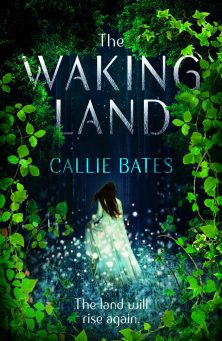
10janwaking-land-hb_royal_v13-666x1024Lady Elanna Valtai is fiercely devoted to the King who raised her like a daughter. But when he dies under mysterious circumstances, Elanna is accused of his murder and must flee for her life.
Returning to the homeland of magical legends she has forsaken, Elanna is forced to reckon with her despised, estranged father, branded a traitor long ago. Feeling a strange, deep connection to the natural world, she also must face the truth about the forces she has always denied or disdained as superstition powers that suddenly stir within her.
But an all-too-human threat is drawing near, determined to exact vengeance. Now Elanna has no choice but to lead a rebellion against the kingdom to which she once gave her allegiance. Trapped between divided loyalties, she must summon the courage to confront a destiny that could tear her apart.

I really enjoyed this book. It had me hooked, pretty much from the get go. I found the concept really interesting; I loved Uprooted, and this is compared to it, rightfully so. I thought the character development was realistic, and the description and imagery surrounding Elanna’s bond with the earth and the way it made her feel were vivid and clever. My only issue was that it lacked depth with regard to character relationships and the setting of scenes – I felt it often moved along to the next scene or interaction too quickly, and I found myself wondering if I’d accidentally skipped a few pages! And honestly, if I was Elanna, I would not be able to get over issues (such as my parents leaving me for fourteen years) so suddenly – as a protagonist, she didn’t really seem to connect to people on a deep level. But maybe that was the point – she connected more to the land. All in all, it was a really engrossing and beautiful read – I am a huge nature geek so the message of protecting and connecting with nature was something I really resonated with.

Strange the Dreamer

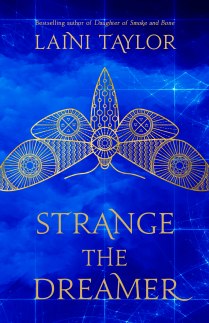
The dream chooses the dreamer, not the other way around— and Lazlo Strange, war new-release-date-2orphan and junior librarian, has always feared that his dream chose poorly. Since he was five years old he’s been obsessed with the mythic lost city of Weep, but it would take someone bolder than he to cross half the world in search of it. Then a stunning opportunity presents itself, in the person of a hero called the Godslayer and a band of legendary warriors, and he has to seize his chance to lose his dream forever.
What happened in Weep two hundred years ago to cut it off from the rest of the world? What exactly did the Godslayer slay that went by the name of god? And what is the mysterious problem he now seeks help in solving?
The answers await in Weep, but so do more mysteries—including the blue-skinned goddess who appears in Lazlo’s dreams. How did he dream her before he knew she existed? and if all the gods are dead, why does she seem so real?

This book was heartbreaking and mystical and catastrophic and shattering and beautiful. It was the perfect fantasy novel. Laini Taylor’s world building is so tangible – God, I wanted Weep to be real. I wanted to walk through the halls of Lazlo’s library, and ride on horseback alongside Eril-Fane, and meet a blue-skinned goddess like Sarai. Laini Taylor’s ability to create magical, fantastical storylines is just breath taking. The world, the language, the characters… everything about this tale captivated me. The ending has broken me, in all the right ways. I need more of God-slaying Eril-Fane and assassins who are acrobats and armies of moths and a strange dreamer who reaches for his impossible dream, and grabs it with both hands…

The Wrath and the Dawn

18798983.jpgOne Life to One Dawn.

In a land ruled by a murderous boy-king, each dawn brings heartache to a new family. Khalid, the eighteen-year-old Caliph of Khorasan, is a monster. Each night he takes a new bride only to have a silk cord wrapped around her throat come morning. When sixteen-year-old Shahrzad’s dearest friend falls victim to Khalid, Shahrzad vows vengeance and volunteers to be his next bride. Shahrzad is determined not only to stay alive, but to end the caliph’s reign of terror once and for all.

Now, surprise, surprise, Shahrzad doesn’t end the caliph’s reign of terror, she actually falls in love with him. But, regardless of all the mixed reviews and the slightly predictable beginning, I found this to be mesmerising, magical and so, so far from mundane. I also slightly (intensely) fell in love with Khalid… This has definitely replaced ACOMAF as my favourite YA book of the moment. It is beautiful and visual and captivating. Renee Ahdieh’s writing is poetic and flowing and you almost pinch yourself half way through because you can’t quite believe words can be written so beautifully. Be right back, going to drown in sandalwood and sunlight…

The Rose and the Dagger
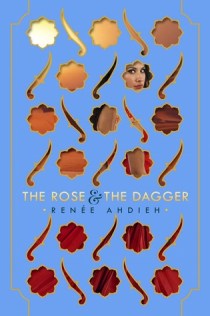
23308084The darker the sky, the brighter the stars.

In a land on the brink of war, Shahrzad is forced from the arms of her beloved husband, the Caliph of Khorasan. She once thought Khalid a monster—a merciless killer of wives, responsible for immeasurable heartache and pain—but as she unraveled his secrets, she found instead an extraordinary man and a love she could not deny. Still, a curse threatens to keep Shazi and Khalid apart forever…

More Shahrzad and Khalid – yes please! So, I might have read this immediately after finishing The Wrath and the Dawn, and stayed up all night engrossed between it’s pages. Nevertheless, this is still a completely un-fangirling and unbiased review, I promise… I absolutely love Shahrzad as a protagonist – she is so strong, and independent and willful, and her faith in Khalid, her beautiful monster, is gut-wrenching and inspiring and so addictive. So many ‘strong’ female characters lack real gumption in YA novels, but in Shahrzad, Renee has created a truly powerful and believable and realistic girl who you find yourself rooting for no matter what. I was completely ensnared by this sexy, mystical, poetic story once more. I just want to read about Shahrzad’s adventures forever.

Maze Runner: The Fever Code – James Dashner
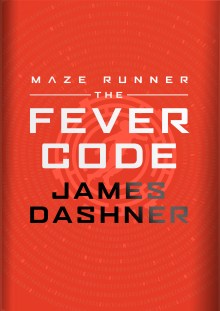
fever-code-hbOnce there was a world’s end.
The forests burned, the lakes and rivers dried up, and the oceans swelled.
Then came a plague, and fever spread across the globe. Families died, violence reigned, and man killed man.
Next came WICKED, who were looking for an answer. And then they found the perfect boy.
The boy’s name was Thomas, and Thomas built a maze.
Now there are secrets.
There are lies.
And there are loyalties history could never have foreseen.
This is the story of that boy, Thomas, and how he built a maze that only he could tear down.
All will be revealed.

So, this was a disappointment… Although not quite as boring and mundane and predictable as The Death Cure, it was still far, far from the genius of the original Maze Runner series. I wish James Dashner had just finished with the third book. Most of this storyline included things that we already know, and repeated everything in excruciating detail, lacking any original events. The first half of the book, absolutely nothing notable happened at all. I’m all for prequels if they contribute to the story, but this just felt like a full-length book for the sake of making as much money as possible. I don’t really have a cynical bone in my body, but this was just so poorly written and so uneventful. It lacked the fantastic shock-creating, unexpected, spontaneous writing of the first three books. This time around, the writing was wooden, and the most exciting thing that happens is the characters sneaking out of their rooms, or, shock-horror, Thomas finding out that the voice in his head is actually Theresa. Well, duh…

Frostblood
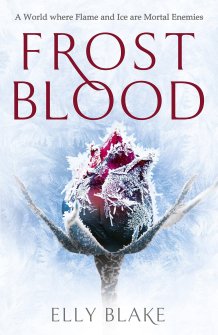
IMG_5775.JPGSeventeen-year-old Ruby is a Fireblood who has concealed her powers of heat and flame from the cruel Frostblood ruling class her entire life. But when her mother is killed trying to protect her, and rebel Frostbloods demand her help to overthrow their bloodthirsty king, she agrees to come out of hiding, desperate to have her revenge.

Despite her unpredictable abilities, Ruby trains with the rebels and the infuriating—yet irresistible—Arcus, who seems to think of her as nothing more than a weapon. But before they can take action, Ruby is captured and forced to compete in the king’s tournaments that pit Fireblood prisoners against Frostblood champions. Now she has only one chance to destroy the maniacal ruler who has taken everything from her—and from the icy young man she has come to love.

Like The Waking Land, the pacing of this novel was slightly on the speedy side, so I felt like it lacked any potential depth, and it tended to follow a very similar fantasy/YA trope, without reinventing anything for itself… but hey, that’s the zeitgeist I guess. Other than this, I enjoyed the book overall. I loved Ruby as a protagonist, she was sarky, and quick, and sharp, but kind-hearted too. The world-building was good, and the plot was fast and intense and dark and wicked – all good fantasy-eque things. Really, who can go wrong with fire and frost and fighting and blood and darkness?!


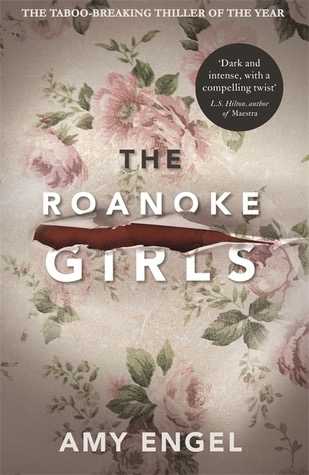
Book Review – The Roanoke Girls by Amy Engel

blue5 (2)

Beautiful. Rich. Mysterious.

The Roanoke girls seem to have it all. But there’s a dark truth about them which is never spoken. Every girl either runs away, or dies.

Lane is one of the lucky ones. When she was fifteen, over one long, hot summer at her grandparents’ estate in rural Kansas, she found out what it really means to be a Roanoke girl. Lane ran, far and fast. Until eleven years later, when her cousin Allegra goes missing – and Lane has no choice but to go back.

She is a Roanoke girl.

Is she strong enough to escape a second time?

The Roanoke Girls is the best book I have read this year.

Creepy, suffocating, dark, addictive and twisted.

I read this in a kind of trance, my throat closing up in horror. Some parts I enjoyed: characters such as Cooper who had me laughing, curious and willing for something good to happen, for him and Lane to find one another and for their lives to get better.

Other parts, especially regarding the Roanoke girls themselves and their secretive, destructive cult, were claustrophobic, disgusting, and left me wondering what on earth I had just read. But still, I couldn’t stop reading.

The setting was perfectly imagined; so tangible you could almost see the waves of heat, and hear the flies buzzing around your ears. It fitted the events and mood of the story so perfectly. The sticky, heavy heat of Kansas only added to the stifling, trapping atmosphere of the novel.

There is also a pent-up, fiery anger that underlies every word and it’s masterfully subtle; things are always hinted at but never explained and a lot of sad confusion and destruction surrounds all the relationships.

The world of the Roanoke girls is taboo-breaking, darkly sensual, downright depressing, and at times, it feels as though you cannot breathe from the sadness of it. But you just cannot. Stop. Reading. The Roanoke Girls is a beautifully written tale of the dark, dangerous secrets families keep and the self-destructive sadness that can follow. There is suspense, heartbreak, shock and the revelation that every one is slightly broken, and that sometimes, that’s okay.

My Holiday Reads – Mini Reviews

I have spent the last two weeks travelling the beautiful Croatian coastline with my husband, and although we spent most of the time exploring, I still managed to fit in quite a few good books! A holiday isn’t a holiday if I don’t get through at least three!

9781447250944the-museThe Muse by Jessie Burton

blue5 (2)

A picture hides a thousand words . . .

On a hot July day in 1967, Odelle Bastien climbs the stone steps of the Skelton gallery in London, knowing that her life is about to change forever. Having struggled to find her place in the city since she arrived from Trinidad five years ago, she has been offered a job as a typist under the tutelage of the glamorous and enigmatic Marjorie Quick. But though Quick takes Odelle into her confidence, and unlocks a potential she didn’t know she had, she remains a mystery – no more so than when a lost masterpiece with a secret history is delivered to the gallery.

The truth about the painting lies in 1936 and a large house in rural Spain, where Olive Schloss, the daughter of a renowned art dealer, is harbouring ambitions of her own. Into this fragile paradise come artist and revolutionary Isaac Robles and his half-sister Teresa, who immediately insinuate themselves into the Schloss family, with explosive and devastating consequences . . .

The Muse was the best book I have read in ages, and definitely my favourite book of the holiday! It transported me to another era, another place, another lifetime – Jessie Burton achieved what she always achieves. She is an excellent historical fiction writer and her prose is lyrical, beautiful and evocative. She adds miniscule details to things in a way that no other author does. I loved The Muse a lot more than The Miniaturist, which I did enjoy, but struggled with at times. The Muse was never boring, the characters had great depth, the dual timelines worked perfectly (which isn’t always the case!) and the storyline was incredibly intriguing and left you guessing until the last page. Nothing was predictable, but it was exhilarating, imaginative, and completely transported you to another time and place. The scene setting of Spain in 1936 and London in 1967 was what I enjoyed most about the story. It is a tale of love, lust, betrayal and danger, and the parallel settings and easy narrative voice help to draw you in spectacularly. I am so excited to see where Jessie Burton goes next – she has yet to disappoint me!

9781447266945carry-onCarry On by Rainbow Rowell

blue5 (2)

Simon Snow just wants to relax and savor his last year at the Watford School of Magicks, but no one will let him. His girlfriend broke up with him, his best friend is a pest, and his mentor keeps trying to hide him away in the mountains where maybe he’ll be safe. Simon can’t even enjoy the fact that his roommate and longtime nemesis is missing, because he can’t stop worrying about the evil git. Plus there are ghosts. And vampires. And actual evil things trying to shut Simon down. When you’re the most powerful magician the world has ever known, you never get to relax and savor anything.

Carry On is a ghost story, a love story, a mystery and a melodrama. It has just as much kissing and talking as you’d expect from a Rainbow Rowell story — but far, far more monsters.

This was a book that I had had on my TBR shelf for a very long time, but was always hesitant to start it. It is an extension of the fanfiction that Cath writes in Fangirl, the novel by Rainbow Rowell. It is clear from Fangirl, and from the minute you start reading Carry On, that it is hugely based off Harry Potter. It is completely undeniable, and that definitely bugged me a bit to begin with. But, as the story continued, I started to fall in love with the characters, with Simon Snow, with Bas, with their chemistry and humour and romance. I also started to remember, hey, I love every damn thing that Rainbow Rowell writes! It was everything you expect from her writing, but funnier, sillier and more magical. Some of the spells made me literally laugh out loud they were so ludicrous – but that was definitely the point. The romance was excellent too – Rainbow is undeniably genius at writing flirtatious scenes, they almost made me squeal with happiness. My heart nearly burst out my chest when I read this:

“I let myself slip away… Just to stay sane. Just to get through it. And when I felt myself slipping too far, I held on to the one thing I’m always sure of – Blue eyes. Bronze curls. The fact that Simon Snow is the most powerful magician alive. That nothing can hurt him, not even me. That Simon Snow is alive. And I’m hopelessly in love with him.”

the-amber-shadows-9781471139284_hrThe Amber Shadows by Lucy Ribchester

four stars

Bletchley Park typist Honey Deschamps spends her days at a type-x machine in Hut 6, transcribing the decrypted signals from the German Army, doing her bit to help the British war effort.
Halfway across the world Hitler’s armies are marching into Leningrad, leaving a trail of destruction and pillaging the country’s most treasured artworks, including the famous Amber Room – the eighth wonder of the world.
As reports begin filtering through about the stolen amber loot, Honey receives a package, addressed to her, carried by a man she has never seen before. He claims his name is Felix Plaidstow and that he works in Hut 3. The package is postmarked from Russia, branded with two censors’ stamps. Inside is a small flat piece of amber, and it is just the first of several parcels.
Caught between fearing the packages are a trap set by the authorities to test her loyalty or a desperate cry for help, Honey turns to the handsome enigmatic Felix Plaidstow. But then her brother is found beaten to death in nearby woods and suddenly danger is all around… 

In true Lucy Ribchester style, this book had all the mystery and suspense of her debut novel The Hourglass Factory, with a little bit of romance and wartime setting added in. I really enjoyed this story – I am kind of obsessed with the World War 2 era, so it was great to read another tale about it. It was also interesting to read about enigma code and decrypting from another viewpoint! The suspense building was excellent and Honey as a protagonist was really easy to read and likeable. I would recommend this novel to anyone who loves a bit of mystery and history! Four stars couldn’t be stretched to five unfortunately, as I found the story to lack factual credibility a little too often, as with Ribchester’s previous novel. But for what it was, it was certainly a good read!

9781442408920_custom-ab1ee04526644c3ae958cba37007c84d709a2fb1-s6-c30Aristotle and Dante Discover the Secrets of the Universe by Benjamin Alire Sáenz
blue5 (2)

Aristotle is an angry teen with a brother in prison. Dante is a know-it-all who has an unusual way of looking at the world. When the two meet at the swimming pool, they seem to have nothing in common. But as the loners start spending time together, they discover that they share a special friendship—the kind that changes lives and lasts a lifetime. And it is through this friendship that Ari and Dante will learn the most important truths about themselves and the kind of people they want to be.

This is a story about a boy who is angry and sad and confused and can’t ever figure out why. It is a story about a boy discovering who he really is. It is a story about a boy learning how to fall in love with the world for the very first time. I loved everything about this book. I had finished it within a few hours of starting it, without truly realising how beautiful it was, how warm it made me feel. Aristotle was so relatable to me when I think back to how I often felt as a teenager, and the way that Benjamin writes is just out of this world mellow, beautiful, touching and life-affirming. There isn’t really much of a plot to this story, but in a way this is what makes it so successful – it’s beauty is in the author’s ability to depict everyday events and unnoticed emotions and the catastrophic feelings of a seventeen year old boy. This book made me cry, and think, and feel at one with the world. This was a beautiful story about love, identity and family, and I think everyone should read it!

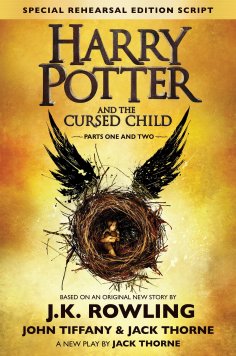
Review – Harry Potter and the Cursed Child Script Book

Harry_Potter_and_the_Cursed_Child_Special_Rehearsal_Edition_Book_Coverthree stars

***WARNING***

CONTAINS SPOILERS!

On Sunday morning, I awoke excitedly, with one thing, and one thing only, on my mind. HARRY POTTER.

The day felt understandably reminiscent of the publication days of the original seven books. I remember the unbound excitement, the feeling of pure, undiluted joy of holding the long-awaited next instalment in your hands, and the heart-quickening, almost panic-like, anticipation you would feel as you opened the first page, and read the first word.

In many ways, this day was just like that. There were launch events at all my local Waterstones. There were Harry Potter parties and Quidditch Tournaments and Butterbeer Pong and fancy dress events at bookshops across London. Every bookshop in the world probably had at least one beautiful display counting down the days until the ‘Eighth’ Harry Potter book. The eighth story, nineteen years later…

But unfortunately, this is where the first hurdle arises. I have tickets to see the play in September, and I have heard absolutely nothing but positive things about it. And I know it will be visually and magically stunning – I can’t wait! But reading the script I feel was a totally different experience, and not at all what I was expecting it to be.

I have read scripts, and screenplays, before, and always liked them. Some of my favourite stories are scripts! However, it was an odd and slightly bumpy experience to read Harry Potter in a script format. I have no doubt that the stage performance will be absolutely incredible (and I still can’t wait to see it in September!) but, for me, something about the story just didn’t sit right.

I read it in one sitting, which in hindsight I wish I hadn’t done. I wish I had taken more time on it – digested it slowly, appreciated it for what it was – an insight into the later lives of our beloved trio and a revisit to the Wizarding World. But even then, I don’t think I would have been that impressed.

The problem was that I was so unbelievable excited to hear from Harry, Hermione, and Ron and the rest of the Wizarding World again that I ended up being entirely disappointed. This in itself is shocking – I have never in my life been disappointed by anything Harry Potter related. But when you remember that this wasn’t singularly written by J.K. Rowling, it kind of makes sense.

I didn’t recognise the characters. I didn’t recognise Harry! His relationship with his son made me sad, which is fine – I appreciate that this was a huge part of the plot, and I did enjoy their journey as father and son and the resolution that bought them closer together. But what upset me the most was that all of the things that Harry said, to me, didn’t seem like he was himself at all. And to be honest, I’d like to think that us original Harry Potter fans know him pretty well. We lived through seven adventures with him over our entire childhood – his thoughts and experiences were ingrained into pretty much everything we did. The Harry Potter that exists in the Cursed Child just didn’t feel like my Harry. I also seriously struggled to imagine Hermione as the same person I read in the Deathly Hallows. I even found it difficult to picture Draco Malfoy. I do know that they have grown up since then. They are decades older, and have had many different experiences that we haven’t been there to witness – but there wasn’t even a smidgen of their old characterisation hidden in them. They felt like entirely new characters, and it just didn’t sit right with my idea of Harry Potter and the memories I have of the series.

I am aware this is completely based on my own interpretation of Harry as a character, and my own depiction of the Harry Potter books. Everyone views them differently, and I am sure there are many people that loved everything about this story.

I however, did not. This makes me seriously sad, and in a strange way I wish I hadn’t actually read it. Jack Thorne and John Tiffany’s writing influence was not an addition that I liked. As much as I appreciate that this is a script, and scripts in general are obviously entirely different to novels… They lack the ability to be able to set a scene and depict emotions quite so cleverly as prose does; they are in every single way, a totally different reading experience. And because of these facts, a script, to me, feels like a strange way to bring Harry’s story back to life.

My biggest issue, other than the strange re-characterisation, was the plot. God, the plot holes. There were so many! The magic lacked any authenticity. Draco Malfoy wingardium leviosa-d a character away (I mean, really?!) This is not something I was aware was even magically possible in any Harry Potter novel, ever? And then there were just many other weird things that happened, that just didn’t seem realistic to me. I didn’t recognise hardly any of the spells; I didn’t believe the fact that the Trolley Witch was just casually strolling her trolley along the roof of the Hogwarts Express with spikes for hands. And who and what the hell even was Delphini? The weakest, most insubstantial character ever created? And not forgetting the fact that the Malfoy’s were apparently in possession of a time-turner this entire time and never once used it?!

One of the things that makes Harry Potter, as a series, and as a reading experience, so incredibly great, is that the magic is ingrained in real life. J.K. Rowling’s writing was so true, so authentic, her stories and character’s so beautifully crafted, that it was always hard to imagine that none of it was real. It felt grounded in reality. Her stories were substantial, self-consistent; they followed canon; you could trust them.

This play lacks all of this, inherently. It’s too fast paced to be believable. There were too many plot twists for it to be clever; too many things that happened in too short a space of time for it to feel like a genuinely good piece of work. I’m going to reiterate what I have heard said many times – it read like a fan fiction. Sadly, truly, it did. I couldn’t see J.K. Rowling in it, anywhere.

Nineteen years later… and the magic just isn’t quite up to scratch.

IMG_2429.JPG


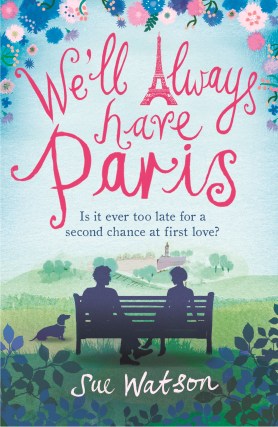
Book Review – We’ll Always Have Paris – Blog Tour!

9780751564570

When she was almost seventeen, Rosie Draper locked eyes with a charismatic student called Peter during their first week at art college, changing the course of her life forever. Now, on the cusp of sixty-five and recently widowed, Rosie is slowly coming to terms with a new future. And after a chance encounter with Peter, forty-seven years later, they both begin to wonder ‘what if’…

Told with warmth, wit and humour, We’ll Always Have Paris is a charming, moving and uplifting novel about two people; the choices they make, the lives they lead and the love they share.

four stars


When I first got sent We’ll Always Have Paris, I wasn’t sure if I was going to enjoy it. It is definitely not my usual read, but I found myself hooked almost immediately. The characters were surprisingly relatable, and the story they told was endearing and heartwarming.

We meet the protagonist, Rosie, at the start of the story, having recently lost her husband and trying to cope with her grief and still maintain family relationships and a small part of herself. She is an extremely likeable character, who teaches us that it is never too late to realise your dreams. Through Rosie you are given an incredibly touching and truthful emotional insight into how someone copes with the loss of their loved one, and how hard, but possible, it is to fight their way through the darkness and come out the other side.

Rosie’s two daughters are also great additions to the novel; their perspectives add a second side to the grief – having lost their father, and trying to help their mother through times that they must be finding extremely difficult themselves.

Sue Watson is brilliant at writing about family dynamics – she depicts relationships between people and the emotions that they feel with incredible authenticity and sensitivity. This story includes both the bad and the good of real life, told with humour and warmth and an easy, flowing writing style that sucks you in from the first page.

I loved the hope that was prevalent throughout – the idea that we are never too old to follow our dreams, or our hearts. The romance in the book was extremely well written, and the chemistry between Rosie and her first love, Peter, is sweet, uplifting and earnest. I feel that Watson truly writes from the heart, making her novel relatable and a joy to read.

We’ll Always Have Paris is a wonderfully profound story about the loss of love, dealing with grief, family relationships, and rediscovering first love. Most prominently, it is about the importance of learning from your experiences, and the appreciation of hindsight. Through Rosie’s story, we are shown that courage is essential to living through pain, and learning to love again. Sue Watson writes with wit, warmth and a poignant understanding of human relationships and the ability that hope has to heal the heart.

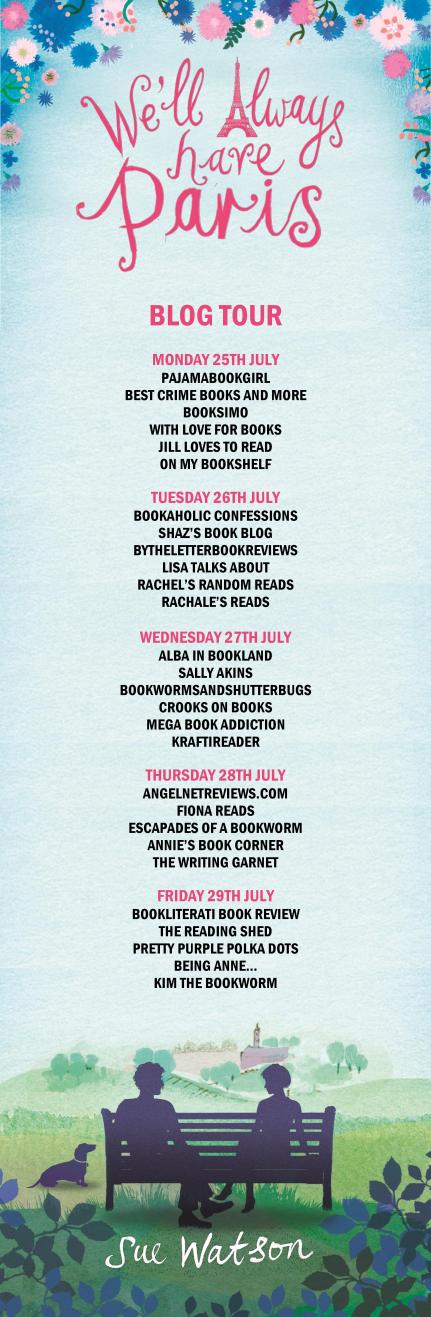
We’ll Always Have Paris is out in March next year! You can pre-order it on Amazon, here.

Follow the rest of the blog tour below… Next stop, Escapades of a Bookworm!

Poster-page-001 (5)

#ReadWithoutPrejudice

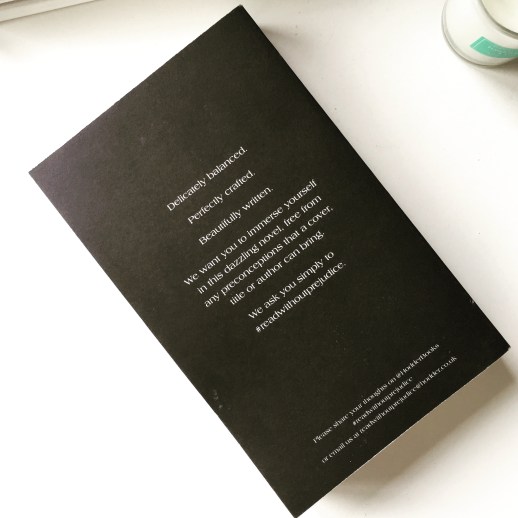
Recently, publisher Hodder & Stoughton distributed a book with no title, no cover and no author, to reviewers and publishing folk alike. The only words on the cover of the book: #ReadWithoutPrejudice. This was an incredible marketing campaign for many reasons, the most important one being that the entire message reflected that of the story inside. This book was written by an author that I have never read before, and now that I’ve finished it, I’m so glad that I was saved the preconceptions of knowing.

IMG_1529

Ruth Jefferson is a labour and delivery nurse at a Connecticut hospital with more than twenty years’ experience. During her shift, Ruth begins a routine check-up on a newborn, only to be told a few minutes later that she’s been reassigned to another patient. The parents are white supremacists and don’t want Ruth, who is African American, to touch their child. The hospital complies with their request, but the next day, the baby goes into cardiac distress while Ruth is alone in the nursery. Does she obey orders or does she intervene?

Ruth hesitates before performing CPR and, as a result, is charged with a serious crime. Kennedy McQuarrie, a white public defender, takes her case but gives unexpected advice: Kennedy insists that mentioning race in the courtroom is not a winning strategy. Conflicted by Kennedy’s counsel, Ruth tries to keep life as normal as possible for her family—especially her teenage son—as the case becomes a media sensation. As the trial moves forward, Ruth and Kennedy must gain each other’s trust, and come to see that what they’ve been taught their whole lives about others—and themselves—might be wrong.

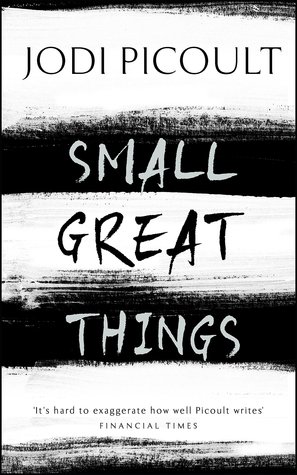
With incredible empathy, intelligence, and candour, Jodi Picoult tackles race, privilege, prejudice, justice, and compassion—and doesn’t offer easy answers. Small Great Things is a remarkable achievement from a writer at the top of her game. 

29391645‘It just goes to show you: every baby is born beautiful. It’s what we project on them that makes them ugly.’
This story is about so, so much. You may think you are accepting and open-minded. You may also think that you are not racist; you might think you understand white privilege and prejudice that rears its ugly head in many forms. But in Small Great Things, Jodi Picoult teaches us that there is so much more to it than we realised.

In the biggest literary risk she has ever taken, Picoult has successfully tackled an extremely sensitive and relevant topic, and has executed it beautifully. I finished this book questioning many things, specifically the way that I think about history and the way that I think about race. To understand another fully, you have to put yourself in their shoes. Jodi Picoult places us in Ruth’s shoes so brilliantly, I failed not to be touched by her life and her experiences. She was an incredible character, and I felt every heartbreak, disappointment and injustice through Picoult’s vivid and clever writing. It is a whole week since I closed the book, but I still cannot get our protagonists story out of my head.

Small Great Things was a remarkably powerful read, but hard going at times. I found it difficult to read the chapters from Turk Bauer’s point of view, but I believe this was entirely the point. Picoult has really done her research, and the novel, as a consequence, rang shockingly true and heart-breaking. She wants you to be uncomfortable; she wants you to question the blasé way racial profiling is brushed off by the courts, and she wants you to understand the way that it truly feels to be judged by the colour of your skin, rather than your talent or accomplishments. Matters such as white privilege, white supremacy, generalised racism, and the often unmentionable effects of this kind of prejudice are brought to light in a realistic, raw and cleverly crafted way.

small great things 2Reading this book was an incredible experience in itself – my heart was in my mouth most of the time. The story was insightful, brutally true, heart-breaking, and unjust, and uncovers the unfair and often invisible plight of many. Jodi Picoult has successfully brought to light the cause and effect behind racial profiling and the huge difference between equality and impartiality. The authenticity was outstanding and this truthful tale has left me with an entirely more informed and opened mind. This story teaches an extremely relevant lesson to never judge a book by its cover, in every sense – a mantra we should remember in the way we treat others every single day.

 

Mini Review – milk and honey by Rupi Kaur

31-oDaA7eRL._SX322_BO1,204,203,200_

blue5 (2)

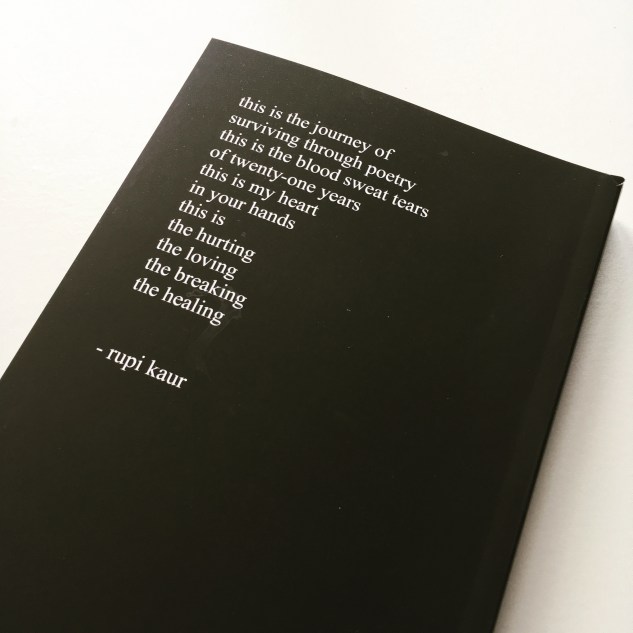
milk and honey is a collection of poetry and prose about survival. About the experience of violence, abuse, love, loss and femininity. It is split into four chapters, and each chapter serves a different purpose.

Rupi Kaur has achieved a mean feat with this book – it is the first and only book of poetry I have read from start to finish. It captivated me. It was effortless, unapologetic, strong, feminist and empowering.

IMG_1626

It is extremely difficult to try and review this book because every single poem is so personal, and tender, and significant in its own unique way. If you only read one book of poetry in your entire life, I urge you to read this one. It is such a sad, amazing and heartbreaking little book. It touches on all aspects and potential experiences of womanhood, through the form of a break-up – abuse, femininity, inner strength, insecurity, love, and grief.

‘You have sadness living in places sadness shouldn’t live.’

Rupi Kaur’s words are written for her – this is obvious in every line, every utterance, every chapter of the book, as her poetry develops and grows and heals and remembers. But it also manages to make you feel something powerful yourself – her stories are amazingly relateable, and her poetry is addictive, thought-provoking, and very, very personal.

IMG_1629

Book Review – One by Sarah Crossan

One

blue5 (2)

Grace and Tippi. Tippi and Grace. Two sisters. Two hearts. Two dreams. Two lives. But one body.

Grace and Tippi are conjoined twins, joined at the waist, defying the odds of survival for sixteen years. They share everything, and they are everything to each other. They would never imagine being apart. For them, that would be the real tragedy.

But something is happening to them. Something they hoped would never happen. And Grace doesn’t want to admit it. Not even to Tippi.

How long can they hide from the truth—how long before they must face the most impossible choice of their lives?

One is a beautiful story about 16-year-old conjoined twins, Grace and Tippi, that really got me to thinking about a way of life completely different to anything I am used to. It is a story that reveals what it means to have a soul mate – albeit not in the traditional sense of the word. The entire novel is written in beautiful, flowing verse that had me in tears and it will remain one of the most poignant stories that I have read this year.

Tippi and Grace have been by each other’s side since birth. They are conjoined from the waist down, and have lived their entire lives sharing every single moment. Having always been home-schooled, they now must attend the local private high school as juniors and face the possibility this brings of staring, disgust, ridicule and judgement.

However, they grow to enjoy normal school life more than they expected, and even make some friends. They smoke, they drink, they go on a road trip – they experience the normal teenage life they have never had the freedom to live before. The normal complications of love, boys, privacy, family drama and angst are discovered through a totally new perspective. When Grace’s health worsens and becomes life-threatening, the twins have to decide whether they wish to be separated for the first time in their lives – the outcome of which will bring a series of devastating physical, emotional and psychological impacts.

I have never read a YA book like this – it was incredibly life-affirming and powerful. I felt that it was extremely clever for Sarah Crossan to write the twin’s tale in verse, because she showed that a story can be deeply moving and hard-hitting, with just a few words. The use of verse also made the novel incredibly easy and free-flowing to read – I finished it in one sitting; in a matter of hours and I found that the words just swept you up completely in their stark, simple poetry. This way of writing created a distinctive and magically profound voice that I feel would have been impossible to replicate with normal prose.

I also found it interesting that the author chose to pen the story through only Grace’s perspective, rather than both the twins. Tippi tended to control all situations and decisions so it was effective to read the story from the shyer and less-dominant twin’s viewpoint.

In summary, Crossan has achieved a powerful, heartfelt, and deeply moving novel that explores the true meaning of the word sisters. The enormous amount of research into conjoined twins was apparent and it read as factually accurate, but also emotionally hard-hitting. It was amazing to read something that perhaps I wouldn’t normally pick up. It is the first time I have read a novel written in verse, and I am glad to say it worked perfectly. I think the writing structure contributed greatly to the meaning and significance of the story. Grace and Tippi’s is an emotionally deep tale that is all at once lovely, shocking and utterly heartbreaking.

One is like nothing I have ever read before, and is a unique and poignant exploration of friendship, sisterhood, strength, soul-mates and love.

Book Review – The Long, Hot Summer by Kathleen MacMahon

The Long, Hot SummerNine Lives. Four Generations. One Family. The MacEntees are no ordinary family.

Determined to be different from other people, they have carved out a place for themselves in Irish life by the sheer force of their personalities. But when a series of misfortunes befall them over the course of one long hot summer, even the MacEntees will struggle to make sense of who they are.
As media storms rage about them and secrets rise to the surface, Deirdre plans a family party for her 80th birthday-and with it one final, shocking surprise.
 

blue5 (2)

‘Relationships between men and women are about power. It’s all about the balance of power, and if you can’t get that right, then it’s a fight to the death.’

The Long, Hot Summer is an insightful, poignant and funny novel about the intricacies of real life. It covers everything from abortion, to adult relationships, mother-daughter complexities, theft, to politics, childhood, and how our experiences truly do shape us.

I loved MacMahon’s writing style – it is easy flowing and swallows you up whole. She has a real talent for writing descriptive prose, and it was so enjoyable to read, that I found I could not stop reading it. When I wasn’t reading it, I was thinking about the characters, and their lives, and their individual stories. The author has a great ability to humanise even the coldest, and most unfeeling characters; I wanted to sit down and interview each of them!

The novel as a whole was incredibly insightful; MacMahon’s perceptions of the everyday are funny, poignant and sometimes, cynical. Each character experienced some sadness, and MacMahon’s interpretation of their experiences invoked a strong feeling of loneliness, yet there were other moments that were surprisingly life-affirming. I felt that she added unexpected insights into extremely normal topics, such as marriage, families, politics, etc. that I hadn’t really thought of before. I particularly loved that the strongest characters are revealed to be the most vulnerable.

The characterisations are great, and although none of them are really likeable, you find yourself warming to them. I loved Alma and Mick particularly – their stubbornness, but also their small, unspoken weaknesses that made them so real. The tragedy that strikes Alma changes her immensely and it was so intriguing to see how her character develops through this. Mick’s storyline was also great, and very, very funny – his mild kleptomania with the crippling consequences, and the fact that he is constantly compared to his brother, was amusing and revealing. I felt that perhaps he was the kindest character, and I liked him the most.

All the characters felt real, in some way, to me. They were very relatable in many different ways and had very humanistic flaws and weaknesses. There was no perfect protagonist, and I think this was why the story worked so exceptionally well. The novel split itself between the family, going from one point of view to another. I loved the structure of the story, written around all the different characters in the same family, all extremely unique, all on very different journeys, but somehow all also meeting up at one important moment in their lives.

I felt that this novel had great depth; it is a strong tale that weaves together the individual stories of many. It was compelling, moving, insightful and funny. The incredible character-based narratives are told with wit, and astute observation, and MacMahon has a great talent for putting normal relationships under the microscope and making warm, funny, and very, very truthful observations. The Long, Hot Summer is the perfect read for fans of family sagas, and Irish writers such as Marian Keyes and Maeve Binchy.

Thank you to Little, Brown for the opportunity to review this title!