Book Review – The Sun In Her Eyes

the-sun-in-her-eyes-9781471138416_hrThe Sun In Her Eyes by Paige Toon
Published: May 21st 2015 by Simon & Schuster UK
Genres: ChickLit, Women’s Fiction, Romance
Pages: 385
Source: Goodreads

two stars

Blinding sunshine; A bend in the road; What became of the little girl with the sun in her eyes?


Amber was three when a car crash stole her mother’s life. She doesn’t remember the accident, but a stranger at the scene has been unable to forget. Now, almost thirty years later, she’s trying to track Amber down. Amber, meanwhile, is married to Ned and living on the other side of the world in London. When her father has a stroke, she flies straight home to Australia to be with him. Away from her husband, Amber finds comfort in her oldest friends, but her feelings for Ethan, the gorgeous, green-eyed man she once fell for, have never been platonic. As Ethan and Amber grow closer, married life in London feels far away. Then Amber receives a letter that changes everything. ‘Before your mother died, she asked me to tell you something…’

I have been a huge Paige Toon fan since her debut novel, Lucy In The Sky, was released. I have to admit, I very rarely read ChickLit at all, but Paige’s novels have always hit the spot for me. They are summery, perfectly written, with extremely likeable protagonists – the perfect beach read. The Johnny Jefferson stories (Johnny Be Good, Baby Be Mine, and Johnny’s Girl) have always been my ultimate favourites and are well worth a read.

So, like many other Paige Toon fans, I was ridiculously excited for The Sun In Her Eyes, and suffered the excruciating one year wait for this new release. I finished it within a matter of hours, but unfortunately, unlike her other books, this one just did not do it for me.

This novel seems completely different to Paige’s previous works. Firstly, the heroine, Amber, is extremely dislikeable from the offset – her behaviour is selfish and she never sees fault in her own actions, even though they are questionable. Her childhood crush, Ethan, who she reignites her love for and ends up having an affair with, was originally extremely likeable, even if Amber wasn’t. We then see him for who he truly is – a cheating, weak, for lack of another word, idiot – and I nearly threw the book at the wall!

It wasn’t even that I was infuriated – it was just that I was sick to death of how dull the book was. I was bored! The only reason I read till the end was that I was hoping that something more interesting was going to happen. I liked Amber’s husband, Ned. He was portrayed as genuine and sweet. All I kept thinking throughout was how bad Amber’s judgement was to betray her devoted, kind husband for a smarmy childhood friend who she hadn’t seen in years.

Amongst all of this, Amber receives a letter from the lady who pulled her out of the car crash that killed her mother when she was a child. Throughout the novel, expectation is deliberately built up as Doris writes that there is a secret that Amber’s mother told her in her dying moments. Her message ends up being something entirely understated and not at all dramatic, as the build-up had suggested. This is fair enough, and the memories that Amber remembers during their heart to heart are sweet, but they are nowhere near as heart-grabbing as I imagine Paige had intended them to be.

The ending of the book was not any better. The protagonist, Amber, seemed almost proud of her affair. She finds out that she is pregnant, and after an initial panic that the baby might be Ethan’s, it turns out it is Ned’s. According to Amber, this means she can now happily get back together with Ned, and live happily ever after, without even telling him about the affair.

It would have been a much more genuine ending if Amber had confessed to Ned and perhaps, within time, he slowly forgave her, or she got the result that she deserved. The whole situation seemed wrong to me, and due to how unlikeable Amber’s character was, I wasn’t exactly rooting for everything to work out for her.

It was great to hear from characters from previous novels, in true Paige Toon fashion. Josh, the son of Michael from Pictures of Lily, and also Zara, from Thirteen Weddings, were both mentioned. Oh, and Jorge and Leo from The Longest Holiday, too, which definitely made me smile.

As much as I love Paige’s previous novels, this one was just boring, unoriginal, and utterly unstimulating. I wouldn’t even give it another thought. The contrast between her debut novel, Lucy in the Sky, which I enjoyed so much that I have read perhaps five times, is shocking. I really hope this is just a lull in creativity for Paige, and that her next read will go more in the direction of her first few books.


Follow my blog with Bloglovin

Book Review – The Hourglass Factory

the-hourglass-factory-9781471139307_hrThe Hourglass Factory by Lucy Ribchester
Published: January 15th 2015 by Simon & Schuster Ltd
Genres: Historical Fiction, Mystery, Feminism
Pages: 504
Source: Goodreads

four stars

The year is 1912 and London is in turmoil…

The suffragette movement is reaching fever pitch but for broke Fleet Street tomboy Frankie George, just getting by in the cut-throat world of newspapers is hard enough. Sent to interview trapeze artist Ebony Diamond, Frankie finds herself fascinated by the tightly laced acrobat and follows her across London to a Mayfair corset shop that hides more than one dark secret.

Then Ebony Diamond mysteriously disappears in the middle of a performance, and Frankie is drawn into a world of tricks, society columnists, corset fetishists, suffragettes and circus freaks. How did Ebony vanish, who was she afraid of, and what goes on behind the doors of the mysterious Hourglass Factory?

From the newsrooms of Fleet Street to the drawing rooms of high society, the missing Ebony Diamond leads Frankie to the trail of a murderous villain with a plot more deadly than anyone could have imagined..

The Hourglass Factory is set in my favourite historical era and I am just slightly obsessed with the Suffragettes. There is a lot of hype surrounding this period in history at the moment, which I imagine is all due to the release of the movie Suffragette, which will be in cinemas this coming October. This is the only reason that I picked up the book to begin with, along with the stunning front cover, which was hard to miss! I read it in two days, and it is definitely one of the better books I have read this year.

You spend the majority of the story travelling around 1912’s London with Frankie, the strong female protagonist, on foot, and this creates plenty of opportunities to visualise the society of the time and how it would have been. Ribchester is successful in creating very realistic imagery that truly leaps out the page, and the reader can almost witness every sight, smell and noise that is presented to Frankie in her travels and tribulations. The period clothing, Frankie’s trouser suit and cigarettes, along with Ebony’s corsets really add an intricate detail to the historical aspect of the story. It made me want to jump into the pages; I love this particular era so much!

I thought that a third person narrative throughout the novel was perfect, and switching from Frankie to DI Primrose kept me engaged and eager to turn the pages, offering me two points of view on the suffragettes and the crimes they were involved in. At times, I was so hooked that I couldn’t put it down, literally! I kept myself up until ridiculous o’clock in the morning to find out how it was all going to pan out.

Frankie is impulsive, impetuous and stubborn. When she’s knocked down she’s not deterred but keeps on fighting. She’s sharp, clever, observatory, smokes cigarettes and wears trousers. But she is also a substantially realistic character as she has unlikeable characteristics and you do not always agree with her decisions. I think Milly, the snake dancer at Jojo’s Bar who develops into a pretty central figure, was definitely my favourite character, and I would have loved to have found out even more about her. I would certainly read a sequel if it was based on her life!

It was the mysterious aspect of the plot that kept me turning the pages. Every step and character was filled with intrigue, from our first meeting with Milly, to Olivier Smythe, the Parisian Corsetiere, to Ebony’s disappearance and beyond. Whilst reading, you get the feeling that the only character you truly know is Frankie. The imagery during the pivotal scene was excellent. It was full of action and excitement, and was perfectly fast-paced. I appreciated the switch between DI Primrose and Frankie’s journeys, and it was interesting to see how the Police apparently reacted to the Suffragettes. I also loved the insight into prison life, with the force-feeding of the male suffragette. Ending the story on the Derby Day that Emily Davison was killed was a perfect way to finish, although it threw me a bit when it was suggested that the three of them hadn’t all kept in touch.

My only problem was that it was, more often than not, historically inaccurate. This was made up for by the interesting storyline, and Ribchester acknowledges her own inaccuracy at the start of the book. However, I definitely feel that it would have been better if she had undertaken more thorough research to make it historically factual. I also found the journalist Frankie slightly too irritating for a protagonist. As much as I loved the story, I didn’t particularly love her.

Overall, the story was richly imagined but wasn’t too heavy, and it remained light-hearted and easy to read although it often dealt with more serious issues. The Hourglass Factory was an exciting, fast-paced, and intriguing read that kept you guessing until the last page. Considering it was a debut novel, it was absolutely fantastic, and I eagerly look forward to what Lucy Ribchester will be writing next.

Follow my blog with Bloglovin

May Reads

It’s May already – where have the first four months of this year gone?! As usual, I have a huge list of books piled up that are screaming at me to be read from my very overfull bookshelves. I am definitely a compulsive book buyer, and cannot resist a book with a pretty cover. I also have a habit of pre-ordering books from my favourite authors without even reading the blurbs! I have yet to be disappointed, but it’s definitely an expensive pastime. Here is a list of the books I am hoping to read in May. However, It might well extend into June… I very rarely stick to any TBR lists that I set myself, so definitely take this with a pinch of salt!

81hEyUlkN6L._SL1500_

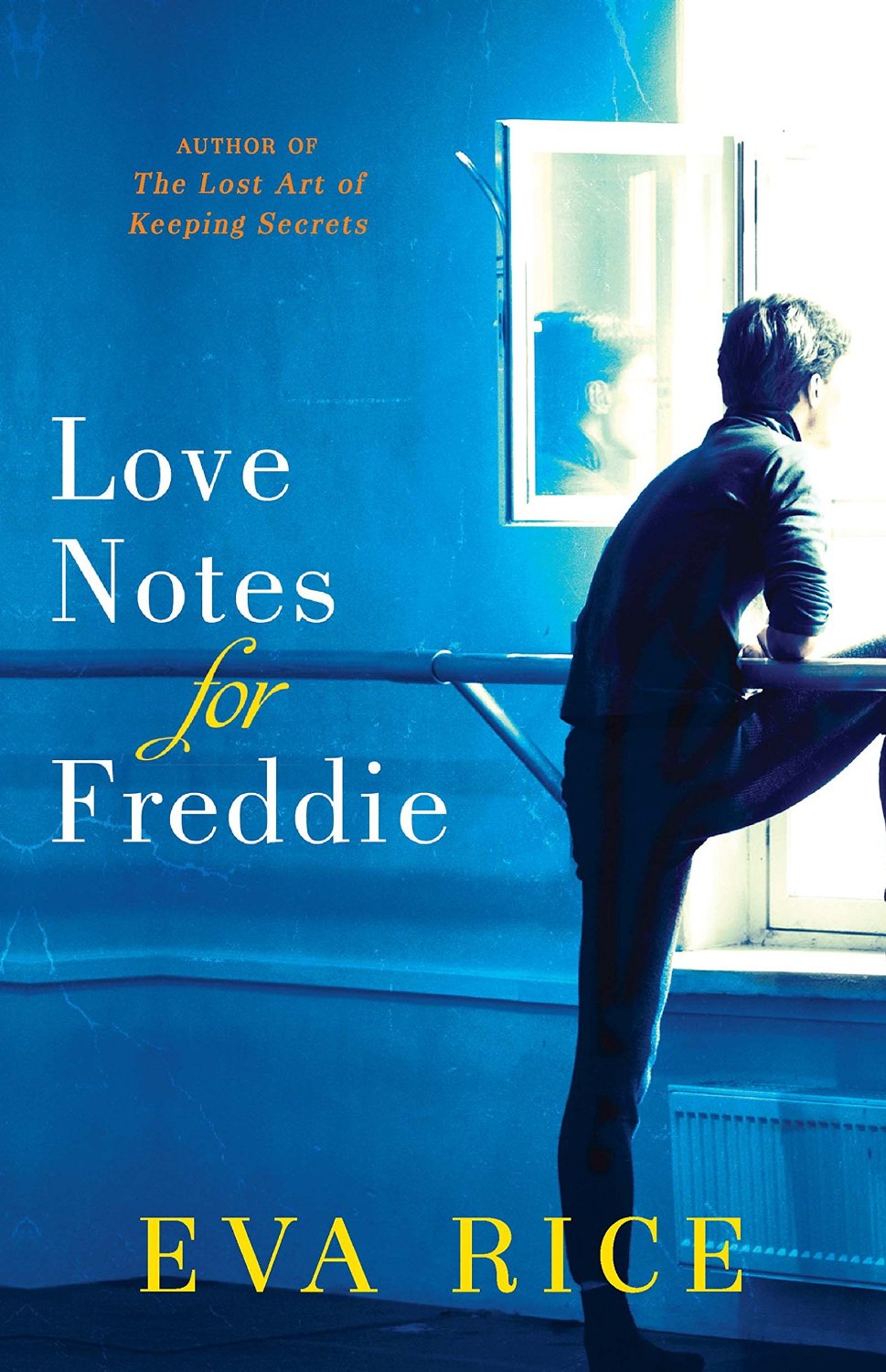
Love Notes for Freddie

Marnie FitzPatrick is a reclusive sixth-former from Hertfordshire with a dysfunctional family, a penchant for Pythagoras’ Theorem and an addiction to doughnuts and gin. Julie Crewe is a disillusioned maths teacher who lives vicariously through the girls she teaches, yet who once danced barefoot through Central Park with a man called Jo she has never been able to forget.

This one isn’t actually due to be released until the beginning of June, but I am so excited to read it that I just had to include it. I have read both The Lost Art of Keeping Secrets and The Misinterpretation of Tara Jupp, and absolutely fell in love with Eva Rice’s writing style. Her books are addictive, eccentric, fantastically vintage and spilling with original characters. I am sure her next book will live up to the hype. The story sounds intriguing and I can’t wait to read it!

Small Wars71nYI6O+y4L._SL1167_

What happens when everything a man believes in — the army, his country, his marriage — begins to crumble? Hal Treherne is a young British soldier on the brink of a brilliant career. Transferred to Cyprus to defend the colony, Hal takes his wife, Clara, and their daughters with him. But Hal is pulled into atrocities that take him further from Clara, a betrayal that is only one part of a shocking personal crisis to come. Small Wars is a searing, unforgettable novel from a writer at the height of her powers.

So far, I have only read the author’s debut novel, The Outcast, but it was passionate, beautifully written, and harrowing. I absolutely adored it, and have read it several times. I am very excited to read this. I love novels that are set in the Second World War, and this sounds like it will be just as dramatic and hard-hitting as Jones’s debut novel. She seems to have a talent for writing compelling, engrossing narrative that burrows deep under your skin.

the-hourglass-factory-9781471139307_hrThe Hourglass Factory

The year is 1912 and London is in turmoil. The suffragette movement is reaching fever pitch but for broke Fleet Street tomboy Frankie George, just getting by in the cut-throat world of newspapers is hard enough. Sent to interview trapeze artist Ebony Diamond, Frankie finds herself fascinated by the tightly laced acrobat and follows her across London to a Mayfair corset shop that hides more than one dark secret.

Then Ebony Diamond mysteriously disappears in the middle of a performance, and Frankie is drawn into a world of tricks, society columnists, corset fetishists, suffragettes and circus freaks. How did Ebony vanish, who was she afraid of, and what goes on behind the doors of the mysterious Hourglass Factory?

Of course there is nothing I like better than a novel about Suffragettes (Opal Plumstead and Parade’s End are amongst my favourites!) Add in some murder mystery, Fleet Street, and the circus, and it could be a thrilling read. It definitely sounds like it will be a gem, and it looks like it too. It was the beautiful cover that drew me to buying it in the first place. This is a debut novel from Lucy Ribchester so it will be interesting to see if it’s as fast-paced and exciting as the blurb makes out!

The Sun In Her Eyes the-sun-in-her-eyes-9781471138416_hr

‘Before your mother died, she asked me to tell you something …’
When Amber Church was three, her mother was killed in a car accident. A stranger was at the scene and now, nearly thirty years later, she’s desperate to talk to Amber.
Living in London and not-so-happily married to Ned, Amber is greeted one morning by two pieces of news: she’s to be made redundant from her City job and her beloved father, across the world in Australia where she grew up, has been felled by a stroke. She takes the first plane out to be by his side, leaving Ned uncertain as to when she will return. Reunited with her old friends, Amber is forced to confront her feelings for Ethan Lockwood, the gorgeous, green-eyed man she fell for as a young girl.
And then Amber receives a letter that changes everything …

I can be a bit of a book snob, not proudly, and am an avid hater of the endless stream of ChickLit that graces the shelves of Waterstones. However, someone who does not fit this narrow genre is Paige Toon. Although officially ‘ChickLit’, her books are clever, and a little deeper than the average romantic, love-triangle story that is so common in the genre. I absolutely love her writing style, and the way that she manages to weave her characters in and out of each other’s books. This should definitely be a great, easy, beach read, and she hasn’t disappointed me yet.

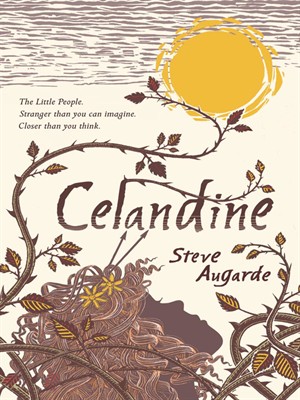
{E0CBEA7A-B95C-4A81-A2E6-28A702185A9F}Img400Celandine

Set seventy years before The Various, the second book in the trilogy follows the adventures of young Celandine at the onset of the First World War. Having run away from her detested boarding school, Celandine is too afraid to go home in case she is sent back. As she seeks shelter in the Wild Wood near her home, little does she think she will encounter a world where loyalty and independence is fiercely guarded, and where danger lurks in the most unlikely of places. Celandine’s troubled character finds both refuge and purpose among the secret tribes of little people that she alone believes in.

The novels of the Various trilogy are full of mystery, beauty and adventure; this second novel is both page-turning and life-affirming.

This is the second book in the Touchstone trilogy, and I read the first, The Various, almost thirteen years ago, when I was ten years old. I haven’t picked it up for a long time, but even now, I remember how magical and beautiful the story was. Steve Augarde is a fantastic writer. It’s pages were full of beauty and adventure and now they seem to fill me with a deep-seated longing to be a child again. I will definitely re-read The Various before beginning Celandine. It’s a little battered compared to this brand new copy that I received for Christmas from my mother. I must have read it a hell of a lot for her to remember it from over a decade ago. Someone said to me recently: ‘It’s extremely important to keep reading children’s literature. It keeps your heart young.’ And I couldn’t agree more.

Follow my blog with Bloglovin

Book Review – Suffragette: My Own Story

91g6rkawY9L._SL1500_

Suffragette: My Own Story by Emmeline Pankhurst
Published: in 2015 by Hesperus Press Limited (First Published in 1914)
Genres: Autobiography, Feminism, Politics
Pages: 332
Source: Goodreads

blue5 (2)

The closing paragraphs of this book were written in the late summer of 1914, when the armies of every great power in Europe were being mobilised for savage, unsparing, barbarous warfare-against one another, against small and unaggressive nations, against helpless women and children, against civilisation itself. How mild, by comparison with the despatches in the daily newspapers, will seem this chronicle of women’s militant struggle against political and social injustice in one small corner of Europe. Yet let it stand as it was written, with peace-so-called, and civilisation, and orderly government as the background for heroism such as the world has seldom witnessed. The militancy of men, through all the centuries, has drenched the world with blood, and for these deeds of horror and destruction men have been rewarded with monuments, with great songs and epics. The militancy of women has harmed no human life save the lives of those who fought the battle of righteousness. Time alone will reveal what reward will be allotted to the women.

I think the most powerful aspect of this story, which is part history, part politics and part autobiography is that it was written before the battle for women’s votes was won. The effect on the reader is that you come close to feeling like a real-time participant in the battle between the WSPU and the government. The detail is revealing and the facts are shocking. Before reading this book, I believed I was clued up on the Suffragette movement, but clearly I was not. I had no idea of the full goriness, pain, barbarism at the hands of men and utter unfairness that the women of the WSPU had to endure. They were incredibly brave and it humbles me. Pankhurst’s writing is fully immersive and you feel as though you are right in the middle of it, witnessing the events that she describes transpire.

Although it was written a hundred years ago, and we now have the vote that they were fighting for, the whole story still feels entirely relevant. We might have the vote, here in the UK, but there are still women who do not use it, and there are still millions of other battles that we need to fight to ensure an equal society. Every woman in the UK should read this, especially as we approach a general election, in which we will all get the right to vote on who runs our country. We’re a long way from equal representation, and I still speak to women who have never voted and do not intend to vote, which makes me angry. I do have a tendency to over-preach my views, but still. Women endured barbaric suffering and even died so that we could have the vote – and you’re not going to use it? Seriously?

I was brought up by a mother who taught me everything that she knew about the suffragette movement and was always made aware that I should value my right to vote, and that women had chained themselves to railings, and endured force-feeding, on my behalf for that right. What I did not realise was the full gory detail of that fight, and how utterly barbaric it was. Emmeline Pankhurst seems to try to justify her use of militancy in the autobiography – but I do not feel she needs to. I’m unsure whether I would have been strong enough to have fought alongside them and that thought alone is humbling. It got me to thinking what I would have done as a Suffragette – how far would I have gone? And what I could continue to do now to help modern day feminist issues.

Why this book isn’t on every school history class reading list I do not know. It really, really should be. Women’s history should be just as important a part of education as male history, but it still isn’t, even now. I know for a fact that without my mother teaching me who Mrs Pankhurst was, who Emily Davison was, and what they both did, along with others, there is no way that I would have known even their names if she had left it down to my teachers.

USE YOUR VOTE is a phrase that springs to mind, especially now, with the UK General Election approaching and the country in a state of prospective political change. It has never been more important to integrate feminism into your everyday life. Even if it’s just as small as calling up a co-worker on a sexist comment, or righting ignorance. Only the other day, I was at a dinner, and we were talking about the general election. A woman sat beside me said that she wouldn’t vote, and never had, as ‘she didn’t know who to vote for.’ I couldn’t help but say ‘You have to vote. Do some research, and vote for the party you like the most. Women died so that you could have the freedom to do that.’ Subsequently, a man in the same conversation proceeded to comment that ‘They did not! All they did was burn their bloody bras!’ I felt my face boil up in anger at the ignorance of his comment, and I wish, even now, that I had had the confidence to right him.

This book has definitely given me that confidence to speak up, and I think that every woman in the world should read it. It’s enlightening, enjoyable, shocking and inspirational. And there has never been a more perfect time to read it.

Book Review – The Casual Vacancy

casual

The Casual Vacancy by J.K. Rowling
Published: on September 27th 2012 by Little, Brown and Company
Genres: Mystery, Contemporary, Adult Fiction
Pages: 503
Source: Goodreads

blue5 (2)

A BIG NOVEL ABOUT A SMALL TOWN …

When Barry Fairbrother dies in his early forties, the town of Pagford is left in shock.
Pagford is, seemingly, an English idyll, with a cobbled market square and an ancient abbey, but what lies behind the pretty façade is a town at war.
Rich at war with poor, teenagers at war with their parents, wives at war with their husbands, teachers at war with their pupils … Pagford is not what it first seems.
And the empty seat left by Barry on the parish council soon becomes the catalyst for the biggest war the town has yet seen. Who will triumph in an election fraught with passion, duplicity and unexpected revelations?

I am a ridiculously obsessive Harry Potter fan. I have been since I was seven years old, and I’m now twenty-two. So, I am not ashamed to admit that the only reason I purchased this book (on release date) was because it was written by my literary idol J.K. Rowling. How can anything written by a storyteller such as her be disappointing?

However, on my first attempt at reading it, disappointed was what I was. I’m not sure I even made it past the first ten pages. It was a whole two years later that I finally picked the dusty copy off my bookshelf and decided, determinedly, that I was going to read the whole thing, regardless of how disappointing it was. It is an adult novel, after all. Undoubtedly, it is going to be entirely different to the Harry Potter series.

The blurb on the inside cover of the hardback copy I possess, synopsises the novel as ‘a big novel about a small town.’ Barry Fairbrother holds a seat on the Parish Council of the small West Country village of Pagford. However, when he dies, unexpectedly and suddenly, in the car park of his local golf club, the town of Pagford is left in shock and disarray. Barry’s casual vacancy from the Parish Council brings on an election for someone to fill his seat.

On first glance, and even the first one hundred pages, it really does seem to be a dull and mundane book about a small town full of dull and mundane people. The deeper you get into the novel, however, and the deeper into the protagonists lives the author takes you, you realise and remember that yes, J.K. Rowling is indeed the best storyteller our world has ever known.

The novel is executed so understatedly, and so cleverly. It follows the daily goings on of the village residents of Pagford and of the nearby council estate The Fields. There is a sharp contrast, highlighted subtly, through morning chats in bed, telephone calls between mother and son, family arguments, and schoolgirl truanting, between the deeply troubled and addiction-riddled Fields and the snobby, gossipy and conservative Pagford. The blurb states that the book is about the election for the empty seat, but it is about so much more than that. There are times when I had tears rolling down my face, times when I laughed out loud, and times when I literally gasped in horror. JKR has proved herself to be an even more talented, honest and intuitive writer than I ever imagined her to be.

How is it that she understands the injustice and horrors of a family with a mother as a heroin addict? Her portrayal of that dark and misunderstood side of life is scarily realistic and shocking. Krystal Weedon lives a rough and raw life, at sixteen years old, in a dirty, unkempt house with her smack-addicted mother and her baby brother Robbie, whose mother keeps him in sodden nappies, even though he is three years old, and is hungry, moaning constantly, with a red-raw bottom. This brutally realistic portrayal literally made me cry. The horrendous gossiping and judgemental attitudes of the Daily Mail readers of nearby Pagford towards Krystal make you angry at the injustice of a world full of people who are incapable of empathy and are shallowly wrapped up in their own pristine lives.

This book struck a chord with me. It may have taken a while to truly understand and get into, but once you are in it, you feel as if you cannot get out. Rowling has achieved what I imagine she set out to do. Nothing much happens in this book. Everything happens behind closed doors, and every family is not as they seem to outsiders. Andrew Price’s family live in fear of their father, who everyone thinks is such a quiet, normal man, but beats them up just because he is in a bad mood and calls his son ‘Pizza-face’ due to his teenage acne. Sukhvinder Jawanda is a timid, self-harming and shy girl with dyslexia, and a mother who favourites her other two children over her, due to her inability to succeed on an academic basis. She self-harms and is cyber-bullied by Fats, the popular, lanky, and ‘cool’ boy at school, who plasters her Facebook page with definitions of lesbianism and hermaphroditism. Samantha Mollison is a middle-aged wife with two girls, and a husband she is sickened by, as he slowly turns into his arrogant and snobby father. She watches her daughter’s DVD of a teen boy band on repeat and closes her eyes when she has sex with her husband, imagining she is nineteen years old again, and that her husband is the twenty-one year old boy band member. Krystal Weedon is a foul-mouthed bully, but she is also just a sixteen year old girl, with the responsibility of her heroin-addicted mother and her underfed and neglected baby brother on her shoulders. Barry Fairbrother was the only man to ever understand her and give her a chance, and her position on his school rowing team was the making of her. When he dies, she is left with nothing, like before, and her status as the school bicycle is merely a reflection of her harrowed and troubled life and her lack of self-worth.

This book is full of nothing much really, but absolutely everything of massive, political and personal, importance. J.K. Rowling’s first adult novel is a huge political statement, and is honest, subtle, and true, true genius.