Book Review – Uprooted by Naomi Novik

uprooted

blue5 (2)

‘Our Dragon doesn’t eat the girls he takes, no matter what stories they tell outside our valley. We hear them sometimes, from travellers passing through. They talk as though we were doing human sacrifice, and he were a real dragon. Of course that’s not true: he may be a wizard and immortal, but he’s still a man, and our fathers would band together and kill him if he wanted to eat one of us every ten years.’

I was unsure about starting this, due to it receiving such mixed reviews; people seemed to either love it or hate it. Luckily, I absolutely loved it. It has to be the most beautiful book I have read this year.

Uprooted tells the tale of a clumsy, plain girl named Angieszka (pronounced Ag-Nyesh-Ka), who lives in a small village on the outskirts of a dark and dangerous wood. The village is protected by a wizard who goes by the name the Dragon. The Dragon lives in a tower close by and protects the village and surrounding areas from the evil, corrupted wood. Once every ten years, he comes to the village and picks one girl to live with him in his tower for ten years. Nobody knows what happens to them whilst they are there, but it ultimately changes them, and they often decide not to return to their families.

Agnieszka worries for her best friend, Kasia, who is the most beautiful girl in the village. Talented, clever and attractive, she has been trained her whole life to expect this moment. She is expected by everyone in the village to be chosen next by the Dragon. Everybody is therefore astonished when clumsy, plain Agnieszka is picked instead.

‘You intolerable lunatic,’ he snarled at me, and then he caught my face between his hands and kissed me.’

Agnieszka is an incredible protagonist – relatable, funny, good natured, kind and strong. Her relationship with the Dragon; their disagreements, stubborn compromises and the journey they travel together are what make this story so special. Their gradual development into something more than friends is very slow going, but in a good way. Novik writes excellent love scenes that literally take your breath away. Their feelings for one another were portrayed subtly, understatedly, yet perfectly seductive, proving just how a good the writing is.

The writing style is magical. The main aspect of the story obviously being, well, magic, I was delighted to find that the prose reflected that in its entirety – it was whimsical, lyrical, unique, and the imagery created was absolutely beautiful.

‘There was a song in this forest, too, but it was a savage song, whispering of madness and tearing and rage.’

The Wood is fantastically nightmarish and creepy, and it plays its part well as the villain of the story. It stands as an ever-present, silent threat, occasionally swallowing villagers, driving people mad, or sending terrible monsters to destroy neighbouring villages. I don’t want to go into this too much as I don’t want to spoil anything. But, this book is so, so worth reading if you love fantasy, fairy tales and stories about magic.

I love fantasy that is based on folklore, and Novik cleverly roots her novel in the mythology of Eastern Europe; the story feels ancient and enticing. Just like reading an old fairy tale, this novel effortlessly recreates the familiar magic of all my childhood favourites – I felt wonderfully at home whilst reading this. You get the magic, the monsters, the wizards and the princes, but never in the way you might quite expect. Novik goes against all expectations, and nothing is as it seems.

IMG_1243

Book Review – A Court of Mist and Fury


cdb1e6e099795bdc93db9f51c6e4bde7

blue5 (2)

‘The power did not belong to the High Lords. Not any longer. It belonged to me – as I belonged only to me, as my future was mine to decide, to forge.’

It’s taken me a few days to think of the right words to describe this book. This enthralling, exciting, enraging and unexpected book with wonderfully authentic character development.

Firstly, I just want to say that a Court of Mist and Fury is SO MUCH BETTER than it’s predecessor. Mostly because Feyre’s characterisation is so outstanding, but also because the story is no longer just about love.

This novel is about self-discovery. It is about Feyre discovering who she is and what she wants. It is about the intrinsic ability that your experiences and adventures have to heal your heart. Through her adventures, she learns to embrace past pain, and learns to become a new, stronger person. She is not the stagnant character that so many similar lovesick heroines are. This time around, her characterisation is stunningly crafted. It makes the first book pale in comparison – it is worth reading if only to get to this stunning sequel.

In a Court of Mist and Fury, Feyre becomes more of the feminist heroine that I love to read. She grows up and realises that she is becoming a different person. And how could she not? I am so happy that Maas stayed true to Feyre’s character. How could she have gone through the events of the previous book and not have changed? And more importantly, how could she ever had stayed in love with Tamlin after the way he treated her? She might have needed him in the first book, when she was indeed a much weaker character who craved any kind of protection he could offer her. But at the beginning of the story, whilst trying to deal with what transpired Under the Mountain, she is emotionally unstable. Rather than helping her to heal, Tamlin ignores her pain like she is a silly little girl who will get over it eventually.

I hated Tamlin almost immediately at the start, which is a surprise since I had liked him in the first book, although his flaws never enabled me to love him. He was too weak, too controlling, and too much of a damn coward all the way through a Court of Thorns and Roses. This only gets worse in the sequel – Tamlin suffocates Feyre. Worse, he ignores her emotional wellbeing like it is something she is just going to snap out of. After reading this, and getting to know Rhysand and all the intricacies of his character, it makes me feel slightly sick to think that I ever liked Tamlin’s character. His and Feyre’s relationship dynamic was extremely shallow, weak and reminded me way too much of Twilight.

I absolutely adore Rhysand’s character. Oh my God, he’s so starry and dark and GLORIOUS. He lets Feyre be who she is meant to be. He sees value in strong women. He never once tries to stifle Feyre’s strength. Rhysand does everything in his power to help her, to heal her, to be her equal, most of which she is oblivious to until close to the end of the book. He keeps the truth of his feelings from her purely so she would be free to make up her own mind; decide the fate of her own heart. Most importantly, Rhysand never ever dismisses Feyre’s emotions to be unimportant.

Can we all just take a minute to appreciate that he made her a High Lady of the Night Court? Equality. That is what I love about Feyre and Rhysand’s relationship. He makes her his equal. He doesn’t lock her away like a delicate doll.

I feel like this stark contrast between the two male characters, and the substantiality of Rhysand’s characterisation when compared to Tamlin’s, is very deliberate. Throughout the entire first book we are never given even a tiny bit as much character building and background to Tamlin as we are for Rhysand. Overall, he is written so much more carefully, solidly and truthfully. You get to know him almost as much as you know Feyre. You learn his fears, his loves, his pain, and you feel them too. In comparison, Tamlin is completely two-dimensional.

Yes Rhysand is out-of-this-world starry, dark, strong, fearless and dangerous, but he is also incredibly selfless, thoughtful and… soft. Not only towards Feyre, but towards everyone he cares for. He sacrifices his entire reputation for his court. He values LOVE above all else, which is intrinsically feminist in my mind.

The slow-building, flirtatious sex that oozes through the book is so much better than the attempted (but not quite there) lust of the first one. It makes your heart stop a beat, your stomach erupt into butterflies, and your mouth drop open. It is cleverly interlaced into the plot, and Maas has learnt to make it more subtle than the shallow and unbelievable desire of the first book.

The romance is perfect because the story no longer revolves purely around it. It is built up by the events that transpire, and develops authentically as Feyre and Rhysand struggle through their own battles, together. It adds an extra dynamic to the story, but overall, they fall in love around everything else that is going on. Perhaps due to everything that is going on. They are common ground. They are one another. There is beautiful, solid substance to their feelings for one another, and you believe it totally.

The new characters are also amazing. They add depth to the story in a way that I don’t feel Lucian, as a secondary character, ever did. They are all extremely memorable and Maas definitely didn’t scrounge on their personal histories, making sure they were extremely interesting in their own right.

Her world-building is another aspect of the story that had me going weak at the knees. As you see the world through Feyre’s eyes, as she discovers her own power, her own importance, and her own place in the world now that Tamlin is no longer locking her away. The imagery of the Night Court and the hidden city within it is so spectacular, and definitely my favourite out of all the Faerie realms. The story arc surrounding Rhysand’s deep love for the court and his desperation to keep it from Amarantha’s destruction is clever, and unexpected. The twist that reveals him as Feyre’s mate is even better, and I loved his retelling of the events of the first book so much that I’ve read them over and over again!

To summarise, I feel that a Court of Mist and Fury was fantastical, seductive, enthralling, beautiful, heart-wrenching and empowering. I devoured it in one sitting, and I can forgive Sarah J Maas for the weak, male-dominated story that made up the first book, if only because it enabled this!

Vintage Charm… The Miniaturist, The Confectioner’s Tale and The Misinterpretation of Tara Jupp

I don’t believe there is any greater joy in the world than reading a book that makes you feel like you have stepped back in time. I love being swept up into the pages of a book that spills with authentic and imaginative vintage charm. The following books all depict different time periods, but they will always be my must-read texts when I want to escape to a world now gone by.

the misinterpretation

The sort-of-sequel to The Lost Art of Keeping Secrets (a book pushed upon me perhaps ten years ago by my mum, urging me to read it), The Misinterpretation of Tara Jupp is a warm, nostalgic period novel set in the 1960’s. I don’t remember much of The Lost Art, except for the fact that I enjoyed it in the way that you enjoy a hot cup of tea and a couple of digestive biscuits. It warmed you from the inside, and you felt as though you were experiencing the events first hand, wishing desperately that you lived in that time period and were friends with these fantastic characters. In the Misinterpretation of Tara Jupp, Rice excels in her natural ability to set a scene both magically and realistically. The story starts in the rural West Country and follows Tara as she begins a singing career, moving to London, falling in love with a photographer, being shown off at Chelsea parties, even dancing on tables at the Marquee Club on the night of the Stones’ debut… Rice perfectly captures that feeling of being seventeen and having the whole world on your doorstep. She has a real gift for evoking a nostalgia-tinged rural childhood, the quaintness of the first and last county in England in the fifties, and the excitement and pure rock-n-roll lifestyle of London in the swinging sixties.

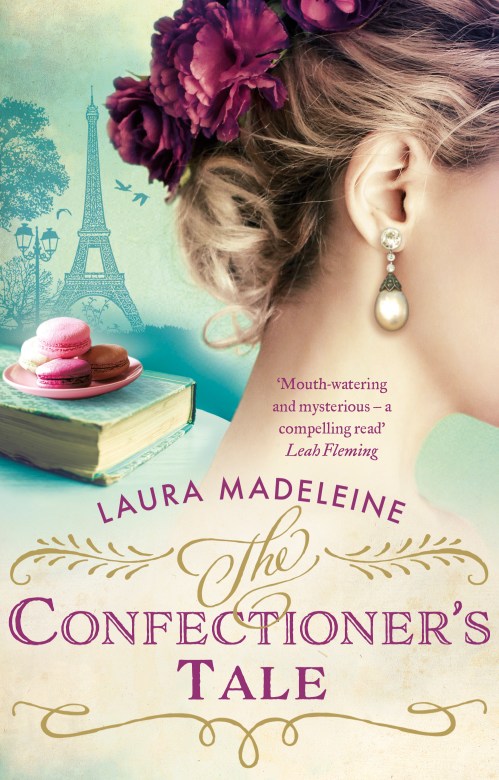
the-confectioners-tale-front-only.jpg

This book is so spectacularly vivid and deliciously detailed. Romance laces every word in a way that makes your heart skip a beat, and the imagery just makes you want to run straight off to Paris, visit a Patisserie and eat every single beautiful creation described. The Confectioner’s Tale tells a love story of two kinds. Set at the famous Patisserie Clermont in Paris, 1909, but told eighty years later through the eyes of Padra Stevenson, researching a photograph she found of her grandfather, the words ‘Forgive me’ written on the back. Her discovery leads her to reveal a mysterious, bittersweet and evocative story about two star-crossed lovers. The writing is what makes this book so infinitely special. It is mouth-watering, literally. The romance of the Parisian setting makes your heart burst.

The Miniaturist

The Miniaturist is set in seventeenth century Amsterdam, and tells the story of eighteen year old Nella Oortman who, after an arranged marriage to an illustrious and mysterious merchant trader, comes to the bustling city to begin a new life. Her loneliness and desolation is what struck me hardest, as she is left in the home with her husband’s cold and enigmatic sister. Her life changes when her husband arrives home with a gift – a beautiful cabinet dolls house. She is offended, seeing it as a toy for a child, but resentfully orders custom-made pieces to fill it. Amongst the objects that arrive from the elusive Miniaturist are items such as a tiny scrap of marzipan that makes people sick to the soul, and the miniature betrothal cup that was missing from her wedding. More things begin to arrive for the cabinet house, eerily life-like, and ominously attuned to the things that happen under her roof. This story is all at once horrible, and lonely, but beautiful too. Perfectly polished and mysteriously compelling, The Miniaturist is definitely a tale that takes you out of your own era and right into the heart of a city of hidden opulence and devastating secrets…

Book Review – Love Notes For Freddie

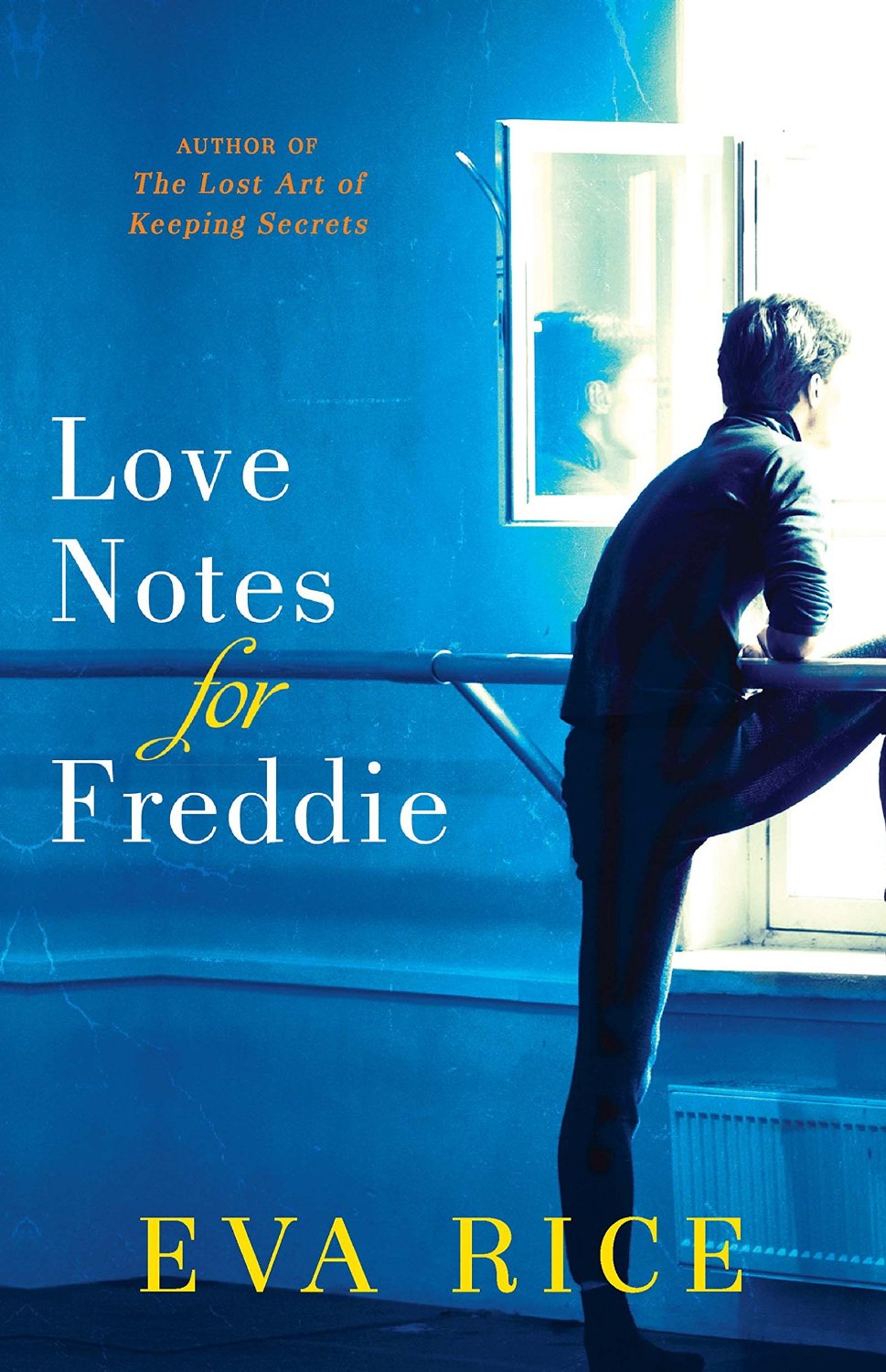
81hEyUlkN6L._SL1500_

Love Notes For Freddie by Eva Rice
Published: June 4th 2015 by Heron Books
Genres: Historical Fiction, Romance
Pages: 385
Source: Goodreads

blue5 (2)

Marnie FitzPatrick is a reclusive sixth-former from Hertfordshire with a dysfunctional family, a penchant for Pythagoras’ Theorem and an addiction to doughnuts and gin. Julie Crewe is a disillusioned maths teacher who lives vicariously through the girls she teaches, yet who once danced barefoot through Central Park with a man called Jo she has never been able to forget.

This is the story of what happened in the summer of 1967, when the sun burned down on the roof of the Shredded Wheat factory, and a boy called Freddie Friday danced to the records he had stolen. This is about first love, and last love, and all the strange stuff in between. This is what happens when three people are bound together by something that can’t be calculated or explained by any equation.

I have read both The Lost Art of Keeping Secrets and The Misinterpretation of Tara Jupp and absolutely fell in love with Eva Rice’s writing style. Her books are engaging, eccentric, fantastically vintage and spilling with original characters.

As expected, I adored Love Notes For Freddie. It was an engrossing, rich and heart-warming story about new love, the ghost of love, new dreams, and shattered dreams.

The chapters alternated between Marnie’s and Miss Crewe’s point of views. I loved the parallels between the two characters, and the fact that they both loved Freddie, but for different reasons, added an intriguing dynamic to the story. I was glad that we didn’t get to read Freddie’s point of view, as I feel he was essential only as a catalyst for Marnie’s and Miss Crewe’s personal development. Miss Crewe’s fascination with him particularly was magically progressive for the story, as you got to see into her past and how it shaped her into the person she is now.

Eva Rice has a unique narrative style that is gloriously detailed and almost filmic in its vivid description of emotions, people and places. She has the ability to write about a particular era with originality and authenticity, and she makes every moment of her novels feel entirely real. You fall head over heels in love with the characters she creates and are immediately drawn into the world that they live in.

I loved Marnie just as much as Tara and Penelope, but for different reasons. The author writes with an empathy that enables you to understand the character’s feelings and actions, and fill their shoes entirely, even if you do not agree with their decisions. I love how real the story felt. There are too many novels that end with ridiculously predictable endings, and happy endings for the sake of a happy ending, even if the story has to forsake its natural direction.

Eva Rice is not scared to write a story that does not end exactly the way the reader would like it to. Her stories are unpredictable, and this is an amazing thing. She writes books that you wish you could have written yourself. Love Notes For Freddie, I believe, teaches you to make the most of the present, and to not dwell on the past. The ending was important as it let you know that love, however heart-breaking and life-changing it might feel at the time, can end, and you can live past it; that sometimes, you have to let things go, in order for them to blossom.

I absolutely adored this book, just as much as the previous two novels, if not more. Love Notes For Freddie is fantastically vivid, heart-warming, rich and truthful. I loved every second of it, and the only thing I hated about it was that it ended. I can’t wait to see what Eva Rice will write next, because I know it will surpass all my expectations and be just as loveable and brilliantly written as this novel is.

When I Was Nine…

The year was 2001. I was nine years old, a very shy little girl, and a ridiculously big bookworm. These were just a few of my favourite books that I read and reread to my heart’s content.

Ally's WorldThe Past, The Present, and The Loud, Loud Girl

Meet the Love children: oh-so-perfect Linn, airy-fairy Rowan, animal-obsessed Tor – and Ally, trying to have a normal life somewhere in the middle of it all. Which isn’t easy when you live in a house that’s a cross between an animal hospital and something out of ‘Changing Rooms’. And then there’s school and the small matter of the forgotten history project and the obnoxious new girl that – oh joy! – Ally’s been nominated to look after. It’s going to be a fun couple of weeks…

This is the first in the wildly successful, utterly loveable “Ally’s World” series.

I remember reading the Ally’s World series when I was around nine years old and they were hilarious. A really quick, funny and easy read for young readers! I remember McCombie using a lot of colloquial language which only made it funnier and more realistic. I absolutely loved the whole series, and read it over and over again. It was so relatable and laugh out loud hilarious. Ally’s family are quirky, troubled and eccentric and just suck you in. I would definitely recommend it to any pre-teens that enjoy a good read. The protagonist Ally is an awkward teenager, trying to find where she fits in with her family and the world,and to deal with the ups and downs of growing up. I would love to read it again now to see whether it is as perfect as I remember!

Bad GirlsBad Girls

Shy, mild Mandy has been bullied at school for as long as she can remember. That’s why she is delighted when cheeky, daring, full-of-fun Tanya picks her as a friend.

Mum isn’t happy – she thinks Tanya’s a BAD GIRL and a bad influence on her daughter. But Mandy loves spending time with her brilliant new friend, and is sure Tanya can only get her out of trouble, not into it . . . or could she? 

 Now I still own my original copy of this book, and it is falling away from the spine it has been read so much. I remember literally just finishing it and starting over again from the beginning, straight away! It was my favourite Jacqueline Wilson book for many, many years. I remember identifying with Mandy hugely, as I was always the shy, timid and sensible one in every situation. I think there are lots of valuable lessons to be learnt from it with regards to growing up, finding yourself, and how to deal with bullies and the feeling of isolation that many young people can face.

Danny Champion of the WorldDanny Champion of the World

Danny’s life seems perfect: his home is a gypsy caravan, he’s the youngest car mechanic around, and his best friend is his dad, who never runs out of wonderful stories to tell. And when Danny discovers his father’s secret, he’s off on the adventure of a lifetime. Here’s Roald Dahl’s famous story about a 9-year-old boy, his dad, and a daring and hilarious pheasant-snatching expedition. Just as important, it’s the story of the love between a boy and his father who, in Danny’s own words, is “the most marvelous and exciting father a boy ever had.”

This was a family bedtime favourite! My mum used to read this to me and my brothers every single night before bed, and we even had it on a tape that we used to listen to as we were drifting off to sleep. Remembering the story gives me such fond memories. It has a humour and lightness of spirit to it, like Roald Dahl’s other books, but it is also more serious, and has a very nostalgic, homely feel. Danny’s father is a fantastic, fantastic character and when Danny calls him the best father in the world, you  agree with him. It is a very heartwarming story that I think any child would love, and it remains my favourite Roald Dahl book to this day.

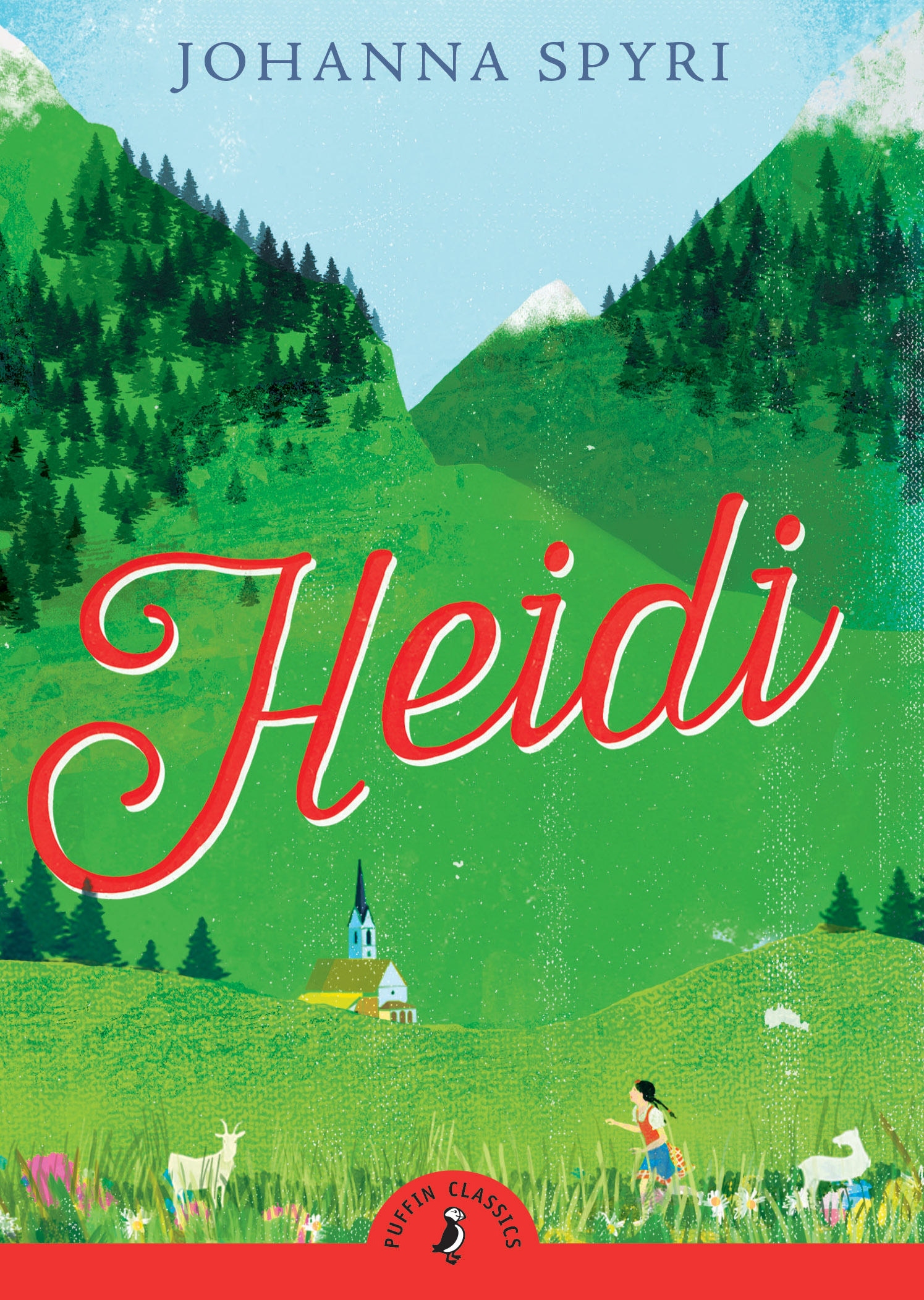
HeidiHeidi

What happens when a little orphan girl is forced to live with her cold and frightening grandfather? The heartwarming answer has engaged children for more than a century, both on the page and on the screen. Johanna Spyri’s beloved story offers youngsters an endearing and intelligent heroine, a cast of unique and memorable characters, and a fascinating portrait of a small Alpine village.

My Nanny gave me a copy of this book at Christmas, 1999. She wrote in the inside cover: ‘I hope you have as many hours of enjoyment from reading Heidi as I did when I was young. I read it at least ten times!’ I then proceeded to read it at least ten times! It is my ultimate favourite childhood book and I seem to love it more and more every time I read it. Even now, as an adult, I can appreciate how lovely it is. It transports me to a world of purple mountains peaks, jumping goats, a bed made of hay, and windows that pile up with snow during the winter. It is so precious. The scenery is vivid, the story full of truth, and Heidi herself is a feisty, strong and independent spirit who I remember completely idolizing as a little girl.

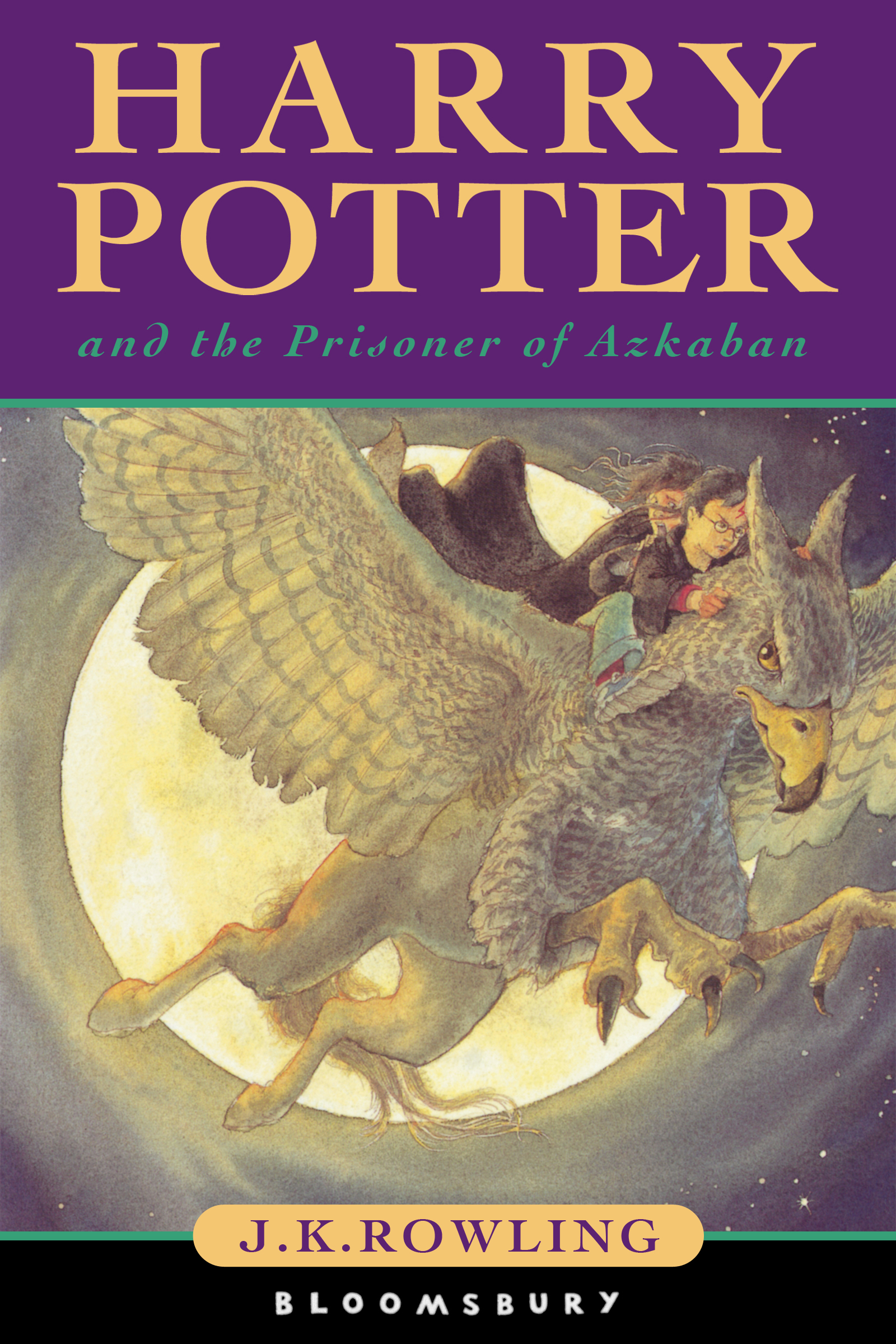
Prisoner of AzkabanHarry Potter and the Prisoner of Azkaban

Harry Potter, along with his best friends, Ron and Hermione, is about to start his third year at Hogwarts School of Witchcraft and Wizardry. Harry can’t wait to get back to school after the summer holidays. (Who wouldn’t if they lived with the horrible Dursleys?) But when Harry gets to Hogwarts, the atmosphere is tense. There’s an escaped mass murderer on the loose, and the sinister prison guards of Azkaban have been called in to guard the school…

This is an obvious one. I read Harry Potter from the age of seven, all through my childhood years, and now, as an adult, I continue to read it just as much. I still find new things in it that I missed the first ten times round! Prisoner of Azkaban has always, always been my favourite Potter. In 2001, Goblet of Fire had just been released the previous year, but I still reread this particular book like it was about to disappear. I actually visibly remember reading it whilst walking, maybe through a park or down the street, and my mum telling me off because it was a hazard! I think that tells you how much I adored it. I can quote whole passages off by heart. It was, and remains to be, my favourite out of the whole series, although even now, I couldn’t really tell you why.

As J.K. Rowling said, ‘I do believe something very magical can happen when you read a good book.’

Follow my blog with Bloglovin

Book Review – The Hourglass Factory

the-hourglass-factory-9781471139307_hrThe Hourglass Factory by Lucy Ribchester
Published: January 15th 2015 by Simon & Schuster Ltd
Genres: Historical Fiction, Mystery, Feminism
Pages: 504
Source: Goodreads

four stars

The year is 1912 and London is in turmoil…

The suffragette movement is reaching fever pitch but for broke Fleet Street tomboy Frankie George, just getting by in the cut-throat world of newspapers is hard enough. Sent to interview trapeze artist Ebony Diamond, Frankie finds herself fascinated by the tightly laced acrobat and follows her across London to a Mayfair corset shop that hides more than one dark secret.

Then Ebony Diamond mysteriously disappears in the middle of a performance, and Frankie is drawn into a world of tricks, society columnists, corset fetishists, suffragettes and circus freaks. How did Ebony vanish, who was she afraid of, and what goes on behind the doors of the mysterious Hourglass Factory?

From the newsrooms of Fleet Street to the drawing rooms of high society, the missing Ebony Diamond leads Frankie to the trail of a murderous villain with a plot more deadly than anyone could have imagined..

The Hourglass Factory is set in my favourite historical era and I am just slightly obsessed with the Suffragettes. There is a lot of hype surrounding this period in history at the moment, which I imagine is all due to the release of the movie Suffragette, which will be in cinemas this coming October. This is the only reason that I picked up the book to begin with, along with the stunning front cover, which was hard to miss! I read it in two days, and it is definitely one of the better books I have read this year.

You spend the majority of the story travelling around 1912’s London with Frankie, the strong female protagonist, on foot, and this creates plenty of opportunities to visualise the society of the time and how it would have been. Ribchester is successful in creating very realistic imagery that truly leaps out the page, and the reader can almost witness every sight, smell and noise that is presented to Frankie in her travels and tribulations. The period clothing, Frankie’s trouser suit and cigarettes, along with Ebony’s corsets really add an intricate detail to the historical aspect of the story. It made me want to jump into the pages; I love this particular era so much!

I thought that a third person narrative throughout the novel was perfect, and switching from Frankie to DI Primrose kept me engaged and eager to turn the pages, offering me two points of view on the suffragettes and the crimes they were involved in. At times, I was so hooked that I couldn’t put it down, literally! I kept myself up until ridiculous o’clock in the morning to find out how it was all going to pan out.

Frankie is impulsive, impetuous and stubborn. When she’s knocked down she’s not deterred but keeps on fighting. She’s sharp, clever, observatory, smokes cigarettes and wears trousers. But she is also a substantially realistic character as she has unlikeable characteristics and you do not always agree with her decisions. I think Milly, the snake dancer at Jojo’s Bar who develops into a pretty central figure, was definitely my favourite character, and I would have loved to have found out even more about her. I would certainly read a sequel if it was based on her life!

It was the mysterious aspect of the plot that kept me turning the pages. Every step and character was filled with intrigue, from our first meeting with Milly, to Olivier Smythe, the Parisian Corsetiere, to Ebony’s disappearance and beyond. Whilst reading, you get the feeling that the only character you truly know is Frankie. The imagery during the pivotal scene was excellent. It was full of action and excitement, and was perfectly fast-paced. I appreciated the switch between DI Primrose and Frankie’s journeys, and it was interesting to see how the Police apparently reacted to the Suffragettes. I also loved the insight into prison life, with the force-feeding of the male suffragette. Ending the story on the Derby Day that Emily Davison was killed was a perfect way to finish, although it threw me a bit when it was suggested that the three of them hadn’t all kept in touch.

My only problem was that it was, more often than not, historically inaccurate. This was made up for by the interesting storyline, and Ribchester acknowledges her own inaccuracy at the start of the book. However, I definitely feel that it would have been better if she had undertaken more thorough research to make it historically factual. I also found the journalist Frankie slightly too irritating for a protagonist. As much as I loved the story, I didn’t particularly love her.

Overall, the story was richly imagined but wasn’t too heavy, and it remained light-hearted and easy to read although it often dealt with more serious issues. The Hourglass Factory was an exciting, fast-paced, and intriguing read that kept you guessing until the last page. Considering it was a debut novel, it was absolutely fantastic, and I eagerly look forward to what Lucy Ribchester will be writing next.

Follow my blog with Bloglovin