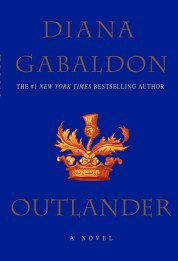
Outlander: Book One Review

Gabaldon_outlanderThe year is 1945. Claire Randall, a former combat nurse, is just back from the war and reunited with her husband on a second honeymoon when she walks through a standing stone in one of the ancient circles that dot the British Isles. Suddenly she is a Sassenach—an “outlander”—in a Scotland torn by war and raiding border clans in the year of Our Lord… 1743.

Hurled back in time by forces she cannot understand, Claire is catapulted into the intrigues of lairds and spies that may threaten her life, and shatter her heart. For here James Fraser, a gallant young Scots warrior, shows her a love so absolute that Claire becomes a woman torn between fidelity and desire—and between two vastly different men in two irreconcilable lives.

“Oh, aye, Sassenach. I am your master . . . and you’re mine. Seems I canna possess your soul without losing my own.”

Outlander is a beautifully complex and mesmerizing story with multi-layered characters, authentic settings and dramatic, unexpected and all-encompassing storylines. It’s the kind of book that you will live through alongside the main characters – you will feel Claire’s bewilderment and fear, her gutsy determination, her love and heartbreak and you will feel as though you are standing alongside her in every aspect of her life. The historical context is so accurate it is amazing!

For a while now, people kept recommending Outlander to me, but I avoided the books because, for one, the sheer size of the series daunted me, and two, I was put off by the time travel aspect (ironic, since I love Doctor Who!) But, I often find that time-travel literature can be cheesy and too unrealistic to be believable.

However, now I have finally read Outlander, I can confidently say that it is the most original historical romance I have ever, ever read. It was way more involved that the typical man meets woman trope, and it was so historically accurate and vivid I felt myself completely submerged in the world of the Scottish Highlands, 1743, for the whole two weeks I was reading it.

Claire is a World War II combat nurse who accidentally wanders through an ancient stone circle in Inverness whilst on a post-war honeymoon with her husband, Frank, in 1945. She suddenly finds herself in the 18th Century. Even in this, she is brilliant – sarky, intelligent, with a quick wit and a quick tongue to match. She’s compassionate, competent, a kick-ass nurse and an independent woman who doesn’t let the abrupt, seemingly-impossible change to her timeline phase her. She’s a refreshing change from the princess-type heroines of a lot of historical fiction.

Jamie Fraser, the Scottish Clansman who slowly becomes the love of her life, is at times sweet and heart-stoppingly romantic, and others an extremely dangerous and passionate warrior. He is one of the most charismatic and appealing male leads I’ve read in a long, long time. And every time he calls Claire a Sassenach… God. I go weak at the knees! Understandably, however, readers are completely divided over Jamie because, although he is gorgeous and lovable for the majority of the novel, there is one extremely disturbing scene that enrages any 21st-Century reader, including myself. As upsetting as the scene was (I won’t mention it due to spoilers, but it deals with domestic abuse) it was very accurate to the times and the way that a man would have treated his wife in that period. Although it doesn’t excuse it, I was able to forgive and get past it and still fall in love with Jamie, just as Claire does, as I could view it within its historical context. There are quite a few sexually abusive scenes in the novel, which, although they do not subtract from the overall enjoyment of the story, they are quite hard to get through.

Regardless of this, what is so brilliant about Gabaldon’s characters and the world she has created is that they are delightfully multi-dimensional, and extremely complex, just as real people and real life can be. Claire somehow finds the courage to made difficult choices in a period of history when choices were often non-existent for women. She is stubborn and determined almost to a fault, and she has a passion and unending support for Jamie that matches his own for her perfectly. Jamie, on the outside, is tough and warrior-like, while on the inside, he is kind and sensitive, with excellent intuition and a backstory full of pain and suffering. He is also intelligent, self-depreciating and almost poetic in the things he says to Claire.

“When I asked my da how ye knew which was the right woman, he told me when the time came, I’d have no doubt. And I didn’t. When I woke in the dark under that tree on the road to Leoch, with you sitting on my chest, cursing me for bleeding to death, I said to myself, ‘Jamie Fraser, for all ye canna see what she looks like, and for all she weighs as much as a good draft horse, this is the woman'”

Their romance is probably my favourite part of the novel – there is true honesty between them, which brings an openness and vulnerability to both of the characters which is such a beautiful addition to the story. I love the way that the author creates a strong friendship between them before they become lovers, and then lets this friendship continue to grow deeper even after they are married. The intimacy level of these two characters is perfectly depicted, and the best that I have read in a novel for a long time, and not just because of the sex.

Outlander was so meticulously researched and Gabaldon manages to weave all the historical accuracies into the plot without destroying the authenticity of the emotional journey. At its heart, Outlander is a historical novel that is packed full of details of 18th Century life in the Scottish Highlands, and as well as recounting events leading up to the Jacobite rising of 1745, the character’s lives are deeply delved in to and an extraordinary picture is painted that truly transports you to another time and place.

There is adventure, history, fantasy, romance, violence and drama. Outlander is a book that literally sucks you into its pages. It is a fully immersive experience that is so engrossing, you find it almost impossible to put it down.
Capture

Vintage Charm… The Miniaturist, The Confectioner’s Tale and The Misinterpretation of Tara Jupp

I don’t believe there is any greater joy in the world than reading a book that makes you feel like you have stepped back in time. I love being swept up into the pages of a book that spills with authentic and imaginative vintage charm. The following books all depict different time periods, but they will always be my must-read texts when I want to escape to a world now gone by.

the misinterpretation

The sort-of-sequel to The Lost Art of Keeping Secrets (a book pushed upon me perhaps ten years ago by my mum, urging me to read it), The Misinterpretation of Tara Jupp is a warm, nostalgic period novel set in the 1960’s. I don’t remember much of The Lost Art, except for the fact that I enjoyed it in the way that you enjoy a hot cup of tea and a couple of digestive biscuits. It warmed you from the inside, and you felt as though you were experiencing the events first hand, wishing desperately that you lived in that time period and were friends with these fantastic characters. In the Misinterpretation of Tara Jupp, Rice excels in her natural ability to set a scene both magically and realistically. The story starts in the rural West Country and follows Tara as she begins a singing career, moving to London, falling in love with a photographer, being shown off at Chelsea parties, even dancing on tables at the Marquee Club on the night of the Stones’ debut… Rice perfectly captures that feeling of being seventeen and having the whole world on your doorstep. She has a real gift for evoking a nostalgia-tinged rural childhood, the quaintness of the first and last county in England in the fifties, and the excitement and pure rock-n-roll lifestyle of London in the swinging sixties.

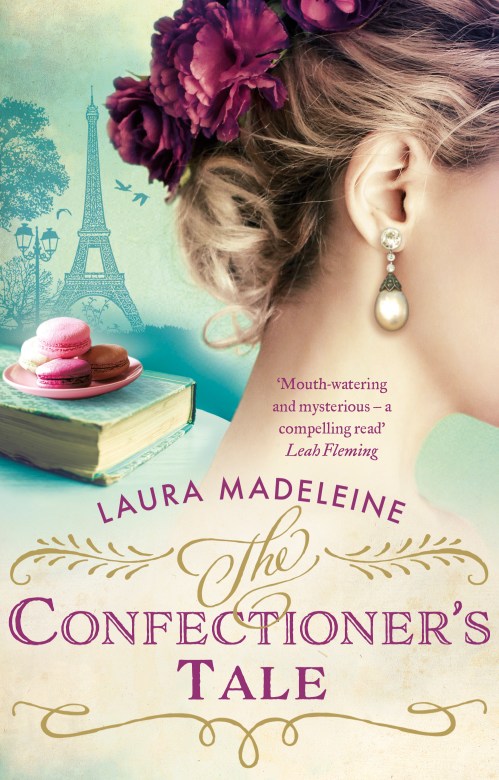
the-confectioners-tale-front-only.jpg

This book is so spectacularly vivid and deliciously detailed. Romance laces every word in a way that makes your heart skip a beat, and the imagery just makes you want to run straight off to Paris, visit a Patisserie and eat every single beautiful creation described. The Confectioner’s Tale tells a love story of two kinds. Set at the famous Patisserie Clermont in Paris, 1909, but told eighty years later through the eyes of Padra Stevenson, researching a photograph she found of her grandfather, the words ‘Forgive me’ written on the back. Her discovery leads her to reveal a mysterious, bittersweet and evocative story about two star-crossed lovers. The writing is what makes this book so infinitely special. It is mouth-watering, literally. The romance of the Parisian setting makes your heart burst.

The Miniaturist

The Miniaturist is set in seventeenth century Amsterdam, and tells the story of eighteen year old Nella Oortman who, after an arranged marriage to an illustrious and mysterious merchant trader, comes to the bustling city to begin a new life. Her loneliness and desolation is what struck me hardest, as she is left in the home with her husband’s cold and enigmatic sister. Her life changes when her husband arrives home with a gift – a beautiful cabinet dolls house. She is offended, seeing it as a toy for a child, but resentfully orders custom-made pieces to fill it. Amongst the objects that arrive from the elusive Miniaturist are items such as a tiny scrap of marzipan that makes people sick to the soul, and the miniature betrothal cup that was missing from her wedding. More things begin to arrive for the cabinet house, eerily life-like, and ominously attuned to the things that happen under her roof. This story is all at once horrible, and lonely, but beautiful too. Perfectly polished and mysteriously compelling, The Miniaturist is definitely a tale that takes you out of your own era and right into the heart of a city of hidden opulence and devastating secrets…

Book Review – The Hourglass Factory

the-hourglass-factory-9781471139307_hrThe Hourglass Factory by Lucy Ribchester
Published: January 15th 2015 by Simon & Schuster Ltd
Genres: Historical Fiction, Mystery, Feminism
Pages: 504
Source: Goodreads

four stars

The year is 1912 and London is in turmoil…

The suffragette movement is reaching fever pitch but for broke Fleet Street tomboy Frankie George, just getting by in the cut-throat world of newspapers is hard enough. Sent to interview trapeze artist Ebony Diamond, Frankie finds herself fascinated by the tightly laced acrobat and follows her across London to a Mayfair corset shop that hides more than one dark secret.

Then Ebony Diamond mysteriously disappears in the middle of a performance, and Frankie is drawn into a world of tricks, society columnists, corset fetishists, suffragettes and circus freaks. How did Ebony vanish, who was she afraid of, and what goes on behind the doors of the mysterious Hourglass Factory?

From the newsrooms of Fleet Street to the drawing rooms of high society, the missing Ebony Diamond leads Frankie to the trail of a murderous villain with a plot more deadly than anyone could have imagined..

The Hourglass Factory is set in my favourite historical era and I am just slightly obsessed with the Suffragettes. There is a lot of hype surrounding this period in history at the moment, which I imagine is all due to the release of the movie Suffragette, which will be in cinemas this coming October. This is the only reason that I picked up the book to begin with, along with the stunning front cover, which was hard to miss! I read it in two days, and it is definitely one of the better books I have read this year.

You spend the majority of the story travelling around 1912’s London with Frankie, the strong female protagonist, on foot, and this creates plenty of opportunities to visualise the society of the time and how it would have been. Ribchester is successful in creating very realistic imagery that truly leaps out the page, and the reader can almost witness every sight, smell and noise that is presented to Frankie in her travels and tribulations. The period clothing, Frankie’s trouser suit and cigarettes, along with Ebony’s corsets really add an intricate detail to the historical aspect of the story. It made me want to jump into the pages; I love this particular era so much!

I thought that a third person narrative throughout the novel was perfect, and switching from Frankie to DI Primrose kept me engaged and eager to turn the pages, offering me two points of view on the suffragettes and the crimes they were involved in. At times, I was so hooked that I couldn’t put it down, literally! I kept myself up until ridiculous o’clock in the morning to find out how it was all going to pan out.

Frankie is impulsive, impetuous and stubborn. When she’s knocked down she’s not deterred but keeps on fighting. She’s sharp, clever, observatory, smokes cigarettes and wears trousers. But she is also a substantially realistic character as she has unlikeable characteristics and you do not always agree with her decisions. I think Milly, the snake dancer at Jojo’s Bar who develops into a pretty central figure, was definitely my favourite character, and I would have loved to have found out even more about her. I would certainly read a sequel if it was based on her life!

It was the mysterious aspect of the plot that kept me turning the pages. Every step and character was filled with intrigue, from our first meeting with Milly, to Olivier Smythe, the Parisian Corsetiere, to Ebony’s disappearance and beyond. Whilst reading, you get the feeling that the only character you truly know is Frankie. The imagery during the pivotal scene was excellent. It was full of action and excitement, and was perfectly fast-paced. I appreciated the switch between DI Primrose and Frankie’s journeys, and it was interesting to see how the Police apparently reacted to the Suffragettes. I also loved the insight into prison life, with the force-feeding of the male suffragette. Ending the story on the Derby Day that Emily Davison was killed was a perfect way to finish, although it threw me a bit when it was suggested that the three of them hadn’t all kept in touch.

My only problem was that it was, more often than not, historically inaccurate. This was made up for by the interesting storyline, and Ribchester acknowledges her own inaccuracy at the start of the book. However, I definitely feel that it would have been better if she had undertaken more thorough research to make it historically factual. I also found the journalist Frankie slightly too irritating for a protagonist. As much as I loved the story, I didn’t particularly love her.

Overall, the story was richly imagined but wasn’t too heavy, and it remained light-hearted and easy to read although it often dealt with more serious issues. The Hourglass Factory was an exciting, fast-paced, and intriguing read that kept you guessing until the last page. Considering it was a debut novel, it was absolutely fantastic, and I eagerly look forward to what Lucy Ribchester will be writing next.

Follow my blog with Bloglovin