Review – Harry Potter and the Cursed Child Script Book

Harry_Potter_and_the_Cursed_Child_Special_Rehearsal_Edition_Book_Coverthree stars

***WARNING***

CONTAINS SPOILERS!

On Sunday morning, I awoke excitedly, with one thing, and one thing only, on my mind. HARRY POTTER.

The day felt understandably reminiscent of the publication days of the original seven books. I remember the unbound excitement, the feeling of pure, undiluted joy of holding the long-awaited next instalment in your hands, and the heart-quickening, almost panic-like, anticipation you would feel as you opened the first page, and read the first word.

In many ways, this day was just like that. There were launch events at all my local Waterstones. There were Harry Potter parties and Quidditch Tournaments and Butterbeer Pong and fancy dress events at bookshops across London. Every bookshop in the world probably had at least one beautiful display counting down the days until the ‘Eighth’ Harry Potter book. The eighth story, nineteen years later…

But unfortunately, this is where the first hurdle arises. I have tickets to see the play in September, and I have heard absolutely nothing but positive things about it. And I know it will be visually and magically stunning – I can’t wait! But reading the script I feel was a totally different experience, and not at all what I was expecting it to be.

I have read scripts, and screenplays, before, and always liked them. Some of my favourite stories are scripts! However, it was an odd and slightly bumpy experience to read Harry Potter in a script format. I have no doubt that the stage performance will be absolutely incredible (and I still can’t wait to see it in September!) but, for me, something about the story just didn’t sit right.

I read it in one sitting, which in hindsight I wish I hadn’t done. I wish I had taken more time on it – digested it slowly, appreciated it for what it was – an insight into the later lives of our beloved trio and a revisit to the Wizarding World. But even then, I don’t think I would have been that impressed.

The problem was that I was so unbelievable excited to hear from Harry, Hermione, and Ron and the rest of the Wizarding World again that I ended up being entirely disappointed. This in itself is shocking – I have never in my life been disappointed by anything Harry Potter related. But when you remember that this wasn’t singularly written by J.K. Rowling, it kind of makes sense.

I didn’t recognise the characters. I didn’t recognise Harry! His relationship with his son made me sad, which is fine – I appreciate that this was a huge part of the plot, and I did enjoy their journey as father and son and the resolution that bought them closer together. But what upset me the most was that all of the things that Harry said, to me, didn’t seem like he was himself at all. And to be honest, I’d like to think that us original Harry Potter fans know him pretty well. We lived through seven adventures with him over our entire childhood – his thoughts and experiences were ingrained into pretty much everything we did. The Harry Potter that exists in the Cursed Child just didn’t feel like my Harry. I also seriously struggled to imagine Hermione as the same person I read in the Deathly Hallows. I even found it difficult to picture Draco Malfoy. I do know that they have grown up since then. They are decades older, and have had many different experiences that we haven’t been there to witness – but there wasn’t even a smidgen of their old characterisation hidden in them. They felt like entirely new characters, and it just didn’t sit right with my idea of Harry Potter and the memories I have of the series.

I am aware this is completely based on my own interpretation of Harry as a character, and my own depiction of the Harry Potter books. Everyone views them differently, and I am sure there are many people that loved everything about this story.

I however, did not. This makes me seriously sad, and in a strange way I wish I hadn’t actually read it. Jack Thorne and John Tiffany’s writing influence was not an addition that I liked. As much as I appreciate that this is a script, and scripts in general are obviously entirely different to novels… They lack the ability to be able to set a scene and depict emotions quite so cleverly as prose does; they are in every single way, a totally different reading experience. And because of these facts, a script, to me, feels like a strange way to bring Harry’s story back to life.

My biggest issue, other than the strange re-characterisation, was the plot. God, the plot holes. There were so many! The magic lacked any authenticity. Draco Malfoy wingardium leviosa-d a character away (I mean, really?!) This is not something I was aware was even magically possible in any Harry Potter novel, ever? And then there were just many other weird things that happened, that just didn’t seem realistic to me. I didn’t recognise hardly any of the spells; I didn’t believe the fact that the Trolley Witch was just casually strolling her trolley along the roof of the Hogwarts Express with spikes for hands. And who and what the hell even was Delphini? The weakest, most insubstantial character ever created? And not forgetting the fact that the Malfoy’s were apparently in possession of a time-turner this entire time and never once used it?!

One of the things that makes Harry Potter, as a series, and as a reading experience, so incredibly great, is that the magic is ingrained in real life. J.K. Rowling’s writing was so true, so authentic, her stories and character’s so beautifully crafted, that it was always hard to imagine that none of it was real. It felt grounded in reality. Her stories were substantial, self-consistent; they followed canon; you could trust them.

This play lacks all of this, inherently. It’s too fast paced to be believable. There were too many plot twists for it to be clever; too many things that happened in too short a space of time for it to feel like a genuinely good piece of work. I’m going to reiterate what I have heard said many times – it read like a fan fiction. Sadly, truly, it did. I couldn’t see J.K. Rowling in it, anywhere.

Nineteen years later… and the magic just isn’t quite up to scratch.

IMG_2429.JPG


When I Was Nine…

The year was 2001. I was nine years old, a very shy little girl, and a ridiculously big bookworm. These were just a few of my favourite books that I read and reread to my heart’s content.

Ally's WorldThe Past, The Present, and The Loud, Loud Girl

Meet the Love children: oh-so-perfect Linn, airy-fairy Rowan, animal-obsessed Tor – and Ally, trying to have a normal life somewhere in the middle of it all. Which isn’t easy when you live in a house that’s a cross between an animal hospital and something out of ‘Changing Rooms’. And then there’s school and the small matter of the forgotten history project and the obnoxious new girl that – oh joy! – Ally’s been nominated to look after. It’s going to be a fun couple of weeks…

This is the first in the wildly successful, utterly loveable “Ally’s World” series.

I remember reading the Ally’s World series when I was around nine years old and they were hilarious. A really quick, funny and easy read for young readers! I remember McCombie using a lot of colloquial language which only made it funnier and more realistic. I absolutely loved the whole series, and read it over and over again. It was so relatable and laugh out loud hilarious. Ally’s family are quirky, troubled and eccentric and just suck you in. I would definitely recommend it to any pre-teens that enjoy a good read. The protagonist Ally is an awkward teenager, trying to find where she fits in with her family and the world,and to deal with the ups and downs of growing up. I would love to read it again now to see whether it is as perfect as I remember!

Bad GirlsBad Girls

Shy, mild Mandy has been bullied at school for as long as she can remember. That’s why she is delighted when cheeky, daring, full-of-fun Tanya picks her as a friend.

Mum isn’t happy – she thinks Tanya’s a BAD GIRL and a bad influence on her daughter. But Mandy loves spending time with her brilliant new friend, and is sure Tanya can only get her out of trouble, not into it . . . or could she? 

 Now I still own my original copy of this book, and it is falling away from the spine it has been read so much. I remember literally just finishing it and starting over again from the beginning, straight away! It was my favourite Jacqueline Wilson book for many, many years. I remember identifying with Mandy hugely, as I was always the shy, timid and sensible one in every situation. I think there are lots of valuable lessons to be learnt from it with regards to growing up, finding yourself, and how to deal with bullies and the feeling of isolation that many young people can face.

Danny Champion of the WorldDanny Champion of the World

Danny’s life seems perfect: his home is a gypsy caravan, he’s the youngest car mechanic around, and his best friend is his dad, who never runs out of wonderful stories to tell. And when Danny discovers his father’s secret, he’s off on the adventure of a lifetime. Here’s Roald Dahl’s famous story about a 9-year-old boy, his dad, and a daring and hilarious pheasant-snatching expedition. Just as important, it’s the story of the love between a boy and his father who, in Danny’s own words, is “the most marvelous and exciting father a boy ever had.”

This was a family bedtime favourite! My mum used to read this to me and my brothers every single night before bed, and we even had it on a tape that we used to listen to as we were drifting off to sleep. Remembering the story gives me such fond memories. It has a humour and lightness of spirit to it, like Roald Dahl’s other books, but it is also more serious, and has a very nostalgic, homely feel. Danny’s father is a fantastic, fantastic character and when Danny calls him the best father in the world, you  agree with him. It is a very heartwarming story that I think any child would love, and it remains my favourite Roald Dahl book to this day.

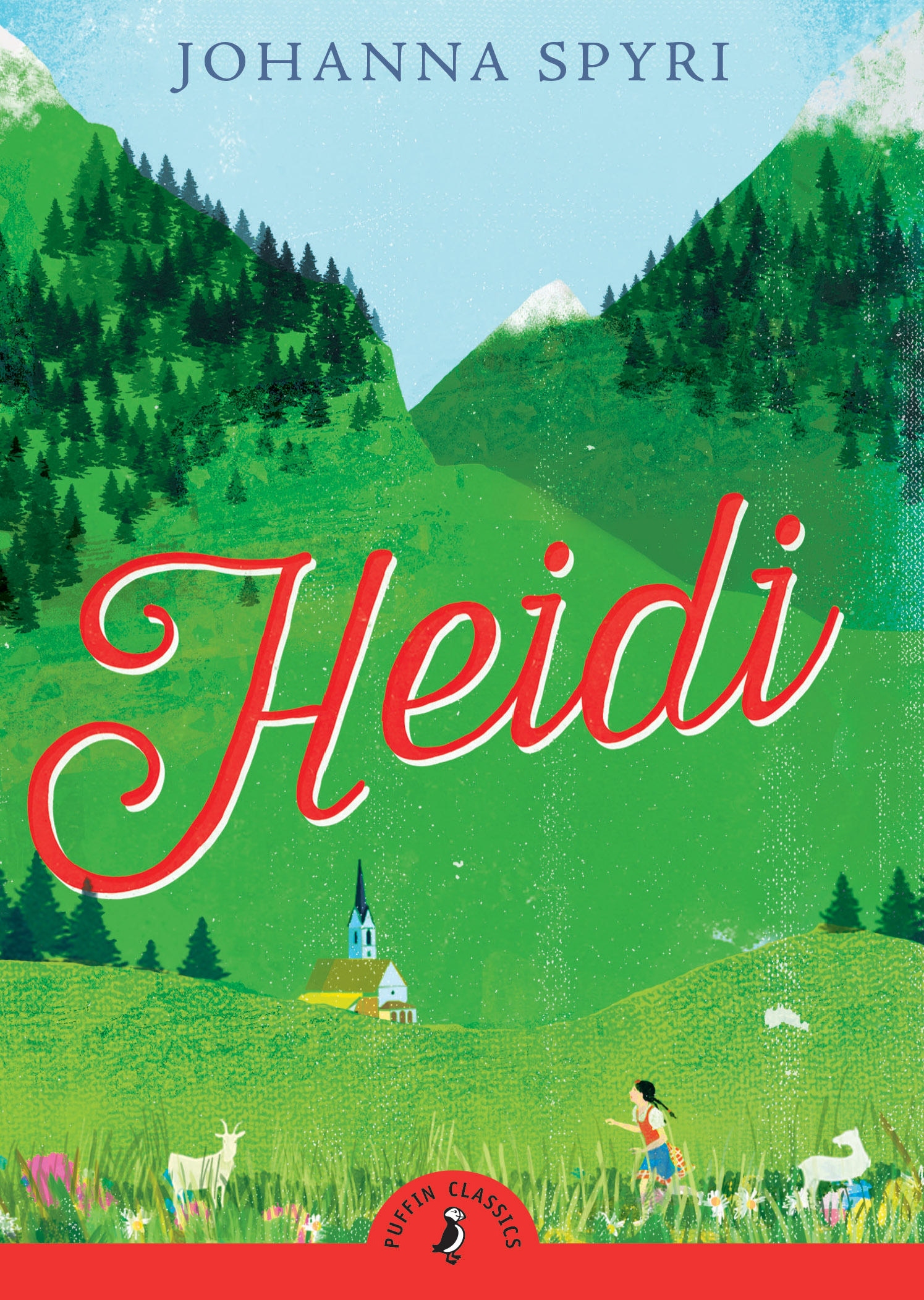
HeidiHeidi

What happens when a little orphan girl is forced to live with her cold and frightening grandfather? The heartwarming answer has engaged children for more than a century, both on the page and on the screen. Johanna Spyri’s beloved story offers youngsters an endearing and intelligent heroine, a cast of unique and memorable characters, and a fascinating portrait of a small Alpine village.

My Nanny gave me a copy of this book at Christmas, 1999. She wrote in the inside cover: ‘I hope you have as many hours of enjoyment from reading Heidi as I did when I was young. I read it at least ten times!’ I then proceeded to read it at least ten times! It is my ultimate favourite childhood book and I seem to love it more and more every time I read it. Even now, as an adult, I can appreciate how lovely it is. It transports me to a world of purple mountains peaks, jumping goats, a bed made of hay, and windows that pile up with snow during the winter. It is so precious. The scenery is vivid, the story full of truth, and Heidi herself is a feisty, strong and independent spirit who I remember completely idolizing as a little girl.

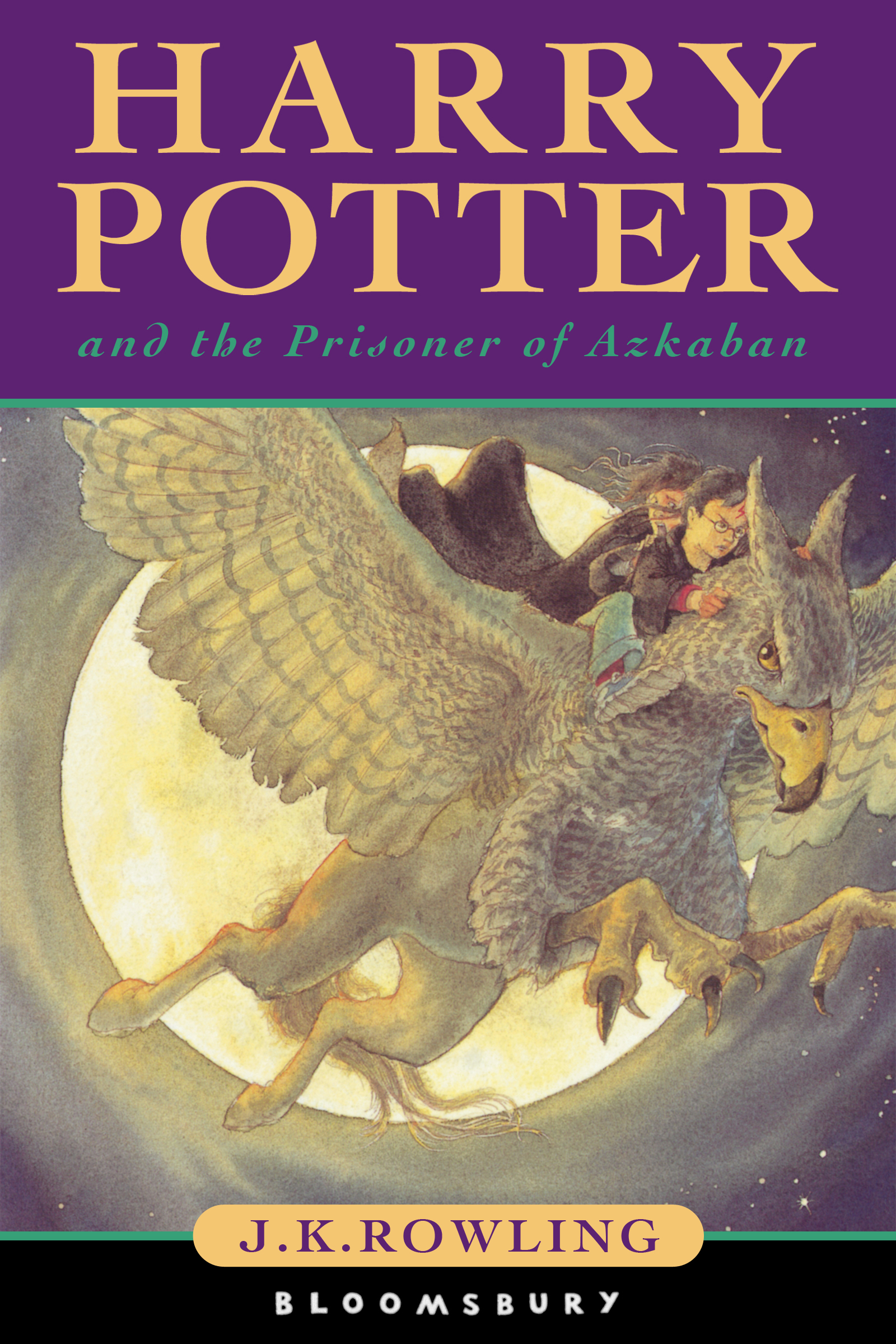
Prisoner of AzkabanHarry Potter and the Prisoner of Azkaban

Harry Potter, along with his best friends, Ron and Hermione, is about to start his third year at Hogwarts School of Witchcraft and Wizardry. Harry can’t wait to get back to school after the summer holidays. (Who wouldn’t if they lived with the horrible Dursleys?) But when Harry gets to Hogwarts, the atmosphere is tense. There’s an escaped mass murderer on the loose, and the sinister prison guards of Azkaban have been called in to guard the school…

This is an obvious one. I read Harry Potter from the age of seven, all through my childhood years, and now, as an adult, I continue to read it just as much. I still find new things in it that I missed the first ten times round! Prisoner of Azkaban has always, always been my favourite Potter. In 2001, Goblet of Fire had just been released the previous year, but I still reread this particular book like it was about to disappear. I actually visibly remember reading it whilst walking, maybe through a park or down the street, and my mum telling me off because it was a hazard! I think that tells you how much I adored it. I can quote whole passages off by heart. It was, and remains to be, my favourite out of the whole series, although even now, I couldn’t really tell you why.

As J.K. Rowling said, ‘I do believe something very magical can happen when you read a good book.’

Follow my blog with Bloglovin

Book Review – The Casual Vacancy

casual

The Casual Vacancy by J.K. Rowling
Published: on September 27th 2012 by Little, Brown and Company
Genres: Mystery, Contemporary, Adult Fiction
Pages: 503
Source: Goodreads

blue5 (2)

A BIG NOVEL ABOUT A SMALL TOWN …

When Barry Fairbrother dies in his early forties, the town of Pagford is left in shock.
Pagford is, seemingly, an English idyll, with a cobbled market square and an ancient abbey, but what lies behind the pretty façade is a town at war.
Rich at war with poor, teenagers at war with their parents, wives at war with their husbands, teachers at war with their pupils … Pagford is not what it first seems.
And the empty seat left by Barry on the parish council soon becomes the catalyst for the biggest war the town has yet seen. Who will triumph in an election fraught with passion, duplicity and unexpected revelations?

I am a ridiculously obsessive Harry Potter fan. I have been since I was seven years old, and I’m now twenty-two. So, I am not ashamed to admit that the only reason I purchased this book (on release date) was because it was written by my literary idol J.K. Rowling. How can anything written by a storyteller such as her be disappointing?

However, on my first attempt at reading it, disappointed was what I was. I’m not sure I even made it past the first ten pages. It was a whole two years later that I finally picked the dusty copy off my bookshelf and decided, determinedly, that I was going to read the whole thing, regardless of how disappointing it was. It is an adult novel, after all. Undoubtedly, it is going to be entirely different to the Harry Potter series.

The blurb on the inside cover of the hardback copy I possess, synopsises the novel as ‘a big novel about a small town.’ Barry Fairbrother holds a seat on the Parish Council of the small West Country village of Pagford. However, when he dies, unexpectedly and suddenly, in the car park of his local golf club, the town of Pagford is left in shock and disarray. Barry’s casual vacancy from the Parish Council brings on an election for someone to fill his seat.

On first glance, and even the first one hundred pages, it really does seem to be a dull and mundane book about a small town full of dull and mundane people. The deeper you get into the novel, however, and the deeper into the protagonists lives the author takes you, you realise and remember that yes, J.K. Rowling is indeed the best storyteller our world has ever known.

The novel is executed so understatedly, and so cleverly. It follows the daily goings on of the village residents of Pagford and of the nearby council estate The Fields. There is a sharp contrast, highlighted subtly, through morning chats in bed, telephone calls between mother and son, family arguments, and schoolgirl truanting, between the deeply troubled and addiction-riddled Fields and the snobby, gossipy and conservative Pagford. The blurb states that the book is about the election for the empty seat, but it is about so much more than that. There are times when I had tears rolling down my face, times when I laughed out loud, and times when I literally gasped in horror. JKR has proved herself to be an even more talented, honest and intuitive writer than I ever imagined her to be.

How is it that she understands the injustice and horrors of a family with a mother as a heroin addict? Her portrayal of that dark and misunderstood side of life is scarily realistic and shocking. Krystal Weedon lives a rough and raw life, at sixteen years old, in a dirty, unkempt house with her smack-addicted mother and her baby brother Robbie, whose mother keeps him in sodden nappies, even though he is three years old, and is hungry, moaning constantly, with a red-raw bottom. This brutally realistic portrayal literally made me cry. The horrendous gossiping and judgemental attitudes of the Daily Mail readers of nearby Pagford towards Krystal make you angry at the injustice of a world full of people who are incapable of empathy and are shallowly wrapped up in their own pristine lives.

This book struck a chord with me. It may have taken a while to truly understand and get into, but once you are in it, you feel as if you cannot get out. Rowling has achieved what I imagine she set out to do. Nothing much happens in this book. Everything happens behind closed doors, and every family is not as they seem to outsiders. Andrew Price’s family live in fear of their father, who everyone thinks is such a quiet, normal man, but beats them up just because he is in a bad mood and calls his son ‘Pizza-face’ due to his teenage acne. Sukhvinder Jawanda is a timid, self-harming and shy girl with dyslexia, and a mother who favourites her other two children over her, due to her inability to succeed on an academic basis. She self-harms and is cyber-bullied by Fats, the popular, lanky, and ‘cool’ boy at school, who plasters her Facebook page with definitions of lesbianism and hermaphroditism. Samantha Mollison is a middle-aged wife with two girls, and a husband she is sickened by, as he slowly turns into his arrogant and snobby father. She watches her daughter’s DVD of a teen boy band on repeat and closes her eyes when she has sex with her husband, imagining she is nineteen years old again, and that her husband is the twenty-one year old boy band member. Krystal Weedon is a foul-mouthed bully, but she is also just a sixteen year old girl, with the responsibility of her heroin-addicted mother and her underfed and neglected baby brother on her shoulders. Barry Fairbrother was the only man to ever understand her and give her a chance, and her position on his school rowing team was the making of her. When he dies, she is left with nothing, like before, and her status as the school bicycle is merely a reflection of her harrowed and troubled life and her lack of self-worth.

This book is full of nothing much really, but absolutely everything of massive, political and personal, importance. J.K. Rowling’s first adult novel is a huge political statement, and is honest, subtle, and true, true genius.