Book Review – Caraval by Stephanie Garber

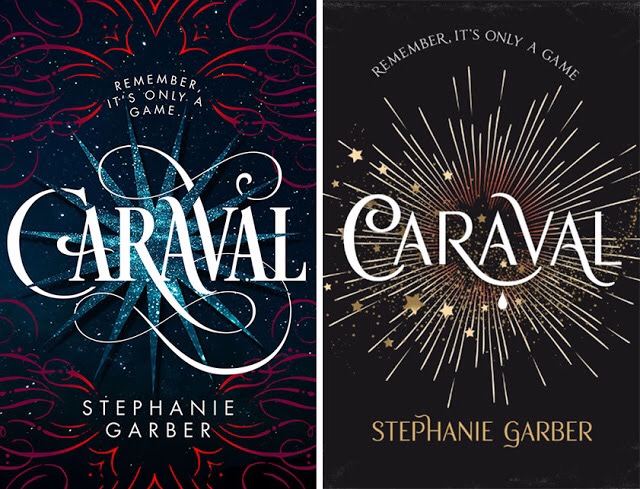
Whatever you’ve heard about Caraval, it doesn’t compare to the reality. It’s more than just a game or a performance. It’s the closest you’ll ever find to magic in this world . . .

Welcome, welcome to Caraval–Stephanie Garber’s sweeping tale of two sisters who escape their ruthless father when they enter the dangerous intrigue of a legendary game.

‘Every person has the power to change their fate if they are brave enough to fight for what they desire more than anything.’

Caraval is a truly enchanting, magical and obscure story written in the most lyrical, descriptive prose. 

Although it is written in third person, the novel is entirely from Scarlett’s point of view only, and you cleverly never know anything of the other characters intentions or feelings until it is too late.

The use of description and imagery that related to colour and smells and sounds was stunningly crafted, with the novel an abundance of tangible sentences like: ‘Scarlett could still smell her father’s perfume. It smelled like the color of his gloves; anise and lavender and something akin to rotted plums.’

Caraval is, first and foremost, a game, and this is crafted not just into the story, but in to the readers imagination, as you realise that not only is the boundary between reality and illusion blurred for Scarlett, but it is for you too. You cannot know, for sure, what is real or not real. You can only guess, and wonder, and read on, as Scarlett is sucked further and further into the travelling performance of Caraval, her trust and awareness of real life facing hurdles at every turn of the page.

It is interesting that the author chose to write the story from the point of view of a character who, for most of her life, had been scared to take risks and always played it safe. However, once her sister, Tella, is suspected to be in danger, you witness Scarlett adapt into a confident, risk-taking person who will do absolutely anything to save her sister. Scarlett is an excellent, realistic protagonist and you really feel yourself going through every heartbreak and shock and knock back alongside her. She is cautious, but brave and clear headed and her strongest trait is how deeply and unashamedly she loves her sister.

‘She imagined loving him would feel like falling in love with darkness, frightening and consuming yet utterly beautiful when the stars came out.’

The romance in the book was also very cleverly planned out and really played on the idea of nothing quite being what it seems. The chemistry and sexual tension between Scarlett and Tristan was very slow-burning, in all the right ways. I loved that nothing was instant: they didn’t just fall head over heels in love. There was angst and confusion and perfect tension that matched the mystery and evocativeness of the story. In Caraval, you shouldn’t trust a soul, least of all your love interest.

If you loved The Night Circus, you will adore this. Be prepared to be enchanted; to be swept off your feet into a riddle of choices and consequences, where nothing is quite as it seems… This story will play with your mind and your heart, with twists and turns and a spellbinding cast of players to deceive you.
Vintage Charm… The Miniaturist, The Confectioner’s Tale and The Misinterpretation of Tara Jupp

I don’t believe there is any greater joy in the world than reading a book that makes you feel like you have stepped back in time. I love being swept up into the pages of a book that spills with authentic and imaginative vintage charm. The following books all depict different time periods, but they will always be my must-read texts when I want to escape to a world now gone by.

the misinterpretation

The sort-of-sequel to The Lost Art of Keeping Secrets (a book pushed upon me perhaps ten years ago by my mum, urging me to read it), The Misinterpretation of Tara Jupp is a warm, nostalgic period novel set in the 1960’s. I don’t remember much of The Lost Art, except for the fact that I enjoyed it in the way that you enjoy a hot cup of tea and a couple of digestive biscuits. It warmed you from the inside, and you felt as though you were experiencing the events first hand, wishing desperately that you lived in that time period and were friends with these fantastic characters. In the Misinterpretation of Tara Jupp, Rice excels in her natural ability to set a scene both magically and realistically. The story starts in the rural West Country and follows Tara as she begins a singing career, moving to London, falling in love with a photographer, being shown off at Chelsea parties, even dancing on tables at the Marquee Club on the night of the Stones’ debut… Rice perfectly captures that feeling of being seventeen and having the whole world on your doorstep. She has a real gift for evoking a nostalgia-tinged rural childhood, the quaintness of the first and last county in England in the fifties, and the excitement and pure rock-n-roll lifestyle of London in the swinging sixties.

the-confectioners-tale-front-only.jpg

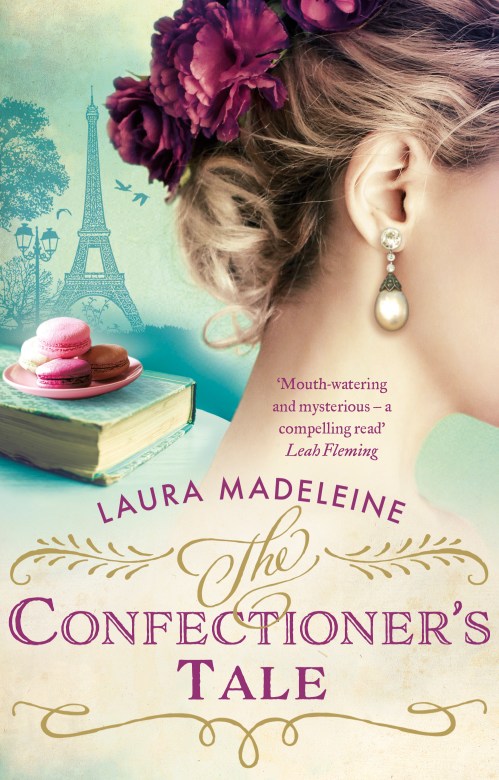
This book is so spectacularly vivid and deliciously detailed. Romance laces every word in a way that makes your heart skip a beat, and the imagery just makes you want to run straight off to Paris, visit a Patisserie and eat every single beautiful creation described. The Confectioner’s Tale tells a love story of two kinds. Set at the famous Patisserie Clermont in Paris, 1909, but told eighty years later through the eyes of Padra Stevenson, researching a photograph she found of her grandfather, the words ‘Forgive me’ written on the back. Her discovery leads her to reveal a mysterious, bittersweet and evocative story about two star-crossed lovers. The writing is what makes this book so infinitely special. It is mouth-watering, literally. The romance of the Parisian setting makes your heart burst.

The Miniaturist

The Miniaturist is set in seventeenth century Amsterdam, and tells the story of eighteen year old Nella Oortman who, after an arranged marriage to an illustrious and mysterious merchant trader, comes to the bustling city to begin a new life. Her loneliness and desolation is what struck me hardest, as she is left in the home with her husband’s cold and enigmatic sister. Her life changes when her husband arrives home with a gift – a beautiful cabinet dolls house. She is offended, seeing it as a toy for a child, but resentfully orders custom-made pieces to fill it. Amongst the objects that arrive from the elusive Miniaturist are items such as a tiny scrap of marzipan that makes people sick to the soul, and the miniature betrothal cup that was missing from her wedding. More things begin to arrive for the cabinet house, eerily life-like, and ominously attuned to the things that happen under her roof. This story is all at once horrible, and lonely, but beautiful too. Perfectly polished and mysteriously compelling, The Miniaturist is definitely a tale that takes you out of your own era and right into the heart of a city of hidden opulence and devastating secrets…

Book Review – The Hourglass Factory

the-hourglass-factory-9781471139307_hrThe Hourglass Factory by Lucy Ribchester
Published: January 15th 2015 by Simon & Schuster Ltd
Genres: Historical Fiction, Mystery, Feminism
Pages: 504
Source: Goodreads

four stars

The year is 1912 and London is in turmoil…

The suffragette movement is reaching fever pitch but for broke Fleet Street tomboy Frankie George, just getting by in the cut-throat world of newspapers is hard enough. Sent to interview trapeze artist Ebony Diamond, Frankie finds herself fascinated by the tightly laced acrobat and follows her across London to a Mayfair corset shop that hides more than one dark secret.

Then Ebony Diamond mysteriously disappears in the middle of a performance, and Frankie is drawn into a world of tricks, society columnists, corset fetishists, suffragettes and circus freaks. How did Ebony vanish, who was she afraid of, and what goes on behind the doors of the mysterious Hourglass Factory?

From the newsrooms of Fleet Street to the drawing rooms of high society, the missing Ebony Diamond leads Frankie to the trail of a murderous villain with a plot more deadly than anyone could have imagined..

The Hourglass Factory is set in my favourite historical era and I am just slightly obsessed with the Suffragettes. There is a lot of hype surrounding this period in history at the moment, which I imagine is all due to the release of the movie Suffragette, which will be in cinemas this coming October. This is the only reason that I picked up the book to begin with, along with the stunning front cover, which was hard to miss! I read it in two days, and it is definitely one of the better books I have read this year.

You spend the majority of the story travelling around 1912’s London with Frankie, the strong female protagonist, on foot, and this creates plenty of opportunities to visualise the society of the time and how it would have been. Ribchester is successful in creating very realistic imagery that truly leaps out the page, and the reader can almost witness every sight, smell and noise that is presented to Frankie in her travels and tribulations. The period clothing, Frankie’s trouser suit and cigarettes, along with Ebony’s corsets really add an intricate detail to the historical aspect of the story. It made me want to jump into the pages; I love this particular era so much!

I thought that a third person narrative throughout the novel was perfect, and switching from Frankie to DI Primrose kept me engaged and eager to turn the pages, offering me two points of view on the suffragettes and the crimes they were involved in. At times, I was so hooked that I couldn’t put it down, literally! I kept myself up until ridiculous o’clock in the morning to find out how it was all going to pan out.

Frankie is impulsive, impetuous and stubborn. When she’s knocked down she’s not deterred but keeps on fighting. She’s sharp, clever, observatory, smokes cigarettes and wears trousers. But she is also a substantially realistic character as she has unlikeable characteristics and you do not always agree with her decisions. I think Milly, the snake dancer at Jojo’s Bar who develops into a pretty central figure, was definitely my favourite character, and I would have loved to have found out even more about her. I would certainly read a sequel if it was based on her life!

It was the mysterious aspect of the plot that kept me turning the pages. Every step and character was filled with intrigue, from our first meeting with Milly, to Olivier Smythe, the Parisian Corsetiere, to Ebony’s disappearance and beyond. Whilst reading, you get the feeling that the only character you truly know is Frankie. The imagery during the pivotal scene was excellent. It was full of action and excitement, and was perfectly fast-paced. I appreciated the switch between DI Primrose and Frankie’s journeys, and it was interesting to see how the Police apparently reacted to the Suffragettes. I also loved the insight into prison life, with the force-feeding of the male suffragette. Ending the story on the Derby Day that Emily Davison was killed was a perfect way to finish, although it threw me a bit when it was suggested that the three of them hadn’t all kept in touch.

My only problem was that it was, more often than not, historically inaccurate. This was made up for by the interesting storyline, and Ribchester acknowledges her own inaccuracy at the start of the book. However, I definitely feel that it would have been better if she had undertaken more thorough research to make it historically factual. I also found the journalist Frankie slightly too irritating for a protagonist. As much as I loved the story, I didn’t particularly love her.

Overall, the story was richly imagined but wasn’t too heavy, and it remained light-hearted and easy to read although it often dealt with more serious issues. The Hourglass Factory was an exciting, fast-paced, and intriguing read that kept you guessing until the last page. Considering it was a debut novel, it was absolutely fantastic, and I eagerly look forward to what Lucy Ribchester will be writing next.

Follow my blog with Bloglovin

Book Review – The Casual Vacancy

casual

The Casual Vacancy by J.K. Rowling
Published: on September 27th 2012 by Little, Brown and Company
Genres: Mystery, Contemporary, Adult Fiction
Pages: 503
Source: Goodreads

blue5 (2)

A BIG NOVEL ABOUT A SMALL TOWN …

When Barry Fairbrother dies in his early forties, the town of Pagford is left in shock.
Pagford is, seemingly, an English idyll, with a cobbled market square and an ancient abbey, but what lies behind the pretty façade is a town at war.
Rich at war with poor, teenagers at war with their parents, wives at war with their husbands, teachers at war with their pupils … Pagford is not what it first seems.
And the empty seat left by Barry on the parish council soon becomes the catalyst for the biggest war the town has yet seen. Who will triumph in an election fraught with passion, duplicity and unexpected revelations?

I am a ridiculously obsessive Harry Potter fan. I have been since I was seven years old, and I’m now twenty-two. So, I am not ashamed to admit that the only reason I purchased this book (on release date) was because it was written by my literary idol J.K. Rowling. How can anything written by a storyteller such as her be disappointing?

However, on my first attempt at reading it, disappointed was what I was. I’m not sure I even made it past the first ten pages. It was a whole two years later that I finally picked the dusty copy off my bookshelf and decided, determinedly, that I was going to read the whole thing, regardless of how disappointing it was. It is an adult novel, after all. Undoubtedly, it is going to be entirely different to the Harry Potter series.

The blurb on the inside cover of the hardback copy I possess, synopsises the novel as ‘a big novel about a small town.’ Barry Fairbrother holds a seat on the Parish Council of the small West Country village of Pagford. However, when he dies, unexpectedly and suddenly, in the car park of his local golf club, the town of Pagford is left in shock and disarray. Barry’s casual vacancy from the Parish Council brings on an election for someone to fill his seat.

On first glance, and even the first one hundred pages, it really does seem to be a dull and mundane book about a small town full of dull and mundane people. The deeper you get into the novel, however, and the deeper into the protagonists lives the author takes you, you realise and remember that yes, J.K. Rowling is indeed the best storyteller our world has ever known.

The novel is executed so understatedly, and so cleverly. It follows the daily goings on of the village residents of Pagford and of the nearby council estate The Fields. There is a sharp contrast, highlighted subtly, through morning chats in bed, telephone calls between mother and son, family arguments, and schoolgirl truanting, between the deeply troubled and addiction-riddled Fields and the snobby, gossipy and conservative Pagford. The blurb states that the book is about the election for the empty seat, but it is about so much more than that. There are times when I had tears rolling down my face, times when I laughed out loud, and times when I literally gasped in horror. JKR has proved herself to be an even more talented, honest and intuitive writer than I ever imagined her to be.

How is it that she understands the injustice and horrors of a family with a mother as a heroin addict? Her portrayal of that dark and misunderstood side of life is scarily realistic and shocking. Krystal Weedon lives a rough and raw life, at sixteen years old, in a dirty, unkempt house with her smack-addicted mother and her baby brother Robbie, whose mother keeps him in sodden nappies, even though he is three years old, and is hungry, moaning constantly, with a red-raw bottom. This brutally realistic portrayal literally made me cry. The horrendous gossiping and judgemental attitudes of the Daily Mail readers of nearby Pagford towards Krystal make you angry at the injustice of a world full of people who are incapable of empathy and are shallowly wrapped up in their own pristine lives.

This book struck a chord with me. It may have taken a while to truly understand and get into, but once you are in it, you feel as if you cannot get out. Rowling has achieved what I imagine she set out to do. Nothing much happens in this book. Everything happens behind closed doors, and every family is not as they seem to outsiders. Andrew Price’s family live in fear of their father, who everyone thinks is such a quiet, normal man, but beats them up just because he is in a bad mood and calls his son ‘Pizza-face’ due to his teenage acne. Sukhvinder Jawanda is a timid, self-harming and shy girl with dyslexia, and a mother who favourites her other two children over her, due to her inability to succeed on an academic basis. She self-harms and is cyber-bullied by Fats, the popular, lanky, and ‘cool’ boy at school, who plasters her Facebook page with definitions of lesbianism and hermaphroditism. Samantha Mollison is a middle-aged wife with two girls, and a husband she is sickened by, as he slowly turns into his arrogant and snobby father. She watches her daughter’s DVD of a teen boy band on repeat and closes her eyes when she has sex with her husband, imagining she is nineteen years old again, and that her husband is the twenty-one year old boy band member. Krystal Weedon is a foul-mouthed bully, but she is also just a sixteen year old girl, with the responsibility of her heroin-addicted mother and her underfed and neglected baby brother on her shoulders. Barry Fairbrother was the only man to ever understand her and give her a chance, and her position on his school rowing team was the making of her. When he dies, she is left with nothing, like before, and her status as the school bicycle is merely a reflection of her harrowed and troubled life and her lack of self-worth.

This book is full of nothing much really, but absolutely everything of massive, political and personal, importance. J.K. Rowling’s first adult novel is a huge political statement, and is honest, subtle, and true, true genius.