All Souls Trilogy by Deborah Harkness: A Review

Processed with VSCO with s2 presetSeries: All Souls Trilogy
Publication Date: 2011/2012/2014
Genres: Fantasy
blue5 (2)

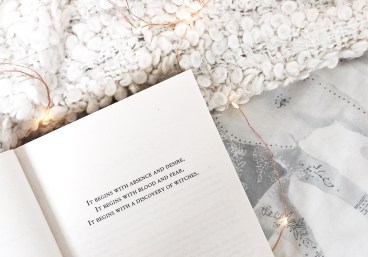
“It begins with absence and desire.

It begins with blood and fear.

It begins with a discovery of witches.”

I have just finished reading this trilogy for the second time, and surprisingly, I gleaned a lot more from it than I did the first time. I first listened to the trilogy as an audiobook, when I used to commute a long distance to work. It got me through my journeys for a couple of weeks and I enjoyed it immensely, but I do think I miss a lot from a story when I’m not able to read the words in front of me. I gain an additional level of understanding and joy from sentence structure and vocabulary – call me a nerd, I am – in a novel. Beautifully written sentences breathe life into a book.

And there is a lot of detail in these books. From spell work, to the contents of grimoires, to science and alchemy and data analysis of blood cells, it’s a massive trek through a detailed and richly tapestried world, and a insight into how biology and genealogy can change the course of your life. It is like no paranormal or fantasy book I’ve ever read. Although the world and its contents are wide, Harkness takes you through it all, and its history, in a seamless thread of intrigue, mystery, magic and desire.

Diana has distanced herself from her magical heritage, and as such, is clueless to the goings on of the witches, vampires, and daemons, hiding in plain sight around her. Her lack of knowledge enables us, the readers, to learn everything about the world gradually and authentically. The story truly starts when Diana accidentally calls a magical book, Ashmole 782, from the Bodleian Library, for her academic research. Opening the book, she realises it is an enchanted palimpsest. This action kickstarts the driving motive of the entire trilogy – also known as the Book of Origins, Ashmole 782 is coveted by all creatures, and they are all desperate to get their hands on it.

Matthew, vampire love interest (for what would a supernatural story be without a forbidden love?), is drawn to Diana because of his need for the book. He has searched for it for centuries, but when he gets to know Diana, it is no longer just the book that keeps him from pursuing her. He is a mysterious, dark, and dangerous character, with a thousand-year history full of just as many secrets. But Harkness writes him beautifully – his sincere care and feelings towards Diana flow through the plot and undercut everything that happens. There are definite parallels to be drawn here between Matthew and Diana and Jamie and Claire from Outlander – they are both relationships that travel through generations – steadfast, heady, intense, and long-lasting.

Many readers relate these books to the Twilight saga, but this trilogy is nothing like it. This is a story of the supernatural, but it is tempered by real life choices, adult dilemmas and adult relationships, and the backstory and historical science itself is enough to set it apart from any teen-vamp-drama. Harkness has a beautiful way with words, and there is a seamless flow to the books that keep you captivated. Even the scientific descriptions (and there is more than you would expect from your average fantasy novel) kept me engaged – a sign of the authors talent and ability to weave great detail into the plot without it seeming forced. Harkness is clearly very knowledgeable and has done great research into the time periods and science in the books, and this shines through, the details adding depth and connection to the characters and the story, enriching the worldbuilding and building intrigue.

The author’s research is really put to the test in the second book, Shadow of Night, as Matthew and Diana time-walk to Elizabethan England in order to hide from the creatures pursuing Diana and Ashmole 782. From the moment they step into 1591 Oxford, the newly imagined world is vividly depicted. I felt as though I could smell the ‘waxen smell’ that reminded Diana of Summer, and the ‘tang of woodsmoke’. I could practically hear the ‘crackle of a fire’, and the smell of the ‘sprigs of rosemary and lavender strewn among the rushes laid down to keep dampness from being tromped through the house.’ Even the smell of the Elizabethan smock Diana first wears is described: ‘lavender and cedar’. When she walks through London for the first time, the sights and sounds assault her, and us, in turn; ‘Bread baking. Coal fires. Wood smoke. Fermentation. Freshly washed garbage, courtesy of yesterday’s rains. Wet wool.’ Harkness’s ability to move her setting from 21st Century Madison, USA to London in 1591 is unparalleled and the time travel is unquestioned. You have no problem believing everything that is written because the worldbuilding is so richly imagined.

The All Souls trilogy has spellbound me. I especially loved the fun inclusion of Fleetwood Mac as a soundtrack to a witch’s teenage years, and the vast amount of secondary characters that all somehow held their own space within the story. With a myriad of interesting characters, deeply researched history, minutely detailed settings and a love story filled with absence and desire, Harkness has created a thought-provoking and engrossing page-turner of a trilogy. All the strands weave together in the final book to culminate in an absorbing and magical romp through science, magic, family and history. It is a story about the threads of life that tie us all together, and the discrimination and bias that can try to tear us apart.
   Processed with VSCO with s2 preset

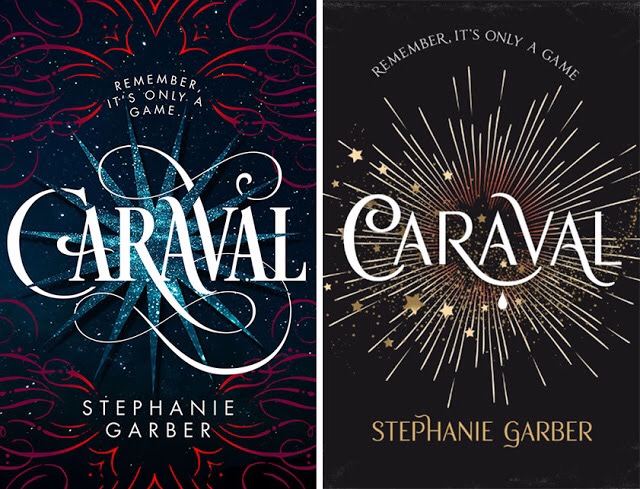
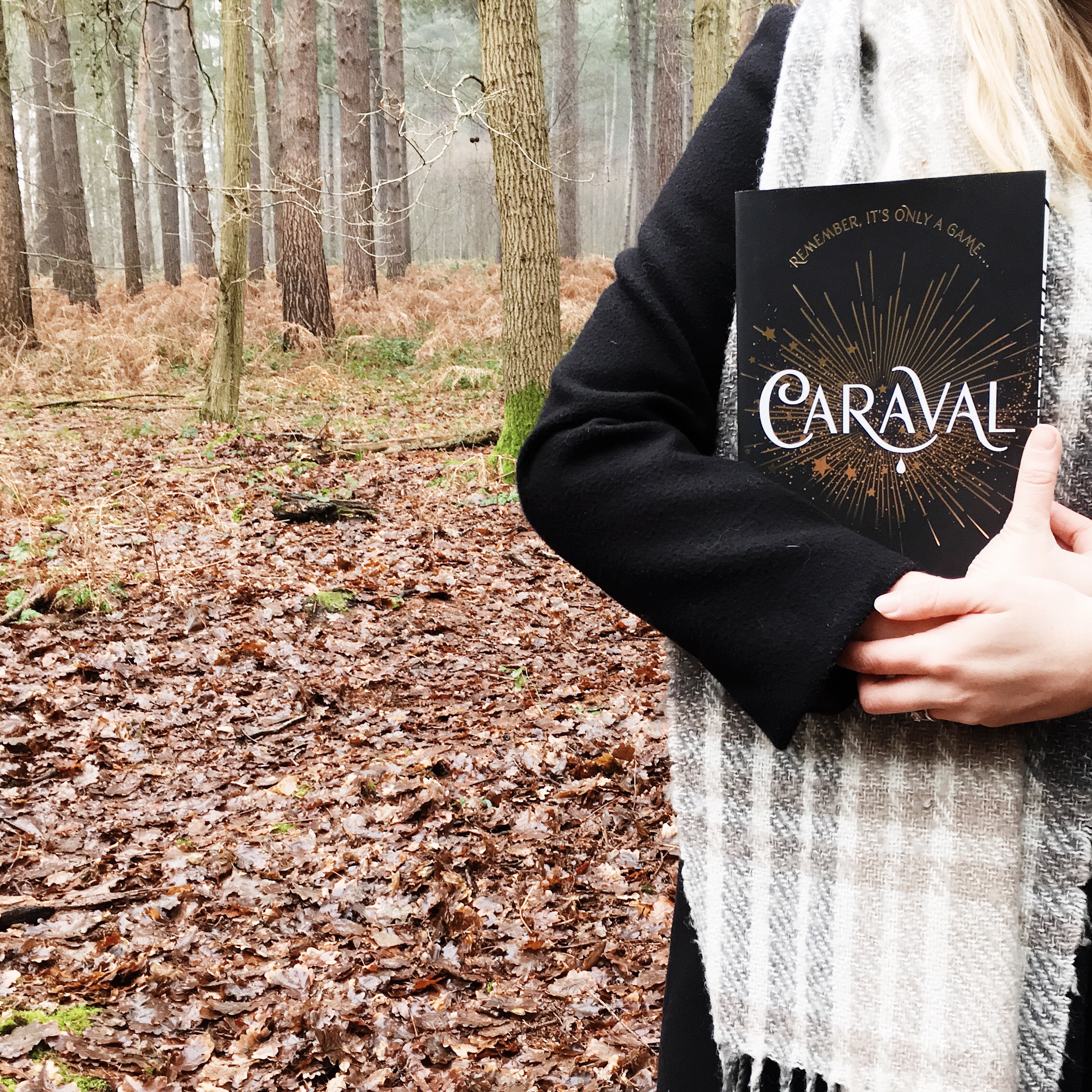
Book Review – Caraval by Stephanie Garber

Whatever you’ve heard about Caraval, it doesn’t compare to the reality. It’s more than just a game or a performance. It’s the closest you’ll ever find to magic in this world . . .

Welcome, welcome to Caraval–Stephanie Garber’s sweeping tale of two sisters who escape their ruthless father when they enter the dangerous intrigue of a legendary game.

‘Every person has the power to change their fate if they are brave enough to fight for what they desire more than anything.’

Caraval is a truly enchanting, magical and obscure story written in the most lyrical, descriptive prose. 

Although it is written in third person, the novel is entirely from Scarlett’s point of view only, and you cleverly never know anything of the other characters intentions or feelings until it is too late.

The use of description and imagery that related to colour and smells and sounds was stunningly crafted, with the novel an abundance of tangible sentences like: ‘Scarlett could still smell her father’s perfume. It smelled like the color of his gloves; anise and lavender and something akin to rotted plums.’

Caraval is, first and foremost, a game, and this is crafted not just into the story, but in to the readers imagination, as you realise that not only is the boundary between reality and illusion blurred for Scarlett, but it is for you too. You cannot know, for sure, what is real or not real. You can only guess, and wonder, and read on, as Scarlett is sucked further and further into the travelling performance of Caraval, her trust and awareness of real life facing hurdles at every turn of the page.

It is interesting that the author chose to write the story from the point of view of a character who, for most of her life, had been scared to take risks and always played it safe. However, once her sister, Tella, is suspected to be in danger, you witness Scarlett adapt into a confident, risk-taking person who will do absolutely anything to save her sister. Scarlett is an excellent, realistic protagonist and you really feel yourself going through every heartbreak and shock and knock back alongside her. She is cautious, but brave and clear headed and her strongest trait is how deeply and unashamedly she loves her sister.

‘She imagined loving him would feel like falling in love with darkness, frightening and consuming yet utterly beautiful when the stars came out.’

The romance in the book was also very cleverly planned out and really played on the idea of nothing quite being what it seems. The chemistry and sexual tension between Scarlett and Tristan was very slow-burning, in all the right ways. I loved that nothing was instant: they didn’t just fall head over heels in love. There was angst and confusion and perfect tension that matched the mystery and evocativeness of the story. In Caraval, you shouldn’t trust a soul, least of all your love interest.

If you loved The Night Circus, you will adore this. Be prepared to be enchanted; to be swept off your feet into a riddle of choices and consequences, where nothing is quite as it seems… This story will play with your mind and your heart, with twists and turns and a spellbinding cast of players to deceive you.

2017 So Far: Mini Reviews

This year, I have set myself a Goodreads challenge… to read 100 books! Realistically, this probably won’t be very difficult, considering on average, I read about 6 books a month, and there will of course be long, relaxing book-filled holidays and the inevitable addictive novel that keeps me up reading until the early hours of the morning… Yep. I think I will hit this target just fine.

I’ve been so busy recently, it’s been difficult to make time for my writing and this blog, alongside reading and working as well. However, in 2017, I would like that to change. My personal challenges, besides from reading 100 books, are to finish the first draft of my novel, visit India, write one blog post a week, and do more yoga. Very varied, but complimentary, I feel!

So, to start the year, here are some mini reviews of the books I have read so far. I am ashamed to say that these are all very similar… I seem to be stuck in a fantasy-induced obsession with paranormal romances and I can’t seem to get out…

The Waking Land

10janwaking-land-hb_royal_v13-666x1024Lady Elanna Valtai is fiercely devoted to the King who raised her like a daughter. But when he dies under mysterious circumstances, Elanna is accused of his murder and must flee for her life.
Returning to the homeland of magical legends she has forsaken, Elanna is forced to reckon with her despised, estranged father, branded a traitor long ago. Feeling a strange, deep connection to the natural world, she also must face the truth about the forces she has always denied or disdained as superstition powers that suddenly stir within her.
But an all-too-human threat is drawing near, determined to exact vengeance. Now Elanna has no choice but to lead a rebellion against the kingdom to which she once gave her allegiance. Trapped between divided loyalties, she must summon the courage to confront a destiny that could tear her apart.

I really enjoyed this book. It had me hooked, pretty much from the get go. I found the concept really interesting; I loved Uprooted, and this is compared to it, rightfully so. I thought the character development was realistic, and the description and imagery surrounding Elanna’s bond with the earth and the way it made her feel were vivid and clever. My only issue was that it lacked depth with regard to character relationships and the setting of scenes – I felt it often moved along to the next scene or interaction too quickly, and I found myself wondering if I’d accidentally skipped a few pages! And honestly, if I was Elanna, I would not be able to get over issues (such as my parents leaving me for fourteen years) so suddenly – as a protagonist, she didn’t really seem to connect to people on a deep level. But maybe that was the point – she connected more to the land. All in all, it was a really engrossing and beautiful read – I am a huge nature geek so the message of protecting and connecting with nature was something I really resonated with.

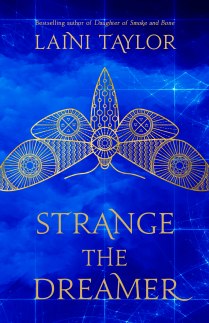
Strange the Dreamer

The dream chooses the dreamer, not the other way around— and Lazlo Strange, war new-release-date-2orphan and junior librarian, has always feared that his dream chose poorly. Since he was five years old he’s been obsessed with the mythic lost city of Weep, but it would take someone bolder than he to cross half the world in search of it. Then a stunning opportunity presents itself, in the person of a hero called the Godslayer and a band of legendary warriors, and he has to seize his chance to lose his dream forever.

What happened in Weep two hundred years ago to cut it off from the rest of the world? What exactly did the Godslayer slay that went by the name of god? And what is the mysterious problem he now seeks help in solving?
The answers await in Weep, but so do more mysteries—including the blue-skinned goddess who appears in Lazlo’s dreams. How did he dream her before he knew she existed? and if all the gods are dead, why does she seem so real?

This book was heartbreaking and mystical and catastrophic and shattering and beautiful. It was the perfect fantasy novel. Laini Taylor’s world building is so tangible – God, I wanted Weep to be real. I wanted to walk through the halls of Lazlo’s library, and ride on horseback alongside Eril-Fane, and meet a blue-skinned goddess like Sarai. Laini Taylor’s ability to create magical, fantastical storylines is just breath taking. The world, the language, the characters… everything about this tale captivated me. The ending has broken me, in all the right ways. I need more of God-slaying Eril-Fane and assassins who are acrobats and armies of moths and a strange dreamer who reaches for his impossible dream, and grabs it with both hands…

The Wrath and the Dawn

18798983.jpgOne Life to One Dawn.

In a land ruled by a murderous boy-king, each dawn brings heartache to a new family. Khalid, the eighteen-year-old Caliph of Khorasan, is a monster. Each night he takes a new bride only to have a silk cord wrapped around her throat come morning. When sixteen-year-old Shahrzad’s dearest friend falls victim to Khalid, Shahrzad vows vengeance and volunteers to be his next bride. Shahrzad is determined not only to stay alive, but to end the caliph’s reign of terror once and for all.

Now, surprise, surprise, Shahrzad doesn’t end the caliph’s reign of terror, she actually falls in love with him. But, regardless of all the mixed reviews and the slightly predictable beginning, I found this to be mesmerising, magical and so, so far from mundane. I also slightly (intensely) fell in love with Khalid… This has definitely replaced ACOMAF as my favourite YA book of the moment. It is beautiful and visual and captivating. Renee Ahdieh’s writing is poetic and flowing and you almost pinch yourself half way through because you can’t quite believe words can be written so beautifully. Be right back, going to drown in sandalwood and sunlight…

The Rose and the Dagger

23308084The darker the sky, the brighter the stars.
In a land on the brink of war, Shahrzad is forced from the arms of her beloved husband, the Caliph of Khorasan. She once thought Khalid a monster—a merciless killer of wives, responsible for immeasurable heartache and pain—but as she unraveled his secrets, she found instead an extraordinary man and a love she could not deny. Still, a curse threatens to keep Shazi and Khalid apart forever…

More Shahrzad and Khalid – yes please! So, I might have read this immediately after finishing The Wrath and the Dawn, and stayed up all night engrossed between it’s pages. Nevertheless, this is still a completely un-fangirling and unbiased review, I promise… I absolutely love Shahrzad as a protagonist – she is so strong, and independent and willful, and her faith in Khalid, her beautiful monster, is gut-wrenching and inspiring and so addictive. So many ‘strong’ female characters lack real gumption in YA novels, but in Shahrzad, Renee has created a truly powerful and believable and realistic girl who you find yourself rooting for no matter what. I was completely ensnared by this sexy, mystical, poetic story once more. I just want to read about Shahrzad’s adventures forever.

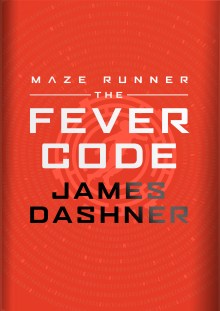
Maze Runner: The Fever Code – James Dashner

fever-code-hbOnce there was a world’s end.
The forests burned, the lakes and rivers dried up, and the oceans swelled.
Then came a plague, and fever spread across the globe. Families died, violence reigned, and man killed man.
Next came WICKED, who were looking for an answer. And then they found the perfect boy.
The boy’s name was Thomas, and Thomas built a maze.
Now there are secrets.
There are lies.
And there are loyalties history could never have foreseen.
This is the story of that boy, Thomas, and how he built a maze that only he could tear down.
All will be revealed.

So, this was a disappointment… Although not quite as boring and mundane and predictable as The Death Cure, it was still far, far from the genius of the original Maze Runner series. I wish James Dashner had just finished with the third book. Most of this storyline included things that we already know, and repeated everything in excruciating detail, lacking any original events. The first half of the book, absolutely nothing notable happened at all. I’m all for prequels if they contribute to the story, but this just felt like a full-length book for the sake of making as much money as possible. I don’t really have a cynical bone in my body, but this was just so poorly written and so uneventful. It lacked the fantastic shock-creating, unexpected, spontaneous writing of the first three books. This time around, the writing was wooden, and the most exciting thing that happens is the characters sneaking out of their rooms, or, shock-horror, Thomas finding out that the voice in his head is actually Theresa. Well, duh…

Frostblood

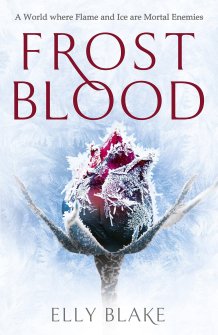
IMG_5775.JPGSeventeen-year-old Ruby is a Fireblood who has concealed her powers of heat and flame from the cruel Frostblood ruling class her entire life. But when her mother is killed trying to protect her, and rebel Frostbloods demand her help to overthrow their bloodthirsty king, she agrees to come out of hiding, desperate to have her revenge.

Despite her unpredictable abilities, Ruby trains with the rebels and the infuriating—yet irresistible—Arcus, who seems to think of her as nothing more than a weapon. But before they can take action, Ruby is captured and forced to compete in the king’s tournaments that pit Fireblood prisoners against Frostblood champions. Now she has only one chance to destroy the maniacal ruler who has taken everything from her—and from the icy young man she has come to love.

Like The Waking Land, the pacing of this novel was slightly on the speedy side, so I felt like it lacked any potential depth, and it tended to follow a very similar fantasy/YA trope, without reinventing anything for itself… but hey, that’s the zeitgeist I guess. Other than this, I enjoyed the book overall. I loved Ruby as a protagonist, she was sarky, and quick, and sharp, but kind-hearted too. The world-building was good, and the plot was fast and intense and dark and wicked – all good fantasy-eque things. Really, who can go wrong with fire and frost and fighting and blood and darkness?!

My 3 Favourite Books About Feminism

A Room of One's OwnA Room of One’s Own by Virginia Woolf

‘When, however, one reads of a witch being ducked, of a woman possessed by devils, of a wise woman selling herbs, or even of a very remarkable man who had a mother, then I think we are on the track of a lost novelist, a suppressed poet, of some mute and inglorious Jane Austen, some Emily Bronte who dashed her brains out on the moor or mopped and mowed about the highways crazed with the torture that her gift had put her to. Indeed, I would venture to guess that Anon, who wrote so many poems without signing them, was often a woman.’

Every single woman should read this. I originally read it whilst studying for my Literature degree, and as a writer myself, it struck a chord and her words have stayed with me, always. It is the essence of Virginia Woolf herself, and I turn to it when I feel rejected, downtrodden, or if I begin to doubt that my work is good enough. This is Woolf’s homage to the spirit of heroines in history who may have written poems, novels, plays, stories, songs and ballads but were forced to remain anonymous as it was unacceptable for women to write. What if Shakespeare had an equally talented sister, but she could never have been as successful as Shakespeare himself because she was a woman, and woman were not allowed to write? She ends the essay by urging women and men to pick up their pen and write, and to banish the limits of gender identity and write with an androgynous mind instead.

the equality illusionThe Equality Illusion by Kat Banyard

Women have made huge strides in equality over the last century. And feminism is now generally considered irrelevant, or old-fashioned, or even embarrassing. But what about the fact that today women working full-time in the UK are paid on average 17% less an hour than men? That one in three women worldwide has been beaten, coerced into sex, or otherwise abused because of her gender?

This book is a few years old now, but is still one of the best books I’ve read about feminism today and the history of. The statistics and research are solid, and it explores the position of women in the UK in areas such as education, work, domestic violence, body image, sex and abortion rights. It’s entirely relevant and written concisely, cleverly and clearly. It’s a really good read, especially if you’re new to identifying as a feminist. It’s a great starter book and Banyard explains everything from grassroots feminism to current day, and how basically every single area of women’s lives are still affected by casual, deep-seated sexism. It’s the perfect book to get you really thinking about modern day feminism, and makes you realise that sexism is not dead. Banyard describes this idea that sexism no longer exists in our society as the ‘Equality Illusion’. This book is an invaluable feminist manifesto for the women of today.

SIsterhood InterruptedSisterhood Interrupted by Deborah Siegel

Contrary to clichés about the end of feminism, Deborah Siegel argues that younger women are reliving the battles of its past, and reinventing it–with a vengeance. From feminist blogging to the popularity of the WNBA, girl culture is on the rise. A lively and compelling look back at the framing of one of the most contentious social movements of our time, Sisterhood, Interrupted exposes the key issues still at stake, outlining how a twenty-first century feminist can reconcile the personal with the political and combat long-standing inequalities that continue today.

I found this book hugely helpful in sorting out all the confused and conflicting stereotypes I may have absorbed about feminism. It’s a great summary of second and third wave feminism and it gave me the knowledge to confidently explain the history of feminism to those who question the word and what it means. It lays out the history of the movement, covering the important events of the 60’s and 70’s, and continuing to present day. The most important thing I learned from this book is that feminism has never been a single, united force as some believe. It explains the entirety of the issues that have existed within feminism itself – the internal conflict over which fights are worth fighting, the best methods to coerce change, and what feminism actually means. There is no one type of feminism, and it isn’t about one single point of view all women who claim the label ‘feminist’ share. This book really teaches you that there are many different kinds of feminism, and that it’s okay to find your own place within the movement.

When I Was Nine…

The year was 2001. I was nine years old, a very shy little girl, and a ridiculously big bookworm. These were just a few of my favourite books that I read and reread to my heart’s content.

Ally's WorldThe Past, The Present, and The Loud, Loud Girl

Meet the Love children: oh-so-perfect Linn, airy-fairy Rowan, animal-obsessed Tor – and Ally, trying to have a normal life somewhere in the middle of it all. Which isn’t easy when you live in a house that’s a cross between an animal hospital and something out of ‘Changing Rooms’. And then there’s school and the small matter of the forgotten history project and the obnoxious new girl that – oh joy! – Ally’s been nominated to look after. It’s going to be a fun couple of weeks…

This is the first in the wildly successful, utterly loveable “Ally’s World” series.

I remember reading the Ally’s World series when I was around nine years old and they were hilarious. A really quick, funny and easy read for young readers! I remember McCombie using a lot of colloquial language which only made it funnier and more realistic. I absolutely loved the whole series, and read it over and over again. It was so relatable and laugh out loud hilarious. Ally’s family are quirky, troubled and eccentric and just suck you in. I would definitely recommend it to any pre-teens that enjoy a good read. The protagonist Ally is an awkward teenager, trying to find where she fits in with her family and the world,and to deal with the ups and downs of growing up. I would love to read it again now to see whether it is as perfect as I remember!

Bad GirlsBad Girls

Shy, mild Mandy has been bullied at school for as long as she can remember. That’s why she is delighted when cheeky, daring, full-of-fun Tanya picks her as a friend.

Mum isn’t happy – she thinks Tanya’s a BAD GIRL and a bad influence on her daughter. But Mandy loves spending time with her brilliant new friend, and is sure Tanya can only get her out of trouble, not into it . . . or could she? 

 Now I still own my original copy of this book, and it is falling away from the spine it has been read so much. I remember literally just finishing it and starting over again from the beginning, straight away! It was my favourite Jacqueline Wilson book for many, many years. I remember identifying with Mandy hugely, as I was always the shy, timid and sensible one in every situation. I think there are lots of valuable lessons to be learnt from it with regards to growing up, finding yourself, and how to deal with bullies and the feeling of isolation that many young people can face.

Danny Champion of the WorldDanny Champion of the World

Danny’s life seems perfect: his home is a gypsy caravan, he’s the youngest car mechanic around, and his best friend is his dad, who never runs out of wonderful stories to tell. And when Danny discovers his father’s secret, he’s off on the adventure of a lifetime. Here’s Roald Dahl’s famous story about a 9-year-old boy, his dad, and a daring and hilarious pheasant-snatching expedition. Just as important, it’s the story of the love between a boy and his father who, in Danny’s own words, is “the most marvelous and exciting father a boy ever had.”

This was a family bedtime favourite! My mum used to read this to me and my brothers every single night before bed, and we even had it on a tape that we used to listen to as we were drifting off to sleep. Remembering the story gives me such fond memories. It has a humour and lightness of spirit to it, like Roald Dahl’s other books, but it is also more serious, and has a very nostalgic, homely feel. Danny’s father is a fantastic, fantastic character and when Danny calls him the best father in the world, you  agree with him. It is a very heartwarming story that I think any child would love, and it remains my favourite Roald Dahl book to this day.

HeidiHeidi

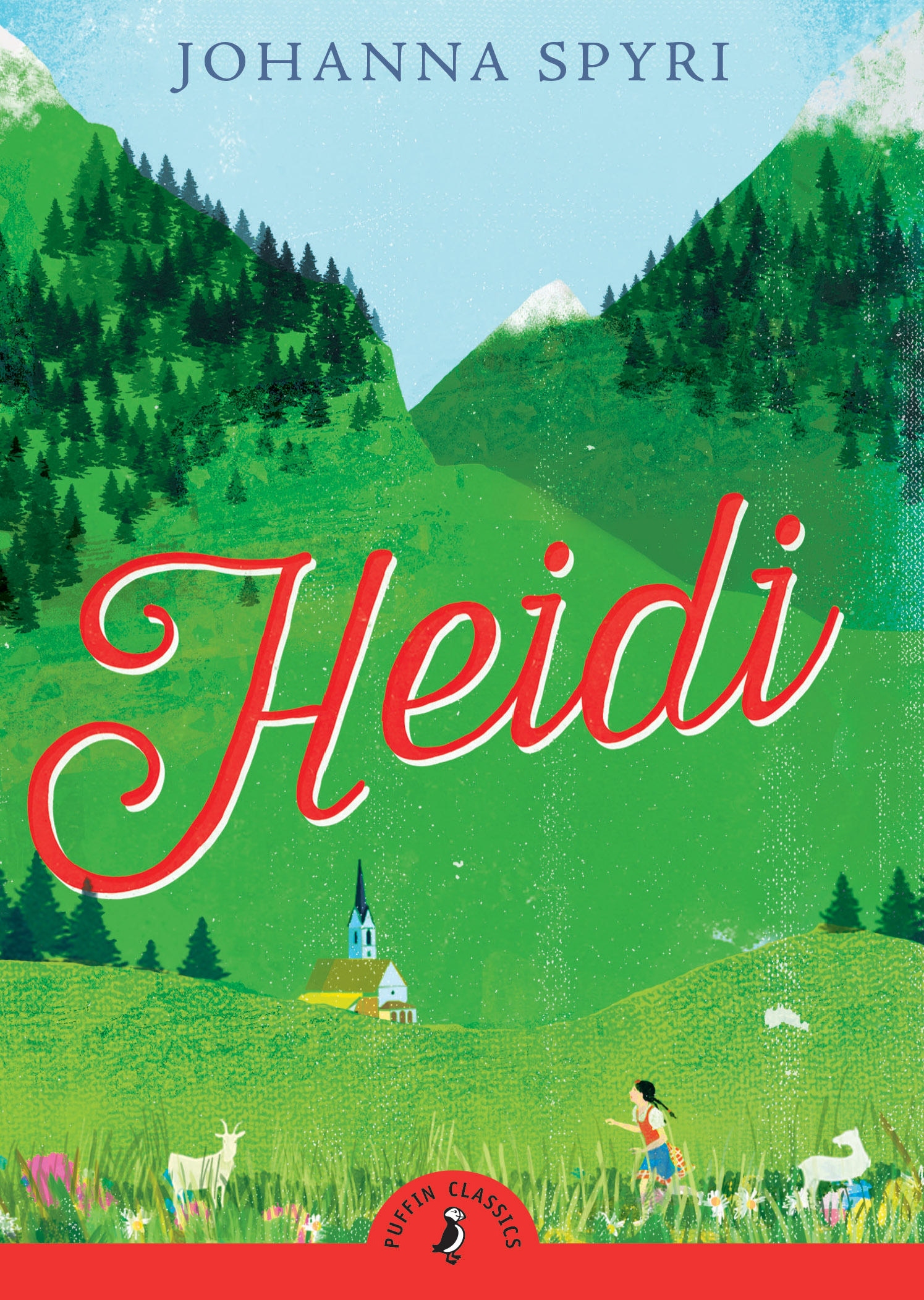
What happens when a little orphan girl is forced to live with her cold and frightening grandfather? The heartwarming answer has engaged children for more than a century, both on the page and on the screen. Johanna Spyri’s beloved story offers youngsters an endearing and intelligent heroine, a cast of unique and memorable characters, and a fascinating portrait of a small Alpine village.

My Nanny gave me a copy of this book at Christmas, 1999. She wrote in the inside cover: ‘I hope you have as many hours of enjoyment from reading Heidi as I did when I was young. I read it at least ten times!’ I then proceeded to read it at least ten times! It is my ultimate favourite childhood book and I seem to love it more and more every time I read it. Even now, as an adult, I can appreciate how lovely it is. It transports me to a world of purple mountains peaks, jumping goats, a bed made of hay, and windows that pile up with snow during the winter. It is so precious. The scenery is vivid, the story full of truth, and Heidi herself is a feisty, strong and independent spirit who I remember completely idolizing as a little girl.

Prisoner of AzkabanHarry Potter and the Prisoner of Azkaban

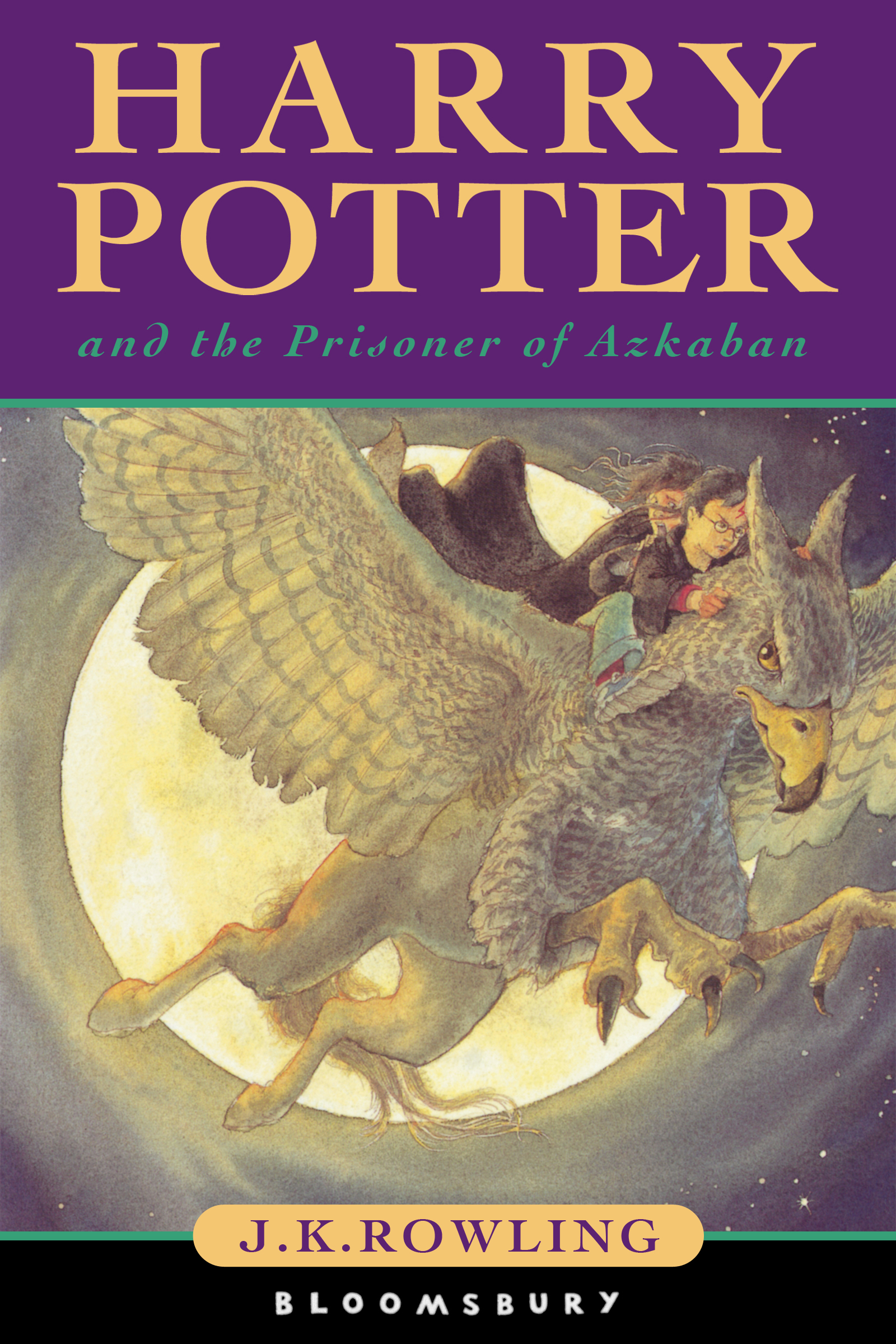
Harry Potter, along with his best friends, Ron and Hermione, is about to start his third year at Hogwarts School of Witchcraft and Wizardry. Harry can’t wait to get back to school after the summer holidays. (Who wouldn’t if they lived with the horrible Dursleys?) But when Harry gets to Hogwarts, the atmosphere is tense. There’s an escaped mass murderer on the loose, and the sinister prison guards of Azkaban have been called in to guard the school…

This is an obvious one. I read Harry Potter from the age of seven, all through my childhood years, and now, as an adult, I continue to read it just as much. I still find new things in it that I missed the first ten times round! Prisoner of Azkaban has always, always been my favourite Potter. In 2001, Goblet of Fire had just been released the previous year, but I still reread this particular book like it was about to disappear. I actually visibly remember reading it whilst walking, maybe through a park or down the street, and my mum telling me off because it was a hazard! I think that tells you how much I adored it. I can quote whole passages off by heart. It was, and remains to be, my favourite out of the whole series, although even now, I couldn’t really tell you why.

As J.K. Rowling said, ‘I do believe something very magical can happen when you read a good book.’

Follow my blog with Bloglovin