Meet the Bookstagrammer!

Capture

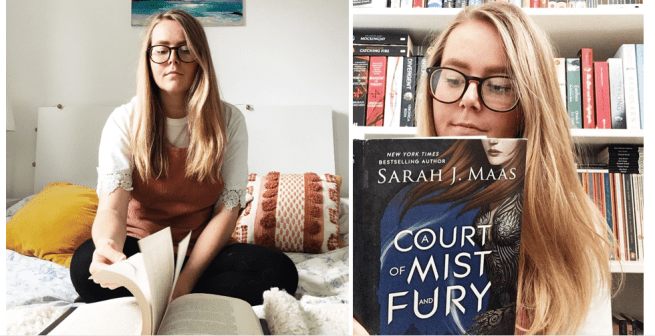
I recently decided that a pandemic is the perfect time to start blogging again. It’s been a couple of years since I last posted, so I thought I would reintroduce myself! My main platform is Instagram, so you can also find this post over there, on @fionareads.

So, hi! My name is Fiona, I’m 27 years old, and I live in the UK. There is nothing in the world I love more than getting lost in a good book, and then discussing it afterwards!

Here are a few facts about me:

📚 I work in children’s book publishing.

📚 I love dogs! I have a Springer Spaniel named Luna who is just as wise and loony as her namesake, Luna Lovegood.

📚 I’m currently writing an adult fantasy novel, but I’ve been at it for about three years, so who knows when it will be finished! I write every single day. It’s my way of winding down, of relaxing, and of letting the creative side of myself flow. I have dozens of notebooks full of unfinished novels. I am still waiting for an idea to truly stick and last all the way to a final draft.

📚 I lived in London for several years, but now I live in the Suffolk countryside. Me, my husband and my lovely dog Luna are always outdoors and we love it!

📚 My favourite authors are J.K. Rowling, Sarah J Maas and Charlotte Brontë

📚 I recently completed my Masters. I wrote my dissertation on Harry Potter. I also wrote my undergrad dissertation on Harry Potter, so we all saw that one coming.

📚 If I didn’t work in publishing, I’d love to work in academia. I love to study, and I hope that makes me cool in a Hermione kinda way!

📚 My favourite TV show at the moment is Brooklyn 99. It never fails to cheer me up on a gloomy day!

📚 I am obsessed with Harry Potter. I have been since I was seven years old. It is my one true love and I could not imagine my childhood, or my life, without Rowling’s words. They inspired my love of literature and pushed me to write my own stories.

📚 My favourite place in the world is the Scottish Highlands. In particular, Glen Coe and Glennfinnan. It is the one place that I truly feel at one with nature, and for me, there is nothing more centring or relaxing. Also, you feel as though you need only take a step backwards to find yourself in the world of Outlander or the grounds of Hogwarts!

Do we have anything in common? Tell me something about yourself in the comments!

Capture2


Someone once told me

Someone once told me

the moon is never wider

than your thumb

And it got me to thinking

of your thumbs and

how calloused and strong

the skin on your hands is

And how they wrap mine in

warmth and ownership

that I am grateful for

More than Aristotle was

grateful for physics

Someone once told me

that the stars tell stories

And I believe they do

So I gazed at the

blackening abyss

And saw a brightening,

a fiery milky way

Of memories

Of us

Someone once told me

that the world

is what you make it

And so I made it about us

About the way you love

me regardless of

flaws and anger

and sorrow

Someone once told me

you can read a person

through their eyes

And I realised

For the first time

That your eyes show me

a story you have written

in your mind of

hazel and green

that could rival Brontë

And a poem you wrote

that could vanquish Dante

About the fact that

we are one person

with more love

than any galaxy could hold

Someone once told me

the moon is never wider

than your thumb

And you’re somewhere

lost, away, too far

And I’m not sure

you can see me

So I think of you

there, wherever

there is and wonder

if we are the same

Or if we love and feel

and think and long

for one another

Differently but equally,

Strong and wholly

each other’s only

one

Outlander: Book One Review

Gabaldon_outlanderThe year is 1945. Claire Randall, a former combat nurse, is just back from the war and reunited with her husband on a second honeymoon when she walks through a standing stone in one of the ancient circles that dot the British Isles. Suddenly she is a Sassenach—an “outlander”—in a Scotland torn by war and raiding border clans in the year of Our Lord… 1743.

Hurled back in time by forces she cannot understand, Claire is catapulted into the intrigues of lairds and spies that may threaten her life, and shatter her heart. For here James Fraser, a gallant young Scots warrior, shows her a love so absolute that Claire becomes a woman torn between fidelity and desire—and between two vastly different men in two irreconcilable lives.

“Oh, aye, Sassenach. I am your master . . . and you’re mine. Seems I canna possess your soul without losing my own.”

Outlander is a beautifully complex and mesmerizing story with multi-layered characters, authentic settings and dramatic, unexpected and all-encompassing storylines. It’s the kind of book that you will live through alongside the main characters – you will feel Claire’s bewilderment and fear, her gutsy determination, her love and heartbreak and you will feel as though you are standing alongside her in every aspect of her life. The historical context is so accurate it is amazing!

For a while now, people kept recommending Outlander to me, but I avoided the books because, for one, the sheer size of the series daunted me, and two, I was put off by the time travel aspect (ironic, since I love Doctor Who!) But, I often find that time-travel literature can be cheesy and too unrealistic to be believable.

However, now I have finally read Outlander, I can confidently say that it is the most original historical romance I have ever, ever read. It was way more involved that the typical man meets woman trope, and it was so historically accurate and vivid I felt myself completely submerged in the world of the Scottish Highlands, 1743, for the whole two weeks I was reading it.

Claire is a World War II combat nurse who accidentally wanders through an ancient stone circle in Inverness whilst on a post-war honeymoon with her husband, Frank, in 1945. She suddenly finds herself in the 18th Century. Even in this, she is brilliant – sarky, intelligent, with a quick wit and a quick tongue to match. She’s compassionate, competent, a kick-ass nurse and an independent woman who doesn’t let the abrupt, seemingly-impossible change to her timeline phase her. She’s a refreshing change from the princess-type heroines of a lot of historical fiction.

Jamie Fraser, the Scottish Clansman who slowly becomes the love of her life, is at times sweet and heart-stoppingly romantic, and others an extremely dangerous and passionate warrior. He is one of the most charismatic and appealing male leads I’ve read in a long, long time. And every time he calls Claire a Sassenach… God. I go weak at the knees! Understandably, however, readers are completely divided over Jamie because, although he is gorgeous and lovable for the majority of the novel, there is one extremely disturbing scene that enrages any 21st-Century reader, including myself. As upsetting as the scene was (I won’t mention it due to spoilers, but it deals with domestic abuse) it was very accurate to the times and the way that a man would have treated his wife in that period. Although it doesn’t excuse it, I was able to forgive and get past it and still fall in love with Jamie, just as Claire does, as I could view it within its historical context. There are quite a few sexually abusive scenes in the novel, which, although they do not subtract from the overall enjoyment of the story, they are quite hard to get through.

Regardless of this, what is so brilliant about Gabaldon’s characters and the world she has created is that they are delightfully multi-dimensional, and extremely complex, just as real people and real life can be. Claire somehow finds the courage to made difficult choices in a period of history when choices were often non-existent for women. She is stubborn and determined almost to a fault, and she has a passion and unending support for Jamie that matches his own for her perfectly. Jamie, on the outside, is tough and warrior-like, while on the inside, he is kind and sensitive, with excellent intuition and a backstory full of pain and suffering. He is also intelligent, self-depreciating and almost poetic in the things he says to Claire.

“When I asked my da how ye knew which was the right woman, he told me when the time came, I’d have no doubt. And I didn’t. When I woke in the dark under that tree on the road to Leoch, with you sitting on my chest, cursing me for bleeding to death, I said to myself, ‘Jamie Fraser, for all ye canna see what she looks like, and for all she weighs as much as a good draft horse, this is the woman'”

Their romance is probably my favourite part of the novel – there is true honesty between them, which brings an openness and vulnerability to both of the characters which is such a beautiful addition to the story. I love the way that the author creates a strong friendship between them before they become lovers, and then lets this friendship continue to grow deeper even after they are married. The intimacy level of these two characters is perfectly depicted, and the best that I have read in a novel for a long time, and not just because of the sex.

Outlander was so meticulously researched and Gabaldon manages to weave all the historical accuracies into the plot without destroying the authenticity of the emotional journey. At its heart, Outlander is a historical novel that is packed full of details of 18th Century life in the Scottish Highlands, and as well as recounting events leading up to the Jacobite rising of 1745, the character’s lives are deeply delved in to and an extraordinary picture is painted that truly transports you to another time and place.

There is adventure, history, fantasy, romance, violence and drama. Outlander is a book that literally sucks you into its pages. It is a fully immersive experience that is so engrossing, you find it almost impossible to put it down.

Capture

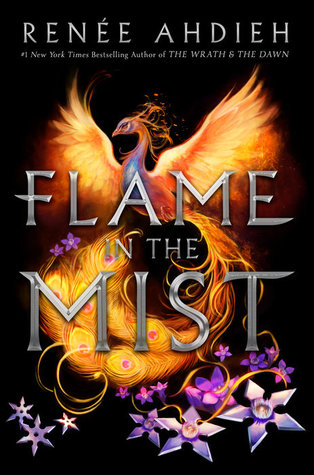
Book Review – The Flame in the Mist by Renee Ahdieh

Image result for flame in the mistThe only daughter of a prominent samurai, Mariko has always known she’d been raised for one purpose and one purpose only: to marry. Never mind her cunning, which rivals that of her twin brother, Kenshin, or her skills as an accomplished alchemist. Since Mariko was not born a boy, her fate was sealed the moment she drew her first breath.

So, at just seventeen years old, Mariko is sent to the imperial palace to meet her betrothed, a man she did not choose, for the very first time. But the journey is cut short when Mariko’s convoy is viciously attacked by the Black Clan, a dangerous group of bandits who’ve been hired to kill Mariko before she reaches the palace.

The lone survivor, Mariko narrowly escapes to the woods, where she plots her revenge. Dressed as a peasant boy, she sets out to infiltrate the Black Clan and hunt down those responsible for the target on her back. Once she’s within their ranks, though, Mariko finds for the first time she’s appreciated for her intellect and abilities. She even finds herself falling in love—a love that will force her to question everything she’s ever known about her family, her purpose, and her deepest desires.

“I’ve never been angry to have been born a woman. There have been times I’ve been angry at how the world treats us, but I see being a woman as a challenge I must fight. Like being born under a stormy sky. Some people are lucky enough to be born on a bright summer’s day. Maybe we were born under clouds. No wind. No rain. Just a mountain of clouds we must climb each morning so that we may see the sun.”

I knew I would love this book from the moment I first heard about it, and I was lucky enough, back in February, to get my hands on a proof copy. It was pitched as a mix between Mulan and 47 Ronin, with a bit of Robin Hood thrown in. However, this particular story takes place in feudal Japan and focuses on samurai warriors and the seven principles of Bushido or the Way of the Warrior. Now that it is out in hard copy (yay!) I have read it once more, and can finally put my thoughts into a coherent review…

Flame in the Mist is told through two alternating perspectives: our kickass, sassy main character Mariko and her twin brother Kenshin. The story begins as Hattori Mariko is on her way to meet her betrothed for the first time – the emperor’s son. Along the way, her and her entourage are forced to travel through the dark forest or risk being late to the palace. But, the dark forest is a dangerous, deadly place, frequented by the Black Clan. Mariko’s cart is consequently attacked during the middle of the night, and she barely escapes with her life after convincingly playing dead, whilst the murderers search the rubble. What then ensues is a battle of self-preservation and survival as Mariko must make her way through the woods nearly naked, alone, and a woman. She is stalked and attacked by a homeless vagabond and she has to fight for her life, culminating in her chopping off her hair (true Mulan style) and donning the disguise of a young man who has run away from home.

She then goes on to track down her attackers in the hope of discovering why her convoy was targeted. Things, however, do not go as planned, and she soon finds herself deep within the ranks of the Black Clan, a Robin Hood/Lost Boys-esque group of warrior rebels, and her supposed killers. She must keep her true identity hidden if she ever wants to survive whilst also gaining their trust and learning their ways. Meanwhile, Mariko’s brother and brutal samurai soldier, Kenshin, is out on a mission to prove that his sister is still alive, tracking her, and getting into all sorts of fights along the way, and find the criminals responsible for attacking her.

There were some brilliant, unexpected plot-twists and action scenes in this book. The plot is intricately woven with mystery and intrigue, from the world-building to the mystical, rain drenched woodland setting, you find yourself completely submerged amongst its many folds. Ahdieh’s writing style is just beautiful. The passages of description were lyrical, whimsical, and stunningly detailed. This is the first book I have ever read that is set in feudal Japan, so I can’t speak for how historically/regionally accurate it was, but it had me believing in every essence of the world from the very start. I could almost smell the scent of oak and cherry blossoms and rainwater that Mariko lived and smelt every single day. And just as we experienced in the Wrath and the Dawn duology, the author manages to successfully and authentically include Japanese terms that only added to the tangibility of the story. (There was also a glossary in the back for times of confusion, but I soon found myself understanding the terms in context to the events.)

Mariko’s character development is probably my favourite aspect of the novel. She is often called ‘odd’ or ‘curious’, both of which she originally has an adverse and negative reaction to. She later comes to realise that these labels only make her who she is. She is sarcastic, witty, completely bad-ass and brave and she totally, wholly owns herself and her idiosyncrasies. Her confidence grows within the Black Clan, far more than it ever would have done if she had remained simply a daughter and wife, as society had mapped her future to be. She is a creator, an inventor, and a warrior, and she develops this within the Black Clan, making weapons and learning to fight. Even as she pretends to be a boy, she still remains completely feminine in the sense that she is always struggling with an internal crisis of identity – pondering the strength of being a woman and a woman’s place in the male-dominated world of feudal Japan.

The romance in the novel is also excellent. It is slow-burning, as mysterious as the world in which it is set, and you never quite truly know what is going to happen next or what the couple are really thinking. Can they be trusted? Does he really like her? Is this a game or is it real? You are never really sure, as is often the case with the ‘enemies falling in love’ zeitgeist. This varied plenty from the common star-crossed lovers’ trope though, and it is beautifully, realistically and slowly done. As well as the romance, you find yourself falling in love with the Black Clan – originally meant to be enemies – they are endearing and comical and they stole my heart.

As expected, in this book Renee is responsible for some seriously incredible world building, tangible characters, another perfectly independent kick ass heroine, and a plot so intricate you find yourself completely submerged amongst its many folds.
There is fighting and flirting, a wonderfully evasive and extremely steamy romance, a heart-stopping twist, and cleverly spun lies.

In summary, I am totally lost to this beautifully brutal world of feudal Japan. Of sharp, smart Mariko and her gutsy determination, of the shadows of the forest and the mystery of Okami and the Black Clan… I need a sequel now!

Samurais, shadows, secrets and deadly revenge… what’s not to love?!

2017 So Far: Mini Reviews

This year, I have set myself a Goodreads challenge… to read 100 books! Realistically, this probably won’t be very difficult, considering on average, I read about 6 books a month, and there will of course be long, relaxing book-filled holidays and the inevitable addictive novel that keeps me up reading until the early hours of the morning… Yep. I think I will hit this target just fine.

I’ve been so busy recently, it’s been difficult to make time for my writing and this blog, alongside reading and working as well. However, in 2017, I would like that to change. My personal challenges, besides from reading 100 books, are to finish the first draft of my novel, visit India, write one blog post a week, and do more yoga. Very varied, but complimentary, I feel!

So, to start the year, here are some mini reviews of the books I have read so far. I am ashamed to say that these are all very similar… I seem to be stuck in a fantasy-induced obsession with paranormal romances and I can’t seem to get out…

The Waking Land

10janwaking-land-hb_royal_v13-666x1024Lady Elanna Valtai is fiercely devoted to the King who raised her like a daughter. But when he dies under mysterious circumstances, Elanna is accused of his murder and must flee for her life.
Returning to the homeland of magical legends she has forsaken, Elanna is forced to reckon with her despised, estranged father, branded a traitor long ago. Feeling a strange, deep connection to the natural world, she also must face the truth about the forces she has always denied or disdained as superstition powers that suddenly stir within her.
But an all-too-human threat is drawing near, determined to exact vengeance. Now Elanna has no choice but to lead a rebellion against the kingdom to which she once gave her allegiance. Trapped between divided loyalties, she must summon the courage to confront a destiny that could tear her apart.

I really enjoyed this book. It had me hooked, pretty much from the get go. I found the concept really interesting; I loved Uprooted, and this is compared to it, rightfully so. I thought the character development was realistic, and the description and imagery surrounding Elanna’s bond with the earth and the way it made her feel were vivid and clever. My only issue was that it lacked depth with regard to character relationships and the setting of scenes – I felt it often moved along to the next scene or interaction too quickly, and I found myself wondering if I’d accidentally skipped a few pages! And honestly, if I was Elanna, I would not be able to get over issues (such as my parents leaving me for fourteen years) so suddenly – as a protagonist, she didn’t really seem to connect to people on a deep level. But maybe that was the point – she connected more to the land. All in all, it was a really engrossing and beautiful read – I am a huge nature geek so the message of protecting and connecting with nature was something I really resonated with.

Strange the Dreamer

The dream chooses the dreamer, not the other way around— and Lazlo Strange, war new-release-date-2orphan and junior librarian, has always feared that his dream chose poorly. Since he was five years old he’s been obsessed with the mythic lost city of Weep, but it would take someone bolder than he to cross half the world in search of it. Then a stunning opportunity presents itself, in the person of a hero called the Godslayer and a band of legendary warriors, and he has to seize his chance to lose his dream forever.

What happened in Weep two hundred years ago to cut it off from the rest of the world? What exactly did the Godslayer slay that went by the name of god? And what is the mysterious problem he now seeks help in solving?
The answers await in Weep, but so do more mysteries—including the blue-skinned goddess who appears in Lazlo’s dreams. How did he dream her before he knew she existed? and if all the gods are dead, why does she seem so real?

This book was heartbreaking and mystical and catastrophic and shattering and beautiful. It was the perfect fantasy novel. Laini Taylor’s world building is so tangible – God, I wanted Weep to be real. I wanted to walk through the halls of Lazlo’s library, and ride on horseback alongside Eril-Fane, and meet a blue-skinned goddess like Sarai. Laini Taylor’s ability to create magical, fantastical storylines is just breath taking. The world, the language, the characters… everything about this tale captivated me. The ending has broken me, in all the right ways. I need more of God-slaying Eril-Fane and assassins who are acrobats and armies of moths and a strange dreamer who reaches for his impossible dream, and grabs it with both hands…

The Wrath and the Dawn
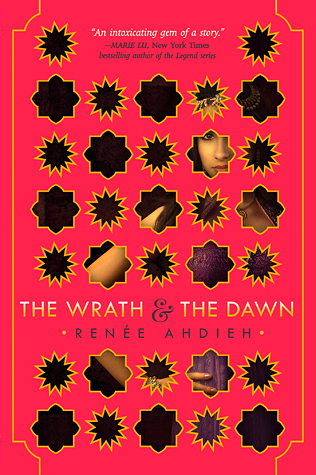
18798983.jpgOne Life to One Dawn.

In a land ruled by a murderous boy-king, each dawn brings heartache to a new family. Khalid, the eighteen-year-old Caliph of Khorasan, is a monster. Each night he takes a new bride only to have a silk cord wrapped around her throat come morning. When sixteen-year-old Shahrzad’s dearest friend falls victim to Khalid, Shahrzad vows vengeance and volunteers to be his next bride. Shahrzad is determined not only to stay alive, but to end the caliph’s reign of terror once and for all.

Now, surprise, surprise, Shahrzad doesn’t end the caliph’s reign of terror, she actually falls in love with him. But, regardless of all the mixed reviews and the slightly predictable beginning, I found this to be mesmerising, magical and so, so far from mundane. I also slightly (intensely) fell in love with Khalid… This has definitely replaced ACOMAF as my favourite YA book of the moment. It is beautiful and visual and captivating. Renee Ahdieh’s writing is poetic and flowing and you almost pinch yourself half way through because you can’t quite believe words can be written so beautifully. Be right back, going to drown in sandalwood and sunlight…

The Rose and the Dagger
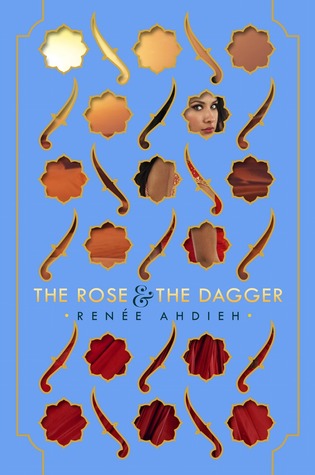
23308084The darker the sky, the brighter the stars.

In a land on the brink of war, Shahrzad is forced from the arms of her beloved husband, the Caliph of Khorasan. She once thought Khalid a monster—a merciless killer of wives, responsible for immeasurable heartache and pain—but as she unraveled his secrets, she found instead an extraordinary man and a love she could not deny. Still, a curse threatens to keep Shazi and Khalid apart forever…

More Shahrzad and Khalid – yes please! So, I might have read this immediately after finishing The Wrath and the Dawn, and stayed up all night engrossed between it’s pages. Nevertheless, this is still a completely un-fangirling and unbiased review, I promise… I absolutely love Shahrzad as a protagonist – she is so strong, and independent and willful, and her faith in Khalid, her beautiful monster, is gut-wrenching and inspiring and so addictive. So many ‘strong’ female characters lack real gumption in YA novels, but in Shahrzad, Renee has created a truly powerful and believable and realistic girl who you find yourself rooting for no matter what. I was completely ensnared by this sexy, mystical, poetic story once more. I just want to read about Shahrzad’s adventures forever.

Maze Runner: The Fever Code – James Dashner
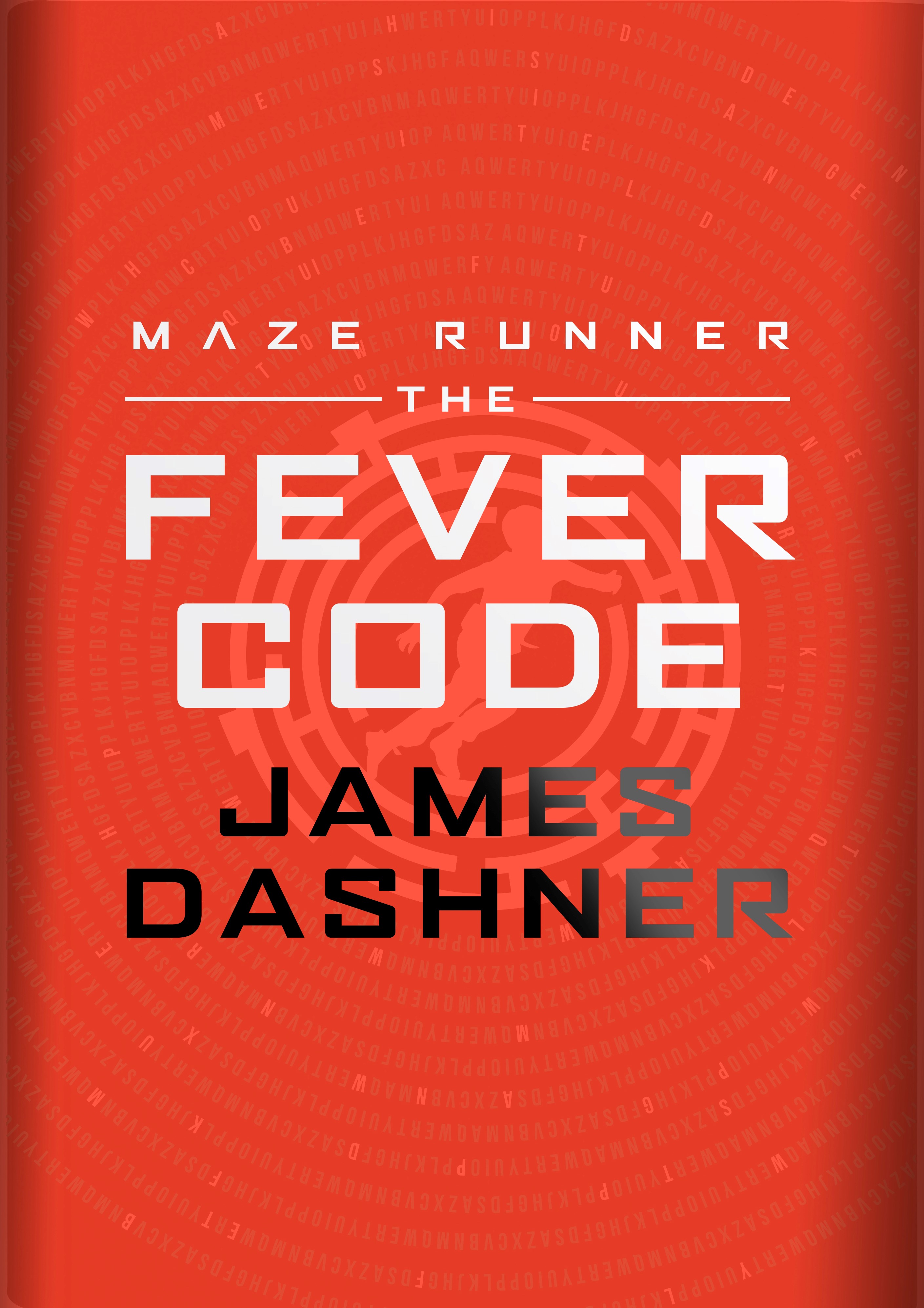
fever-code-hbOnce there was a world’s end.
The forests burned, the lakes and rivers dried up, and the oceans swelled.
Then came a plague, and fever spread across the globe. Families died, violence reigned, and man killed man.
Next came WICKED, who were looking for an answer. And then they found the perfect boy.
The boy’s name was Thomas, and Thomas built a maze.
Now there are secrets.
There are lies.
And there are loyalties history could never have foreseen.
This is the story of that boy, Thomas, and how he built a maze that only he could tear down.
All will be revealed.

So, this was a disappointment… Although not quite as boring and mundane and predictable as The Death Cure, it was still far, far from the genius of the original Maze Runner series. I wish James Dashner had just finished with the third book. Most of this storyline included things that we already know, and repeated everything in excruciating detail, lacking any original events. The first half of the book, absolutely nothing notable happened at all. I’m all for prequels if they contribute to the story, but this just felt like a full-length book for the sake of making as much money as possible. I don’t really have a cynical bone in my body, but this was just so poorly written and so uneventful. It lacked the fantastic shock-creating, unexpected, spontaneous writing of the first three books. This time around, the writing was wooden, and the most exciting thing that happens is the characters sneaking out of their rooms, or, shock-horror, Thomas finding out that the voice in his head is actually Theresa. Well, duh…

Frostblood
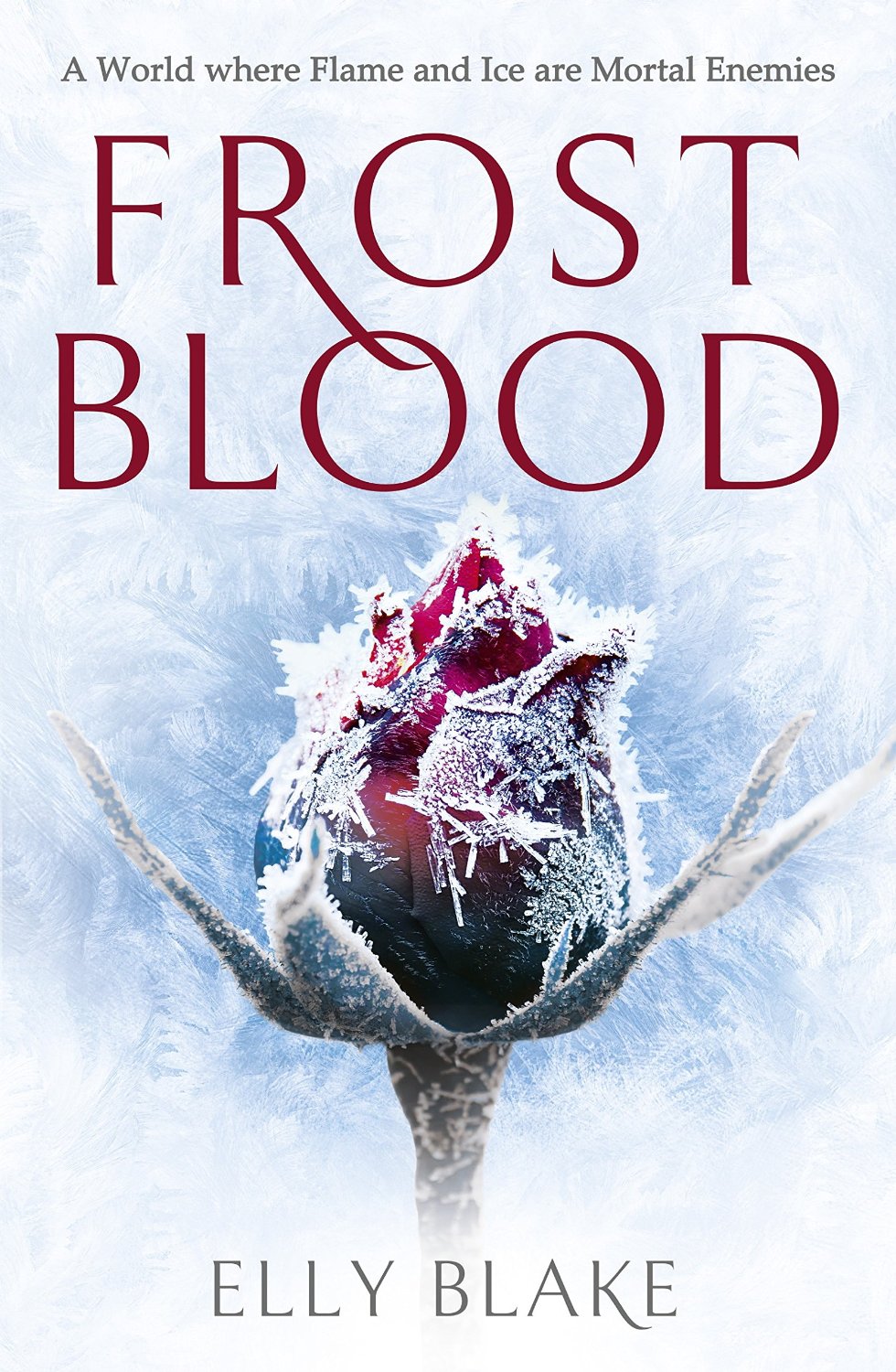
IMG_5775.JPGSeventeen-year-old Ruby is a Fireblood who has concealed her powers of heat and flame from the cruel Frostblood ruling class her entire life. But when her mother is killed trying to protect her, and rebel Frostbloods demand her help to overthrow their bloodthirsty king, she agrees to come out of hiding, desperate to have her revenge.

Despite her unpredictable abilities, Ruby trains with the rebels and the infuriating—yet irresistible—Arcus, who seems to think of her as nothing more than a weapon. But before they can take action, Ruby is captured and forced to compete in the king’s tournaments that pit Fireblood prisoners against Frostblood champions. Now she has only one chance to destroy the maniacal ruler who has taken everything from her—and from the icy young man she has come to love.

Like The Waking Land, the pacing of this novel was slightly on the speedy side, so I felt like it lacked any potential depth, and it tended to follow a very similar fantasy/YA trope, without reinventing anything for itself… but hey, that’s the zeitgeist I guess. Other than this, I enjoyed the book overall. I loved Ruby as a protagonist, she was sarky, and quick, and sharp, but kind-hearted too. The world-building was good, and the plot was fast and intense and dark and wicked – all good fantasy-eque things. Really, who can go wrong with fire and frost and fighting and blood and darkness?!


My 3 Favourite Books About Feminism

A Room of One's OwnA Room of One’s Own by Virginia Woolf

‘When, however, one reads of a witch being ducked, of a woman possessed by devils, of a wise woman selling herbs, or even of a very remarkable man who had a mother, then I think we are on the track of a lost novelist, a suppressed poet, of some mute and inglorious Jane Austen, some Emily Bronte who dashed her brains out on the moor or mopped and mowed about the highways crazed with the torture that her gift had put her to. Indeed, I would venture to guess that Anon, who wrote so many poems without signing them, was often a woman.’

Every single woman should read this. I originally read it whilst studying for my Literature degree, and as a writer myself, it struck a chord and her words have stayed with me, always. It is the essence of Virginia Woolf herself, and I turn to it when I feel rejected, downtrodden, or if I begin to doubt that my work is good enough. This is Woolf’s homage to the spirit of heroines in history who may have written poems, novels, plays, stories, songs and ballads but were forced to remain anonymous as it was unacceptable for women to write. What if Shakespeare had an equally talented sister, but she could never have been as successful as Shakespeare himself because she was a woman, and woman were not allowed to write? She ends the essay by urging women and men to pick up their pen and write, and to banish the limits of gender identity and write with an androgynous mind instead.

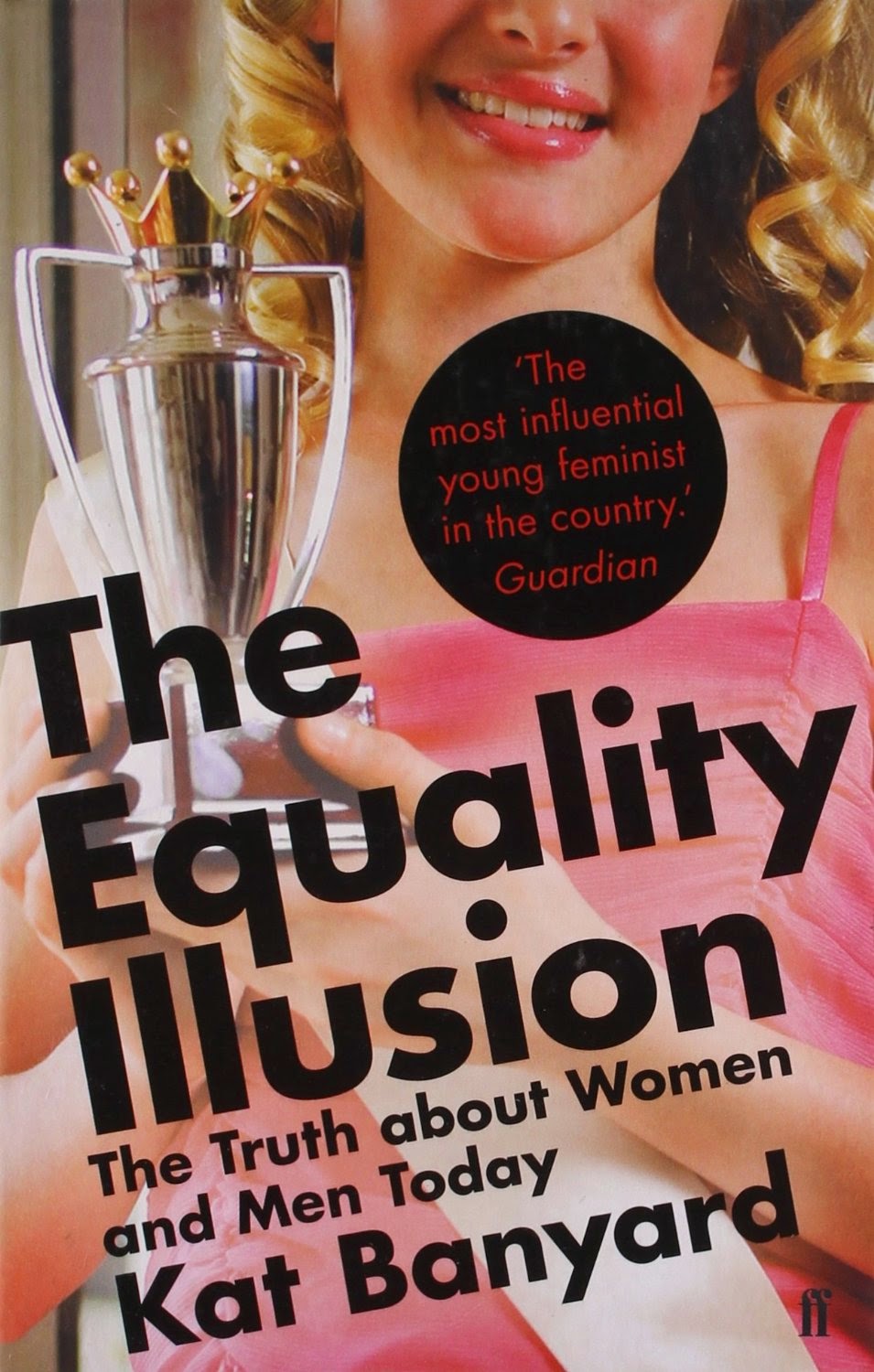
the equality illusionThe Equality Illusion by Kat Banyard

Women have made huge strides in equality over the last century. And feminism is now generally considered irrelevant, or old-fashioned, or even embarrassing. But what about the fact that today women working full-time in the UK are paid on average 17% less an hour than men? That one in three women worldwide has been beaten, coerced into sex, or otherwise abused because of her gender?

This book is a few years old now, but is still one of the best books I’ve read about feminism today and the history of. The statistics and research are solid, and it explores the position of women in the UK in areas such as education, work, domestic violence, body image, sex and abortion rights. It’s entirely relevant and written concisely, cleverly and clearly. It’s a really good read, especially if you’re new to identifying as a feminist. It’s a great starter book and Banyard explains everything from grassroots feminism to current day, and how basically every single area of women’s lives are still affected by casual, deep-seated sexism. It’s the perfect book to get you really thinking about modern day feminism, and makes you realise that sexism is not dead. Banyard describes this idea that sexism no longer exists in our society as the ‘Equality Illusion’. This book is an invaluable feminist manifesto for the women of today.

SIsterhood InterruptedSisterhood Interrupted by Deborah Siegel

Contrary to clichés about the end of feminism, Deborah Siegel argues that younger women are reliving the battles of its past, and reinventing it–with a vengeance. From feminist blogging to the popularity of the WNBA, girl culture is on the rise. A lively and compelling look back at the framing of one of the most contentious social movements of our time, Sisterhood, Interrupted exposes the key issues still at stake, outlining how a twenty-first century feminist can reconcile the personal with the political and combat long-standing inequalities that continue today.

I found this book hugely helpful in sorting out all the confused and conflicting stereotypes I may have absorbed about feminism. It’s a great summary of second and third wave feminism and it gave me the knowledge to confidently explain the history of feminism to those who question the word and what it means. It lays out the history of the movement, covering the important events of the 60’s and 70’s, and continuing to present day. The most important thing I learned from this book is that feminism has never been a single, united force as some believe. It explains the entirety of the issues that have existed within feminism itself – the internal conflict over which fights are worth fighting, the best methods to coerce change, and what feminism actually means. There is no one type of feminism, and it isn’t about one single point of view all women who claim the label ‘feminist’ share. This book really teaches you that there are many different kinds of feminism, and that it’s okay to find your own place within the movement.